
SAS vs Python for Data Analysis: A Comprehensive Guide with Code Examples
Exploring the Advantages and Limitations of Both Languages for Data Processing and Analysis
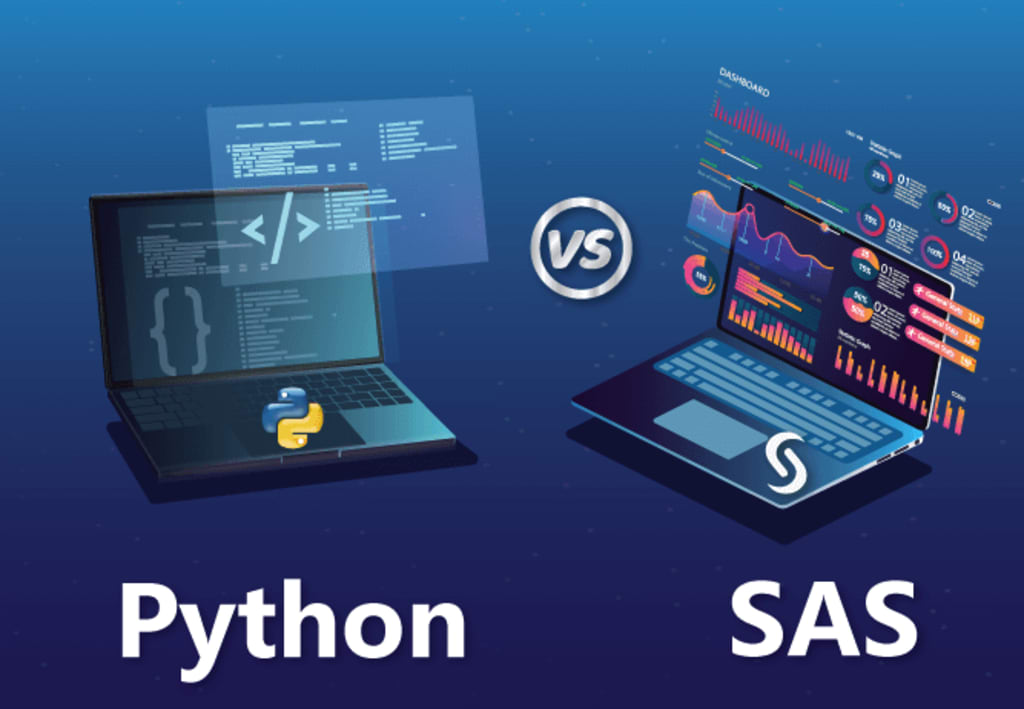
Introduction:
Data analysis has become a crucial part of modern businesses and organizations. The tools used for data analysis have evolved over time, but two of the most widely used platforms are SAS and Python. Both SAS and Python have their unique advantages and disadvantages, and choosing between them often comes down to the specific needs and requirements of the data analysis project.
SAS
SAS (Statistical Analysis System) is a software suite developed by SAS Institute. It is widely used in the business world, especially in large organizations, for a variety of data analysis tasks, including data management, statistical analysis, and reporting. SAS is a proprietary software, which means that it can only be used by organizations that have purchased a license.
Advantages of SAS:
User-Friendly Interface: SAS has a user-friendly interface that makes it easy for even non-technical users to perform complex data analysis tasks. The interface is highly customizable, allowing users to create their own menus, libraries, and macros.
Robust Data Management: SAS is known for its robust data management capabilities, making it ideal for large datasets. It has a variety of tools for cleaning and transforming data, as well as for merging datasets from multiple sources.
Statistical Analysis: SAS is a statistical software package, and it has a wide range of statistical analysis tools, including regression analysis, ANOVA, and time series analysis.
Reporting: SAS has powerful reporting capabilities, making it ideal for creating reports and presentations based on the data analysis results. The software includes a variety of report templates that users can customize, as well as the ability to export reports in a variety of formats.
Disadvantages of SAS:
Cost: SAS is a proprietary software, and organizations must purchase a license in order to use it. This can be expensive, especially for small businesses or organizations.
Steep Learning Curve: Although SAS has a user-friendly interface, it can still be difficult for new users to learn. The software has a steep learning curve, and it can take a significant amount of time to become proficient with all of its features.
Limited Open-Source Community: SAS is a proprietary software, which means that it has a limited open-source community. This can make it difficult for users to find help or resources when they need it.
Python
Python is an open-source programming language that was developed in the late 1980s. It has become one of the most popular programming languages in the world, due to its versatility, simplicity, and the large open-source community that supports it. Python is widely used for data analysis, as well as for web development, scientific computing, and more.
Advantages of Python:
Open-Source: Python is an open-source programming language, which means that it is free to use. This makes it ideal for organizations or individuals with limited budgets.
Large Open-Source Community: Python has a large open-source community, which means that users have access to a wide range of resources and help when they need it.
Versatility: Python is a versatile programming language that can be used for a wide range of tasks, including data analysis, web development, and scientific computing.
Data Analysis Libraries: Python has a wide range of data analysis libraries, such as Pandas, NumPy, and Matplotlib, which make it easy for users to perform complex data analysis tasks.
Disadvantages of Python:
Steep Learning Curve: Although Python is known for its simplicity, it still has a steep learning curve for new users. It can take a significant amount of time to become proficient with the language and its various libraries.
Limited Support for Graphical User Interfaces: While Python has a variety of libraries for data analysis, it may not have the same level of support for graphical user interfaces as proprietary software like SAS.
Performance: While Python is efficient for many data analysis tasks, it may not be as fast as proprietary software like SAS for very large datasets.
Comparison of SAS and Python:
SAS and Python both have their advantages and disadvantages, and the choice between them often comes down to the specific needs of the data analysis project. For example, SAS is a better choice for organizations with large datasets and a need for robust data management, while Python is a better choice for organizations with limited budgets and a need for versatility.
In terms of data analysis, SAS has a wide range of statistical analysis tools, making it ideal for organizations that need to perform complex statistical analysis. On the other hand, Python has a variety of data analysis libraries, such as Pandas and NumPy, making it ideal for organizations that need to perform complex data analysis tasks.
Code Examples:
Here are basic code examples for some of the concepts mentioned in the article.
- Importing data :
SAS:
proc import datafile="data.csv"
out=data_set
dbms=csv;
run;
Python using Pandas:
import pandas as pd
data = pd.read_csv("data.csv")
2. Descriptive statistics
SAS:
proc means data=data_set;
var variable1 variable2;
run;
Python using Pandas:
import pandas as pd
data.describe()
3.Data visualization
SAS:
proc sgplot data=data_set;
scatter x=variable1 y=variable2;
run;
Python using Matplotlib:
import matplotlib.pyplot as plt
plt.scatter(data['variable1'], data['variable2'])
plt.show()
These are just a few examples of the code that can be used for data analysis in SAS and Python. There are many more options available in both languages for data analysis
Conclusion:
In conclusion, both SAS and Python have their advantages and disadvantages, and choosing between them will depend on the specific needs of the data analysis project. SAS is ideal for organizations with large datasets and a need for robust data management, while Python is ideal for organizations with limited budgets and a need for versatility. It is important for organizations to consider their specific needs before choosing between SAS and Python.
Please share your comments on the content. Follow me for more such contents.
Thanks for your time!
About the Creator
Do you really need to take 10,000 steps a day?
While most people avoid spending the night in jail, Jean Béliveau jumped at the opportunity. For the past three years, Béliveau had been walking from country to country, with the goal of circumnavigating the globe on foot. This required sleeping in tents, strangers’ homes, and the occasional jail cell along the way. But this morning, as Béliveau was ready to leave, the police chief, who had agreed to his sleeping arrangement, was nowhere to be found, and the guards weren’t buying his story. Few people have the time or desire to walk such extreme lengths.
By Munesh Yadav4 days ago in Education
What’s the best position to sleep in?
In the 1970s, psychoanalyst Samuel Dunkell proposed a curious, albeit almost completely unsubstantiated, theory that the position you sleep in reflects your personality. For example, preferring to snooze in the so-called royal position indicated self-confidence, while sleeping semi-fetal meant you’re sensible and well adjusted. While Dunkell’s ideas lack any definitive proof, how we sleep can impact our health. So, what’s the best position to sleep in? Sleep positions go by countless creative names—
By Munesh Yadav4 days ago in Education



Comments
There are no comments for this story
Be the first to respond and start the conversation.