
RMS Titanic: The Unsinkable Dream and Its Tragic End
Journey of Glory, Hubris, and Heartbreak

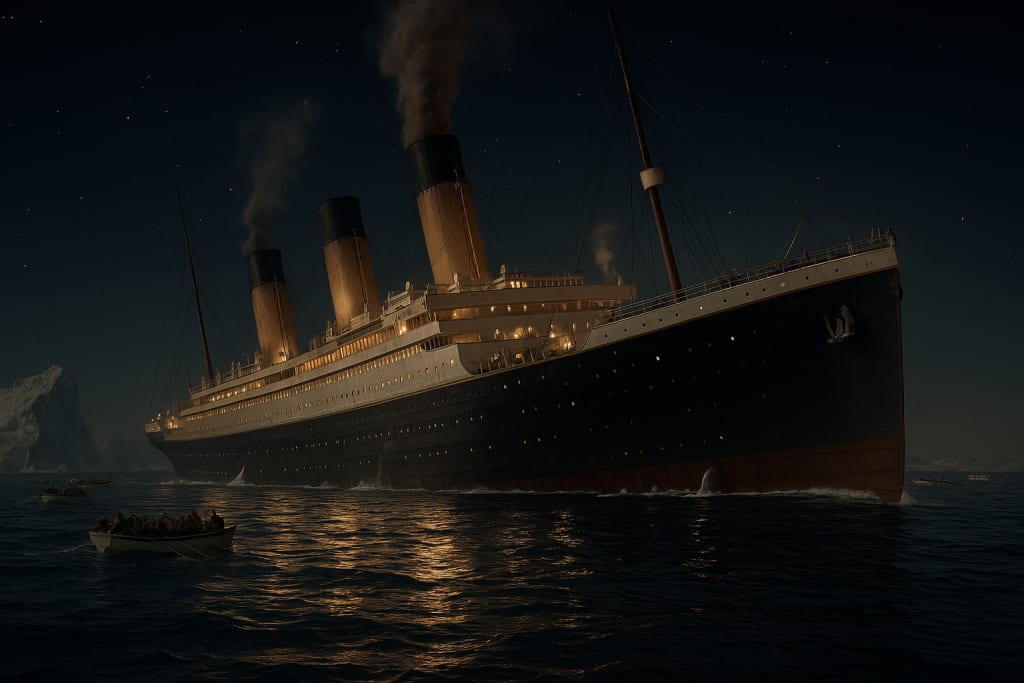
RMS Titanic: The Unsinkable Dream and Its Tragic End
— A Journey of Glory, Hubris, and Heartbreak
The year was 1912, a time defined by industrial greatness and a firm belief in mankind’s unstoppable progress. At the peak of this golden era stood the RMS Titanic — an engineering marvel, a beacon of opulence, and a vessel deemed “unsinkable” by its creators. Built by Harland and Wolff and operated by the White Star Line, the Titanic represented not just a ship, but the culmination of ambition, technology, and dreams.
A Giant Born of Steel and Dreams
Stretching 882 feet long and weighing over 46,000 tons, the Titanic was awe-inspiring. Its three massive propellers, powered by colossal steam engines, were capable of cutting across the Atlantic with speed and grace. But beyond its mechanical prowess lay its unmatched interior. Designed to rival the finest hotels, the ship’s first-class section included a grand staircase, opulent dining halls, a pool, gym, and even a squash court. Each fixture and finish whispered extravagance.
Yet, the Titanic wasn’t only for the elite. Thousands of second- and third-class passengers, many of them immigrants chasing the American dream, found comfort aboard this steel city at sea. It was a moving portrait of society itself — rich and poor, hopeful and weary — sailing towards a shared destiny.
On April 10, 1912, the Titanic began its maiden voyage from Southampton, England, to New York City. Onboard were the wealthy, the prominent, the dreamers, and the hopeful. None could foresee that within days, the world would change forever.
The Fatal Encounter: Ice and Hubris
The voyage began without incident. The ship cut through calm seas, unbothered by the iceberg warnings sent by wireless operators along the Atlantic route. Overconfidence, schedule pressure, and belief in the ship's invincibility led to crucial missteps. Then, late at night on April 14, 1912, the unthinkable happened.
Traveling at 22 knots, the crew spotted an iceberg dead ahead. Despite efforts to avoid it, the ship's starboard side scraped the ice, rupturing five of its watertight compartments. Though initially underestimated, the damage was fatal. The ship’s famed “unsinkable” design could withstand only four compromised compartments.
A Night of Chaos and Courage
As panic spread, Captain Edward Smith and designer Thomas Andrews acknowledged the grim reality — the Titanic was going down. Lifeboats for just over 1,100 people were not enough for the more than 2,200 onboard. The chaos that followed was both heartbreaking and heroic.
Some lifeboats left half empty. The “women and children first” order was unevenly applied. Yet, there were moments of profound bravery. Musicians played on, calming the terrified. Officers and crew fought to save lives till the end. Captain Smith went down with his ship.
At 2:20 AM on April 15, the Titanic broke in two and sank beneath the frigid waters. Over 1,500 lives were lost. The ocean, once a road to opportunity, became a grave.
The Aftermath: Lessons and Legacy
The world reeled. The Titanic’s sinking exposed humanity’s overconfidence in machines and underestimation of nature. But it also inspired sweeping change. The 1914 International Convention for the Safety of Life at Sea (SOLAS) revolutionized maritime safety: mandatory lifeboats, continuous radio watch, and ice patrols became standard.
In 1985, Dr. Robert Ballard discovered the wreck, lying over 12,000 feet below the surface. Since then, the Titanic has been studied, memorialized, and respected — not just as a ship, but as a symbol.
Today, the Titanic is more than a maritime disaster. It is a cultural touchstone — a haunting reminder of ambition, class divides, technological pride, and human fragility. Its tale lives on in books, films, and memories, ensuring that those lost are never forgotten. The “unsinkable” ship now eternally sails the tides of history.
About the Creator
Noman Afridi
I’m Noman Afridi — welcome, all friends! I write horror & thought-provoking stories: mysteries of the unseen, real reflections, and emotional truths. With sincerity in every word. InshaAllah.
Keep reading
More stories from Noman Afridi and writers in Education and other communities.
The Fiery Heart of Our Solar System: Mysteries of the Sun
Every morning, the Sun rises with timeless grace, bathing the world in golden light. Yet behind its calm appearance lies a raging inferno, a cosmic engine that has burned for over 4.6 billion years. The Sun is not just a glowing ball in the sky—it is the center of our solar system, the giver of life, and a symbol of divine power across countless civilizations. But how much do we truly understand about this blinding, burning giant?
By Noman Afridi10 months ago in Education
Purpose Driven Leadership: How Corporate Success Is Fueling Social Change
Business leaders are often recognized for their ability to build organizations, create economic growth, and guide companies through competitive markets. Yet in recent years, a growing number of executives and entrepreneurs have chosen to extend their influence beyond corporate success. Many are investing their time, expertise, and resources into philanthropic efforts that address social challenges and strengthen communities. This evolution reflects a broader understanding that leadership carries responsibilities not only to shareholders but also to society.
By John Olin Killgore4 days ago in Education


Comments
There are no comments for this story
Be the first to respond and start the conversation.