
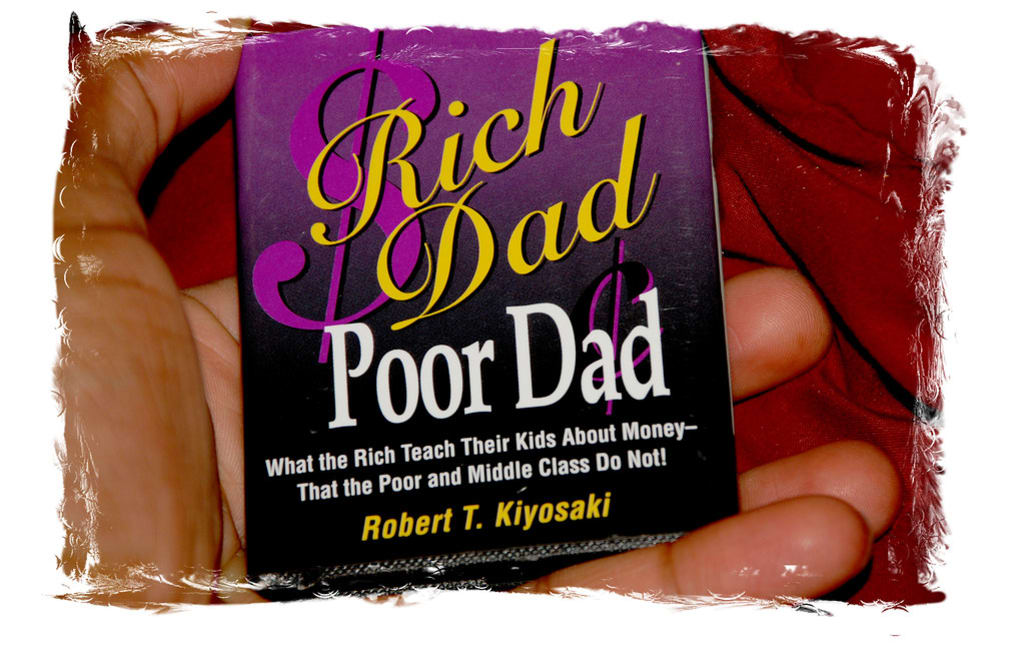
"Rich Dad, Poor Dad" is a self-help book written by Robert Kiyosaki and Sharon Lechter. The book advocates for financial literacy and encourages readers to take control of their financial future through investing, entrepreneurship, and real estate.
The book is based on the author's personal experiences and lessons he learned from his two father figures: his biological father, who was highly educated but financially struggling, and his best friend's father, who was less educated but financially successful. The book contrasts the financial habits and beliefs of these two men and argues that conventional wisdom about money, work, and investing is often misguided.
Many readers have found the book to be a useful and inspiring guide to personal finance, while others have criticized it for oversimplifying complex financial concepts and promoting get-rich-quick schemes.
Here are some of the key points from "Rich Dad, Poor Dad":
- The importance of financial literacy: The book emphasizes the importance of understanding money and finance and taking control of your financial future.
- The difference between assets and liabilities: The book defines assets as things that put money in your pocket and liabilities as things that take money out of your pocket. The goal is to have more assets than liabilities.
- The importance of passive income: The book stresses the importance of building multiple streams of passive income, such as rental income from real estate or dividends from stocks, to achieve financial freedom.
- The dangers of traditional education and job security: The book criticizes the conventional wisdom that getting a good education and a secure job is the key to financial success, and instead argues that entrepreneurship and investing are better paths to wealth.
- The value of taking calculated risks: The book encourages readers to take calculated risks and step outside their comfort zones in order to achieve financial success.
- The power of a positive mindset: The book emphasizes the importance of a positive and growth-oriented mindset for achieving financial success.
- The importance of financial planning: The book highlights the importance of planning for the future and taking action to achieve your financial goals.
- The difference between working for money and having money work for you: The book encourages readers to focus on building wealth through investments and passive income, rather than just working for a paycheck.
- The benefits of entrepreneurship: The book highlights the potential for entrepreneurship to create wealth and provide greater financial freedom than working a traditional job.
- The value of real estate: The book argues that real estate is a valuable asset class for building wealth and provides strategies for getting started in real estate investing.
- The dangers of debt: The book cautions readers against taking on too much debt, especially consumer debt, and encourages them to focus on building assets and reducing liabilities.
- The importance of taking action: The book stresses the importance of taking action and taking control of your financial future, rather than simply reading about money and finance.
- The role of mentors: The book emphasizes the importance of finding mentors and learning from successful individuals who can guide you on your financial journey.
- The idea of "cash flow quadrants": The book introduces the concept of the "cash flow quadrants," which categorizes people into four groups based on how they generate income: employees, self-employed individuals, business owners, and investors.
Overall, "Rich Dad, Poor Dad" is a popular and influential book that has inspired many people to think differently about their finances and take control of their financial future. However, it's important to keep in mind that the ideas and strategies presented in the book may not be suitable for everyone and that it's always a good idea to do your own research and consult with a financial professional before making any major financial decisions.
About the Creator
Keep reading
More stories from Keerthi Babu and writers in Education and other communities.
Best Termux Ethical Hacking Tools for Learning Cybersecurity
If you have been using Termux for a while, you already know how powerful it can be. It looks simple. Just a terminal on Android. But once you start installing packages and learning basic Linux commands, you realize it can turn your phone into a small cybersecurity lab.
By Stephano kambeta7 days ago in Education
NCLEX Study Plan: A Step-by-Step Guide for Nursing Students
Preparing for the NCLEX-RN is one of the most important milestones in the nursing students’ career. This is because the NCLEX is the final step before nursing students can become licensed nurses. However, it is not as easy as simply reading nursing textbooks and taking notes from class lectures. This is because the NCLEX is designed to test the nursing students’ clinical judgment and decision-making skills.
By Sulcus Learningabout 24 hours ago in Education



Comments
There are no comments for this story
Be the first to respond and start the conversation.