
Remote Work vs. Traditional Office
Which One Wins the Productivity Battle?

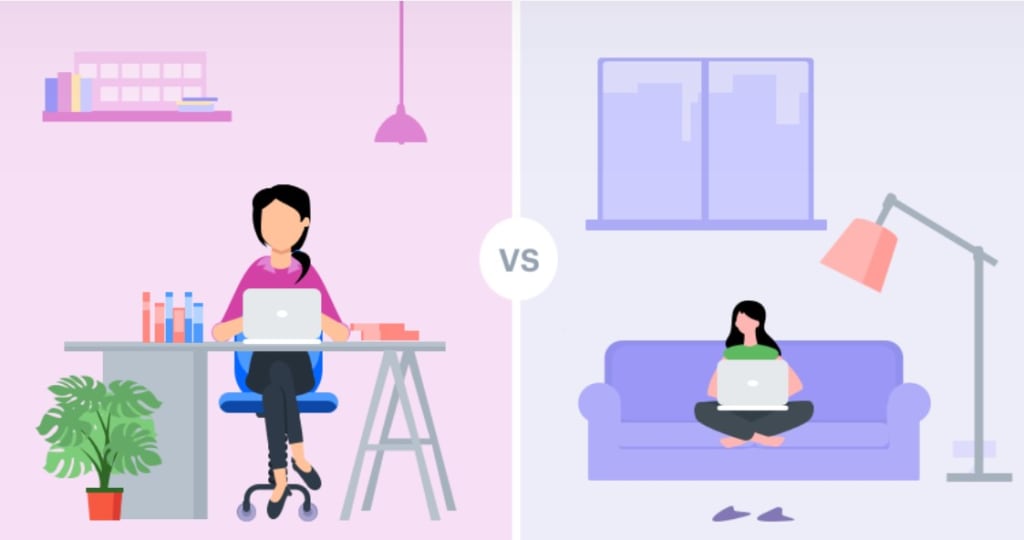
The landscape of work has undergone a significant transformation in recent years, with the rise of remote work revolutionizing the traditional office setup. As professionals and companies explore new ways of working, a debate ensues: Which is more productive, remote work or the traditional office environment? In this article, we delve into the productivity battle between remote work and the traditional office, examining the benefits and challenges of each approach.
Flexibility and Autonomy in Remote Work
One of the key advantages of remote work is the flexibility it offers. Remote workers have the freedom to set their own schedules, creating an environment that aligns with their peak productivity hours. The autonomy to design one's workday according to individual preferences can lead to increased focus and efficiency. Remote workers can tailor their environments to minimize distractions and optimize their productivity, resulting in a higher level of output.
Collaboration and Communication in the Traditional Office
Traditional offices provide a physical space where colleagues can collaborate and communicate face-to-face. Immediate access to colleagues fosters spontaneous brainstorming sessions, quick problem-solving, and efficient decision-making. The ability to gather in person can enhance team dynamics, promote seamless information sharing, and reduce misunderstandings that may occur in virtual communication. This level of collaboration can lead to increased productivity, especially for tasks that require constant coordination and interaction.
Reduced Commute Time and Remote Work
One significant advantage of remote work is the elimination of daily commutes. Commuting can be stressful, time-consuming, and often leads to fatigue even before the workday begins. Remote workers can redirect this time and energy towards productive tasks, resulting in higher efficiency and reduced stress levels. The absence of a daily commute also contributes to better work-life balance, allowing individuals to allocate more time to personal pursuits and well-being, ultimately positively impacting productivity.
Office Infrastructure and Traditional Workspaces
Traditional offices are equipped with infrastructure, technology, and resources optimized for work. Dedicated workspaces, ergonomic furniture, high-speed internet, and office equipment create an environment conducive to productivity. The separation of work and personal spaces can help individuals maintain focus and create a productive mindset. Furthermore, traditional offices often provide support services such as IT assistance, administrative support, and a professional atmosphere that can boost productivity for certain individuals and roles.
Work-Life Integration and Remote Work
Remote work allows for a greater integration of work and personal life. This flexibility enables individuals to attend to personal responsibilities or emergencies without compromising their professional commitments. The ability to strike a balance between work and personal life can contribute to reduced stress levels and increased job satisfaction, ultimately enhancing productivity. Remote workers can adjust their schedules to accommodate their personal needs, leading to a greater sense of fulfillment and motivation.
Mitigating Distractions and the Traditional Office
Traditional offices may come with distractions that can hinder productivity. Interruptions from colleagues, office noise, and impromptu meetings can disrupt concentration and workflow. Open office layouts, while fostering collaboration, can also create an environment prone to distractions. Some individuals find it challenging to focus in such settings, leading to a decrease in productivity. Additionally, the structured nature of office hours may not align with everyone's peak productivity times, further impacting output.
The productivity battle between remote work and the traditional office environment is a complex one, with both approaches offering unique advantages and challenges. Remote work provides flexibility, autonomy, and reduced commute time, allowing individuals to optimize their productivity and achieve better work-life integration. On the other hand, traditional offices foster collaboration, provide access to office infrastructure, and mitigate distractions through structured work environments.
Ultimately, the productivity battle depends on various factors, including individual work styles, job requirements, and personal preferences. Employers and employees must carefully consider their specific needs and goals when determining the most productive work arrangement. It's worth noting that hybrid models, combining elements of both remote work and traditional office settings, have emerged as a potential solution that provides the best of both worlds.
About the Creator
Gilbert Mutongoi Ashiku
Like Informative articles on trends and tech? you are at the right place, welcome on board and enjoy my fascinating articles.
Keep reading
More stories from Gilbert Mutongoi Ashiku and writers in Education and other communities.
Work from Anywhere
In the ever-evolving landscape of work, the concept of remote jobs has gained tremendous popularity. With advancements in technology and the increasing desire for work-life balance, more professionals are seeking opportunities that allow them to work from anywhere. As we venture into 2023, this article will explore the top remote job opportunities that are set to dominate the job market, offering individuals the freedom to work on their own terms and embrace a location-independent lifestyles.
By Gilbert Mutongoi Ashiku3 years ago in Education
The Digital Kitchen Revolution: How Technology Is Redefining Restaurant Efficiency
The restaurant industry has entered a new era where technology plays a central role in shaping daily operations. Restaurants are no longer relying only on traditional methods to run their businesses. Instead, digital tools and modern software solutions are helping restaurant owners manage their operations more efficiently while meeting the growing expectations of customers. As dining habits evolve and competition continues to increase, technology has become an essential resource for improving productivity, reducing costs, and delivering better service.
By Steven Joseph Wolfeabout 6 hours ago in Education
Common Lies on Resumes and How Employers Find Them Out
Your CV should tell the tale of your work life. This is the paper that tells a possible employer who you are before you even go to an interview. Some people who are applying feel like they have to lie or even make things up because of the pressure. It might seem like a good idea to correct a few things that aren't quite perfect, but employers are getting better at finding them.
By Novelty Diploma5 days ago in Education


Comments
There are no comments for this story
Be the first to respond and start the conversation.