
Religious Upbringing and Sexual Shame: Understanding the Connection
How Early Spiritual Messages Can Shape a Lifetime of Self-Perception


For countless individuals, the first language they learn about sexuality is not one of biology or intimacy, but one of morality, sin, and purity. A religious upbringing provides a vital foundation of community, meaning, and moral structure. Yet, when it comes to sexuality, this same foundation can inadvertently become the blueprint for a hidden prison of shame, creating a deep and lasting conflict between the body and the spirit.
The connection isn't accidental; it's woven from specific, powerful teachings that, with the best of intentions, often frame the body's natural desires as a spiritual problem.
The Mechanics of the Message
This internal conflict is typically built on a few core concepts:
The Purity Narrative: Many religions champion the ideal of "purity," often symbolized through metaphors like a "temple" or a "sealed vessel." Sexual feelings and acts outside of very specific, sanctified contexts (typically marriage) are framed as defilement. Masturbation, as a solitary act, exists entirely outside this sanctified space. It becomes the ultimate act of self-defilement, a violation of one's own spiritual worth.
The "Sin in the Heart" Doctrine: Teachings like Matthew 5:28 ("But I tell you that anyone who looks at a woman lustfully has already committed adultery with her in his heart") extend the concept of sin beyond action to include thought and feeling. This creates an impossible standard. A person cannot control an involuntary biological urge or a passing thought, yet they are made to feel spiritually responsible for it. The very experience of sexual feeling becomes a source of guilt.
The Focus on Control and Denial: Spiritual maturity is often linked to the ability to master "carnal" or "fleshly" desires. Since sexual urges are among the most powerful, successfully suppressing them is seen as a sign of strong faith. Conversely, "giving in" to masturbation is framed as a failure of willpower and a spiritual weakness, leading to profound feelings of inadequacy.
The Long Shadow of Shame
The consequences of this early programming are profound and long-lasting. This shame-based framework can lead to:
A Split Self-Image: Individuals learn to see their body and its desires as a separate, rebellious entity that is constantly sabotaging their "true" spiritual self. This internal division creates chronic anxiety and self-alienation.
Hindered Intimacy: Counterintuitively, sexual shame can cripple the ability to form healthy intimate relationships later in life. If you have been taught to associate sexual feelings with guilt and sin, it becomes incredibly difficult to integrate those feelings into a loving, connected partnership. Sex within marriage can still feel tainted by decades of negative conditioning.
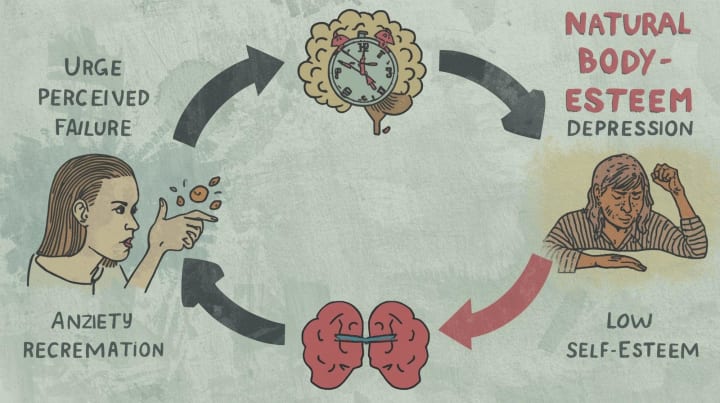
Mental Health Struggles: The constant cycle of urge, "failure," and self-recrimination is a direct contributor to anxiety, depression, and low self-esteem. The body's natural functioning becomes a trigger for a mental health crisis.
Finding a Path to Integration
Healing from religious sexual shame is not about rejecting one's faith, but about seeking a more compassionate and integrated interpretation of it. This path often involves:
Reframing the Narrative: Exploring theological perspectives that celebrate the body as a good creation and sexuality as a divine gift, rather than a flaw to be managed.
Separating Health from Morality: Learning to see masturbation not through a lens of sin, but through a lens of biology and health—a normal, harmless part of human experience.
Practicing Self-Compassion: Actively replacing the inner critic's voice of condemnation with one of grace and understanding, acknowledging that the struggle itself is a testament to a deeply held desire to be good.

Understanding that this shame is a learned script, not a fundamental truth, is the first step toward writing a new, healthier story for oneself—one where faith and the human body are no longer at war.
About the Creator
The 9x Fawdi
Dark Science Of Society — welcome to The 9x Fawdi’s world.
Keep reading
More stories from The 9x Fawdi and writers in Education and other communities.
Why Do I Feel Bad After? Unpacking the Roots of Masturbation Guilt
It’s one of the most common, yet rarely discussed, human experiences. You engage in a natural, private act to relieve stress, experience pleasure, or simply to sleep. For a few moments, it feels good. Then, it washes over you—a wave of shame, regret, or a hollow emptiness. The pleasure evaporates, replaced by a puzzling sense of guilt.
By The 9x Fawdi5 months ago in Education
Short Tempers and Legal Threats: UK Teachers Report Rise in Problem Parents
A growing number of teachers in the United Kingdom are reporting confrontations with parents, including displays of short tempers, verbal abuse, and even threats of legal action, according to a recent survey conducted by the National Education Union (NEU). The findings highlight increasing pressure on school staff as they navigate complex interactions with parents while maintaining standards of education and safeguarding children. The NEU survey, which collected responses from over 15,000 teachers across England, Wales, Scotland, and Northern Ireland, found that more than 60% of respondents had experienced at least one incident of aggression or intimidation from parents over the past academic year. Around 15% of teachers said they had faced explicit threats of legal action, often over disciplinary decisions, homework disputes, or perceived issues with the school environment. Many educators report that the rise in confrontations is being driven by heightened stress among parents, who face pressures from work, finances, and social media scrutiny. “Parents today are under immense pressure, and unfortunately, that sometimes spills over into aggressive behavior towards staff,” said one teacher from a primary school in Manchester. “We try to engage constructively, but the short tempers can make communication extremely difficult.” The survey also revealed that secondary school teachers are disproportionately affected. Staff members teaching older students reported more frequent and intense confrontations, often related to disciplinary matters such as detentions, exam performance, or social media incidents involving students. Primary school teachers, while facing fewer threats, still reported incidents that caused stress and anxiety. Union leaders say that this trend is concerning because it affects both teacher wellbeing and the wider learning environment. “When staff feel intimidated or threatened by parents, it impacts their ability to teach effectively,” said Mary Bousted, co-general secretary of the NEU. “Schools are meant to be safe spaces for children and adults alike, and this rise in aggression undermines that principle.” Schools have also reported an increase in formal complaints lodged by parents over relatively minor issues. While many complaints are resolved amicably, others escalate to involve external legal advice, putting further strain on teachers and school leadership teams. Legal threats, even when ultimately unsubstantiated, can be intimidating and emotionally draining for staff. Experts suggest that social media and the ease of online communication have contributed to the rise in confrontations. Parents can quickly voice grievances publicly or privately, sometimes without full understanding of school policies or procedures. This has added a new layer of complexity to teacher-parent interactions and has occasionally led to public criticism of staff. Government officials acknowledge the challenges faced by educators. The Department for Education (DfE) has urged schools to adopt clear policies on parental conduct and to provide support for staff experiencing aggression. Guidance includes formal reporting mechanisms, training on conflict resolution, and consultation with local authorities or unions when necessary. Some schools have introduced proactive measures to reduce tensions, such as regular parent-teacher meetings, mediation services, and clear communication of rules and expectations. In addition, mental health support for both students and staff is being emphasized to mitigate stress-related behavior. Nevertheless, union representatives warn that systemic pressures—such as increasing class sizes, tighter budgets, and staff shortages—may exacerbate conflicts between teachers and parents. “We are asking parents to work with us, but they also need to understand the pressures on staff,” Bousted said. “Respectful communication is essential for a healthy school community.” The survey underscores the importance of balancing parental involvement with professional boundaries. While parental engagement is vital for student success, teachers are calling for greater recognition of their professional authority and protection from intimidation. As the new school term progresses, education leaders are monitoring incidents closely, emphasizing training, and seeking collaboration between parents and staff. Ensuring that schools remain safe, respectful, and supportive environments for both students and teachers is now a critical priority in the UK education system. The NEU survey concludes that tackling this issue will require a combined effort from parents, school leaders, and policymakers to reinforce positive engagement, protect teachers from aggression, and maintain a constructive environment for learning.
By Fiaz Ahmed a day ago in Education
Strategy Before Software: Why Content Strategy Matters More Than Platform Technology
A strong content strategy matters more than platform technology because strategy shapes every choice a team makes. It guides tone, purpose, structure, and audience focus. Technology can help with speed and reach, but it cannot replace direction. A tool only works well when someone uses it with a clear plan. Without a strategy, even the best systems fail to connect with real people.
By James Kaminsky4 days ago in Education
A System That Isn’t Working Challenge Winners
Systems promise order. They organize behavior, distribute opportunity, and suggest that if everyone follows the rules, things will work. The entries in A System That Isn’t Working look closely at what happens when that promise begins to slip.
By Vocal Curation Team3 days ago in Resources




Comments
There are no comments for this story
Be the first to respond and start the conversation.