
Reality is a Controlled Hallucination
Nothing You See is Real…
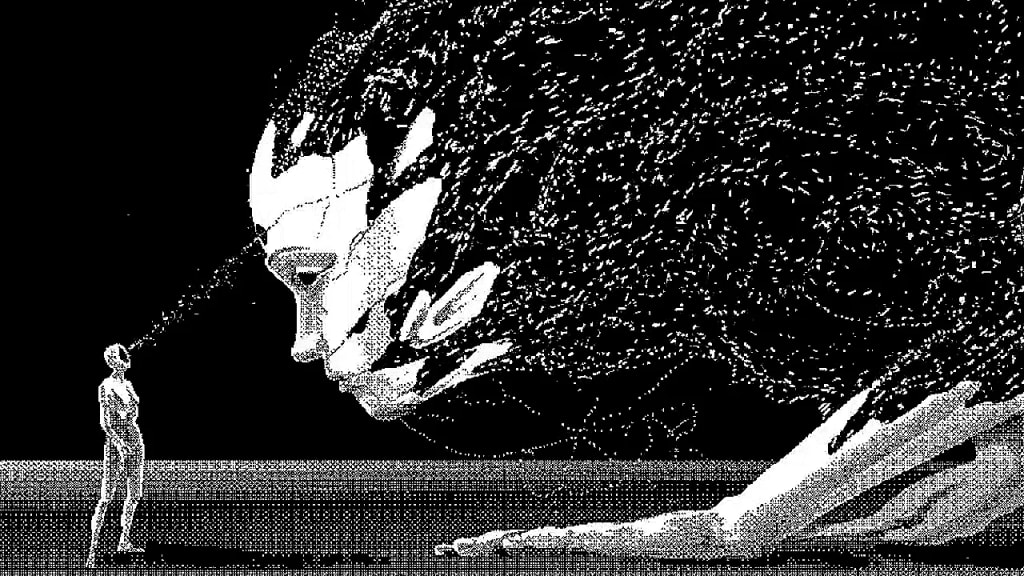
In a crowded café, a man sat at a corner table, sipping his coffee, when he suddenly realized something was wrong. He could see the steam rising from his cup, but when he put his hand above it, he couldn’t feel any warmth. Then, when he took a sip, there was no taste. All over around him, people were talking, yet there was no sound. He reached for his phone to text someone, but the letters on the screen turned out to a complete nonsense. He started panicking, but everything outside the window carried on as if nothing had changed.
Sometimes even when the world seems to be perfectly normal, we feel otherwise.
Why is that?
Maybe what we perceive as reality is in itself a construct entirely made up by us.
Reality Isn’t What You Think
What we see, hear, and feel isn’t really a reflection of the physical world, but a very realistic illusion created by our brain.
Our minds don’t just passively receive the world around us; they create it based on past experiences, learned patterns, and expectations.
Instead of receiving information’s from the physical world and translating it into perception of reality, the brain is constantly guessing, filling in gaps, and making assumptions about what can happen next.
Every moment of your life is a byproduct of the brain’s best guesses. What you are sure that is real may not even exist as you perceive it, because the world you experience is just a version built inside your mind, a version that is influenced by your senses and filtered through the lens of your previous interactions.
The Mind’s Prediction Engine
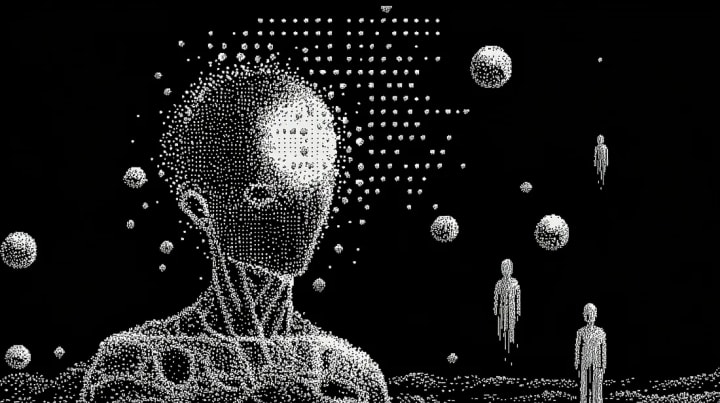
During everyday situations, our brain works as a prediction machine, programmed for constant anticipation of what will happen next.
It’s running a complex system of top-down and bottom-up processing. The higher levels of your mind — the parts that are responsible for memory and expectation, send predictions about what should be happening. At the same time, the lower levels process raw sensory input from the world around you.
But here’s where it gets interesting: your brain doesn’t wait for the sensory input to guide your perception; it predicts what you should experience, and then just checks if the actual input matches.
When these predictions match the incoming data, everything is fine and you are not even aware of this process — it’s absolutely seamless. But when the brain’s guesses don’t match with what you actually see, something that we can call a “prediction error” occurs.
For example, imagine you are walking through a park and suddenly seeing a red cloud in the sky.
Your brain would automatically realize that this doesn’t match your prediction because you were obviously expecting to see a white cloud.
In that situation, you would probably think that maybe it’s the sunset reflecting off something or would come up with something else to justify it.
Either way, your mind tries to make sense of the impossible.
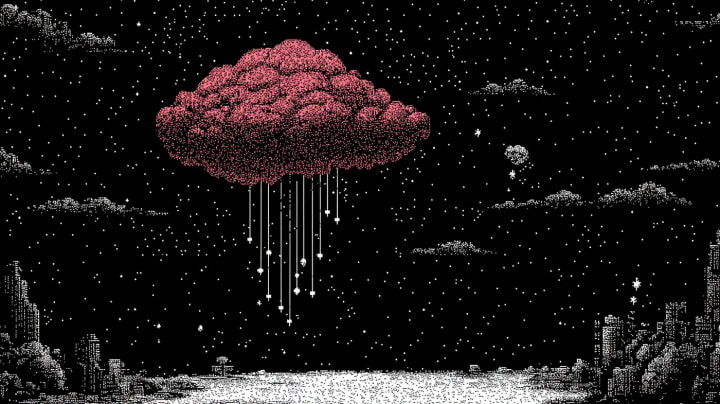
When something like this happens, your brain is forced to stop and recalibrate its model of reality.
This whole system operates on a continuous feedback loop: The brain predicts, senses, compares, and updates — all in a split second.
But here’s the whole point: the brain will always prioritize its predictions over raw data.
It’s more interested in maintaining the internal model it has already built than in being completely objective.
So, your reality is not just a reflection of the world — it’s the result of your brain’s best efforts to guess what’s happening and to fix those guesses when they don’t quite fit.
The Evolutionary Game of Survival
The human brain isn’t conditioned for searching for truth, it’s conditioned for survival.
The beginning of this dates back to a prehistoric period: Our ancestors didn’t need to see the world as it truly was and seek any inconsistencies, why would they do it?; they needed to see what was necessary to avoid danger, find food, and reproduce.
This means that our perception of reality is adapted strictly for survival, not for truth.
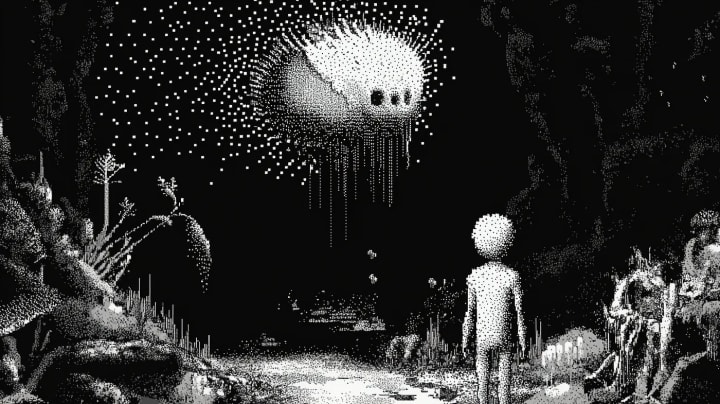
To keep us alive, the brain simplifies the whole overwhelming complexity of the world into small, more manageable pieces.
This huge amount of sensory data comes to the brain and reduces it to what’s most crucial for quick decision-making, at the same time, saving a lot of energy.
Processing every piece of information would be exhausting, so the brain filters it out and focuses only on what’s new or very unexpected.
Mind Tricks and Brain Hacks
Reality created by our brain however is far from being perfect and certain optical illusions show just how easily it can be tricked.
Take the blind spot experiment. There’s a gap in our visual field where the optic nerve connects to the retina, yet we don’t notice it because the brain fills in the missing information.
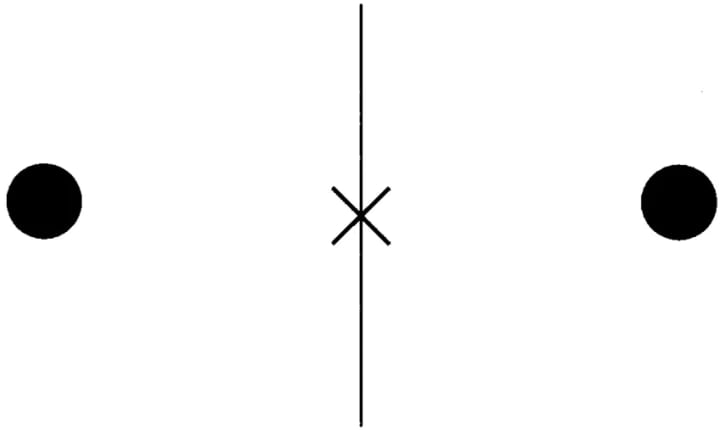
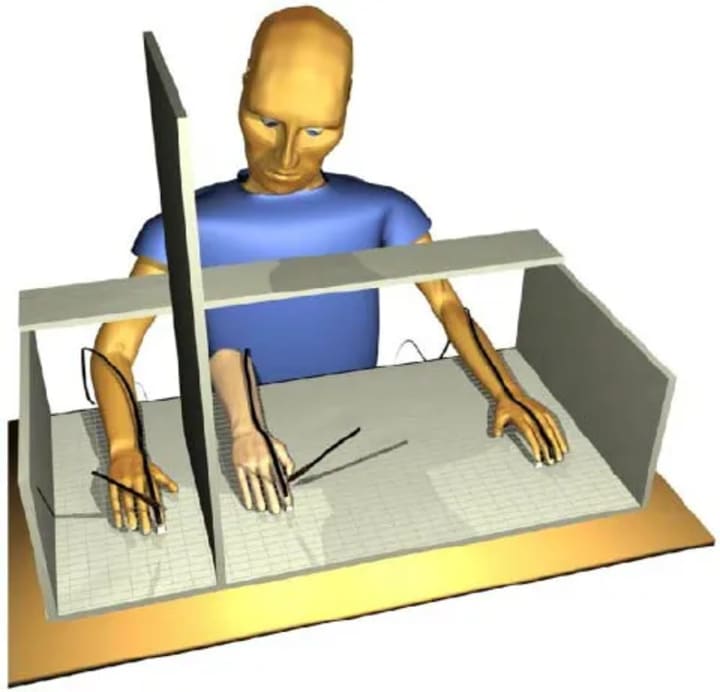
Another glitch in the system is the rubber hand illusion. The brain can be tricked that a fake hand is part of your body simply because it matches the prediction of how your hand looked in the past. The illusion becomes so convincing that if the rubber hand is harmed, you actually feel the pain.
Reality Is a Shared Illusion
Our perception of reality is not only a personal hallucination — we share it with people around us.
We may live in our own mental constructions, but we rely on society and others around us to reinforce what we collectively agree is “real”.
When others agree with us about the existence of things, it gives us a sense of stability and order, but it also limits how we perceive the world.
We don’t question the rules of reality because we assume everyone experiences it in the same way.
But what if this shared reality is simply a larger, collective hallucination?
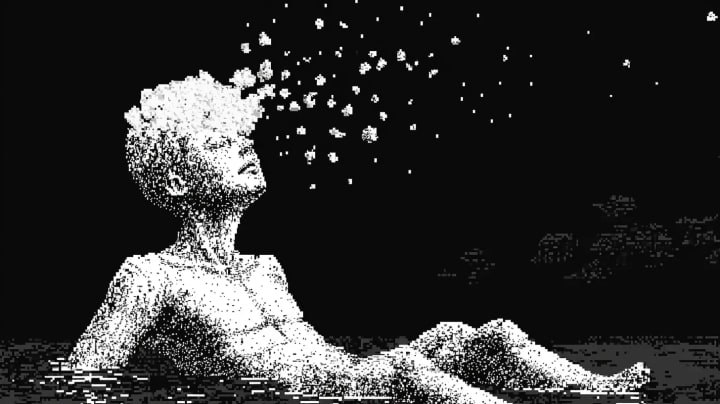
All the cultural norms, beliefs, and societal expectations imposed on us by society are like filters that influence our shared experience of reality making our personal perception not so personal because other people are conditioned to see things in the same way.
We entirely trust what the majority see and agree upon, which makes us stuck in a limited understanding of what is possible and what isn’t.
When you start to break free from this shared illusion, you will realize how different reality can be compared to what it is said to be.
Realize, true freedom begins when you question not only your own perception but also the collective beliefs that define what’s “real” for everyone else.
Free yourself from these imposed beliefs and open the door to seeing the world in an entirely new way — one that isn’t restricted by the limits society places upon our perception.
In the end, if reality is just a mental construction, you have actually more control than you think.
Once you understand how your mind creates the world, you can begin to consciously manipulate it, and create a reality in which everything is perfect because you are the one who influences it.
— — — — — — — — — — — — — — — — — — — — — — — — — — — — — — If you want to take your mind to the next level, my Mental Game Playbook goes live on July 6th.
Preorder now to get a 30% discount: mentalgameplaybook.com
It’s almost game time
Loading…
█▒▒▒▒▒▒▒▒▒
About the Creator
Cipheron
Up Your Game
The Neural Network: China’s Automotive Wiring Harness Revolution in 2026
The automotive industry is often judged by its exterior design or engine horsepower, but in 2026, the real battle for dominance is happening under the chassis. As China solidifies its position as the world’s leading Electric Vehicle (EV) powerhouse, the Automotive Wiring Harness the literal nervous system of the vehicle has undergone a radical transformation. What was once a bundle of simple copper wires has evolved into a high-tech, high-voltage network capable of supporting rapid charging and autonomous driving. Driven by the 15th Five-Year Plan and the "Smart Mobility" mandate, the China automotive wiring harness market is currently valued at over $18.4 Billion in 2026. This "Neural Revolution" is not just about connectivity; it is about the survival of the fittest in an era where vehicles are becoming "computers on wheels."
By Neeraj kumarabout 11 hours ago in Education
A Love Forboding
The chipped stone slope caused unbearable footing. I slid, skirting on my heels. I cast my shield, relinquishing my guard to stay upright. Left with my double-edge and a prayer to the maker, I skated toward my objective. The earthly stubble gave way to solid ground. I found myself restored, a trail of dust in my wake.
By James U. Rizzi3 days ago in Fiction



Comments
There are no comments for this story
Be the first to respond and start the conversation.