
"Realities to consider when opening a bookstore
How to balance emotion and reason?

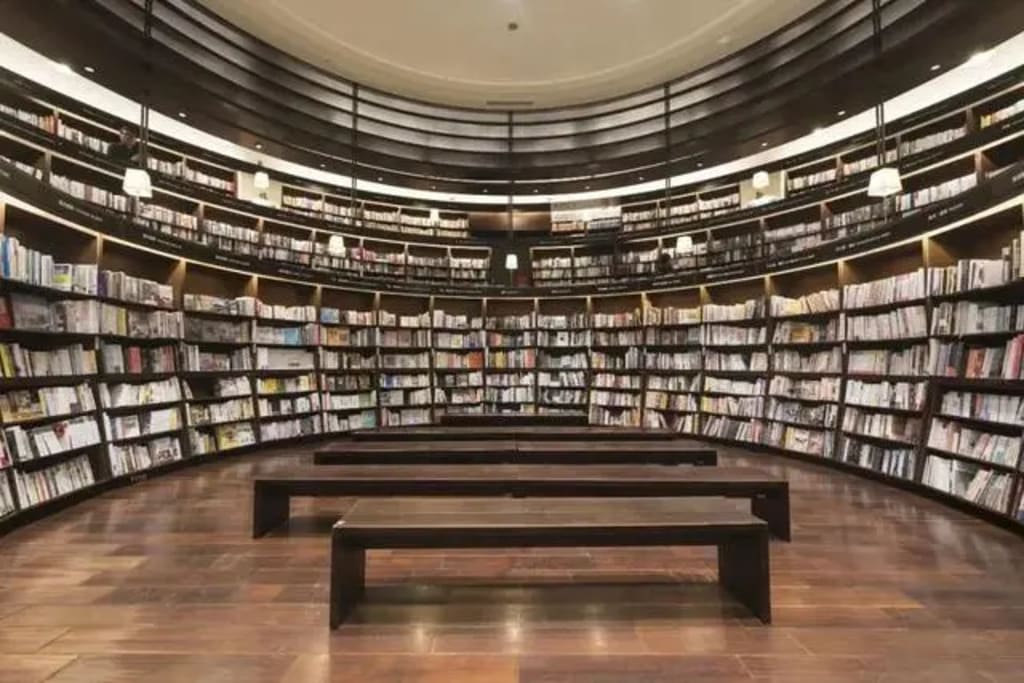
Is it still a good business to open a bookstore today?
Many book lovers have the dream of opening a bookstore. They choose their favorite books, come to a bookstore in a city they love, at the beginning of the sunrise, in the morning light, read books, sip tea, meet with friends who share the same hobby, and return home at the end of the day in the gentle moonlight, realizing their dream and settling down at the same time.
Opening a bookstore is a dream for many people, and it may seem like it has nothing to do with business as if it is purely a cultural endeavor. But the game between ideals and reality, between culture and business, may easily shatter the dream. The effort required to open a bookstore, the pressure it faces compared to the rewards it brings, may disappoint you. But no matter what, there are still many young people who have their hearts set on it and see opening a bookstore as a dream in life.
On our social media platforms, we have received several inquiries from young people on how to open a bookstore, such as how to "open" it, what kind of books to choose, and how to make it a "store". ...... therefore approached Zeng Feng, an observer of the brick-and-mortar bookstore industry and an industry expert with extensive practical experience in the book industry and business, and asked him to talk to us about his views on opening a bookstore with rational and professional analysis, in addition to his emotions. The purpose of this article is not to dissuade or discourage those who plan to open bookstores, but only to provide some new perspectives for readers' reference.
Is opening a bookstore still a good business?
Zeng Feng: Opening a bookstore is a business, but it certainly cannot be called a good business. Based on capital's market acumen and profit-seeking ability, brick-and-mortar bookstores are not the direction they choose. Even if there are some, the focus may not be on the physical bookstore operation itself, but on other aspects, such as social influence, reputation, government support, etc.
In terms of the general environment, it should not be the best time to open a brick-and-mortar bookstore. From the supply side, physical bookstores operate with a single product (books) but many suppliers, including publishing organizations, e-commerce platforms, and bookstores. From the demand side, sales in physical bookstores are not necessarily linked to paper reading behavior, but it is generally believed that paper reading rates are declining year by year, especially after putting aside the factor of the student population. At the same time, the downward pressure of the economy has migrated to individuals leading to a change in their spending power and sort of spending. Whenever an epidemic occurs in a city, the first of the control measures is to close cultural facilities such as museums, libraries, and bookstores, and unsealing is generally the latest.
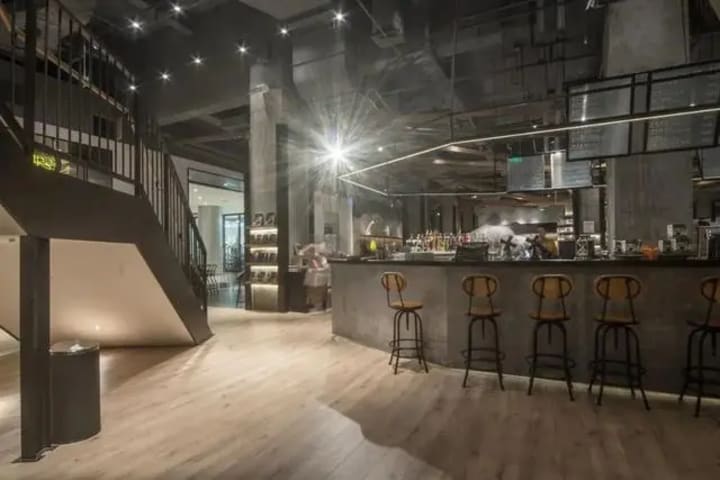
From an investment perspective, brick-and-mortar bookstores do not belong to an industry that can open up as soon as an outsider enters. There have been some industry outsiders who have brought new models and directions to the bookstore industry, but some have succeeded and some have ultimately failed. This success has generally been grafted onto external resources and capabilities, and it is these resources and capabilities that have enabled the bookstores to realize cash to sustain their operations.
What types of independent bookstores have survived well so far?
Zeng Feng: According to the definition of an independent bookstore - unattached, humanistic and persistent - there are few independent bookstores in the true sense of the word. It's not necessarily that the bookstores themselves are not doing well, but rather that the demand side has changed and the bookstores are not adjusting so quickly or easily. It's not that independent bookstores shouldn't have a good market environment, but in the vast majority of cases, bookstores have to accept passively.
Except for state-owned bookstores, the vast majority of bookstores that have managed to survive are student and children-related, and those that have taken the humanities route have generally struggled. Some of the better-known bookstores are commercialized bookstores, with a tendency to broaden the content of their operations, sources of funding, and so on. There is no excuse for these practices for bookstores to survive, and one could even argue that the laws of the market should do the same.
How do you measure the cost of opening a bookstore? How many years can it take to break even and then make money?
Zeng Feng: The opening of a bookstore and the opening of other commercial stores, there is no essential difference in terms of what is invested, the initial capital is mainly invested in several areas: one is the housing category, including rent, decoration (including design, hard and soft furnishings), the vast majority of these are not taken away when the store is closed; the second is the operating category, including props (bookshelves, bookcases, book tables), service facilities (cash registers, reading tables and chairs, etc.), the Electronic equipment (cash registers, monitoring systems, broadcasting systems, etc.), and merchandise (books, other products); third, personnel costs, which many bookstores may not include in the calculation of the investor's costs; and fourth, a certain amount of working capital. After a bookstore starts operations, rent and personnel costs are fixed, and there may be certain losses of merchandise, which have to be paid regardless of whether the bookstore has a turnover or not.
From past industry exchanges, few bookstores talk about how many years they can break even and make a profit, because there is no standard answer to this question, and the criteria for measuring it are not quite the same. The question of how long it takes to make a profit should be thought of differently now that you are opening a store, and that is how long the capital you have prepared can support the operation. If you can't generate cash flow from operating activities, you will end up consuming the reserve funds. The ideal situation is to be able to break even in the first place, and only then consider the rest.
How do you choose a location for a bookstore, is it a mall, street, or community? Where is it better to choose?
Zeng Feng: In the vast majority of cases of failed brick-and-mortar stores, one of the reasons discussed is the failure of site selection. Site selection is the result of qualitative + quantitative analysis, as the most basic work at the beginning of the business, this point needs to grasp its own. My understanding is that the surrounding area needs to have sufficient people with the desire and ability to consume and to achieve consumption conversion through a certain degree of commercial or cultural means of stimulation. If there are a lot of people but no desire or spending power, then it is an ineffective crowd for the bookstore.
Some dimensions are briefly listed for reference.
One is to research where the existing bookstores in the city are open and how these bookstores are operating. Unlike restaurants, bookstores are generally sited in a way that avoids bunching (which is of course unlikely these days). The wholesale book market is stacked with merchants, but this is the nature of the market, not a retail store.
Second, according to their investment budget consider where they can afford to rent housing. There must be a reason for both high and low rents, and the likelihood of picking them up is unlikely, as other types of businesses should have been judged or offered before you. A small bookstore means that the area is not very large and then there is a high dependence on foot traffic. The rent is generally not cheap in locations with high foot traffic.
Thirdly, from the carrier level, shopping malls and communities have a fixed population, which has the advantage of being able to borrow directly from the trend, but if these people do not like the tone and products of the bookstore, then it is declared a death sentence. Street-side stores are subject to the least constraints and are more likely to have direct access to the customer base, which may be relatively better. However, most of the street stores in various cities are of a livelihood nature and are related to daily consumption.
Fourth, it is important to think about which groups of people your bookstore is intended to serve and to choose a location based on where these groups of people congregate in the city. However, there have been some cases of bookstores that show that the young population may no longer be the main consumer group of paper books in brick-and-mortar bookstores.
How to choose the right book category? What logic should be followed in the selection of products?
Others can't advise on the positioning of a bookstore, so you need to make your thinking and judgment.
Opening a bookstore is like opening a restaurant, in the direction of the business to choose Chinese or Western food, formal meals or simple snacks, Chinese food to which cuisine, whether to start the business with breakfast, etc., this is the operator to consider. The restaurant has joined this, providing a certain standardized system, but the bookstore industry has not.
Bookstore selection is methodologically dependent on the preferences and judgments of bookstore buyers (including bookstore owners) and the analysis and screening of big data, but the method differs from logic. The phenomenon that you can often see is that your carefully selected books are displayed on the shelves unasked for. For those who are starting a bookstore, waiting for customers to come to the door is the norm when the target consumer is not too clear. Without a certain amount of sales data to support them, it is difficult for bookstores to develop their production style and improve the accuracy of their selection in the short term.
How do small bookstores stock up? How can I get a low purchase discount?
Small bookstores, which typically choose integrated platforms such as e-commerce, wholesale book markets, or regional ministers for their purchases, may find it difficult to purchase directly from publishing organizations.
The purchase discount is related to the scale of sales and is applicable everywhere. Initial cooperation is usually not accountable, and if the negotiations are good, there may be a certain percentage of book swaps. From this perspective, carefully selected books that do not sell and cannot be returned or exchanged are not much different from a pile of paper, which will take up limited funds.
In the case of individual readers, the channels through which they purchase books and the channels through which bookstores purchase books may overlap. Why should readers buy books from you? This question has been insurmountable for bookstores.
Are there any bookstores that make money from selling books in general? Is it possible to make money by selling books?
Some bookstores make money from selling general books, otherwise, why are there so many bookstores still open? But those bookstores that are relatively well off must have a clientele of students and children.
There is no answer to the question of whether books are the only way to make money, and if there are any, they must be very few. At the same time, there are very few bookstores that only sell books. The point of departure for selling other products in bookstores is certainly not to add additional services, but rather that it is difficult to sustain solely on book sales and other sales items must be added.
If selling books is not profitable, what are the successful diversification models? Which type of diversified business is easy to make money in?
Diversification is a problem that is being studied and practiced by brick-and-mortar bookstores across the country, with different bookstores, different approaches, and different results. The humanities bookstores can extend the diversified model we should have seen, but only the individual bookstores know whether they are successful or not. The cases we have seen so far tend to be those related to the needs of students and children, with more successful operations in all tier cities, selling products other than books, often stationery, toys, groceries, trinkets, and other products that students prefer, or these bookstores may be the main body of private bookstores, just lacking industry visibility.
If there is a certain type of diversified business that can easily make money, then why open a bookstore? For example, bookstore coffee, creative arts, etc. If they can do well, they can open independent stores. Based on Chinese characteristics, the most inseparable thing for consumers is food, but the number of restaurants opening and closing every year is also amazing.
How do small bookstores get private domain traffic? How difficult is it?
Traffic capture is not difficult, at least shedding money is one way, but it is not necessarily suitable for small bookstores as there may not be so much budget.
From experience, the private traffic of independent bookstores is mainly formed by word of mouth through various means, such as activities, products, etc., and slowly fermented through various media. The traffic generated by the value of the bookstore is generally short-term and does not lead to associated consumption, and the case of many online bookstores shows that this is not a shortcut. So, the question is whether your bookstore will survive until the day word of mouth is formed. Some sad stories are that a local bookstore got the highest traffic and sales since it opened when it closed for a sale.
The private domain traffic of brick-and-mortar bookstores can only slowly accumulate, there is no other better way.
Any suggestions on how to make online sales channels for bookstores?
What do online sales depend on? One is the product, two is the price, and three is the audience. If there are exclusive products plus preferential prices and some traffic brought by the platform, there is the possibility of achieving sales. But now, it seems that all publishing organizations are busy with this, just like in Shake Shack, where brands are directly selling their goods. Xinhua bookstores have some unique products, such as textbooks and teaching aids for students, because there is a clear demand and the channel is unique.
My understanding of bookstores doing live streaming or short videos is that they can make a try when the basic store business is stable but not incremental and needs to expand some new sales channels. Let's get the offline stuff straightened out first and then consider the online sales channel.
What is your opinion on the future development trend of small independent bookstores?
I'm not optimistic about the future of small bookstores. The act of reading itself has diversified, and so has the access to books. If you leave your home and office to find a space outside, there are now many options, and a physical bookstore is just one of them, not to mention a small bookstore. In the case of foreign bookstores, it is also the commercial bookstore chains that are more resilient to risk.
In terms of commercial bookstores, there are cases of success and cases of failure, even if, as in the case of Sincere, the exploration of small stores has not been so smooth. It's not that bookstores don't try or lack the ability to do so, but times have changed. Some restaurants such as barbecue and hot pot have added KTV in their private rooms. Don't think this is rustic, but it is based on consumer demand.
Finally, what else would you like to say to those who open bookstores?
Opening a bookstore is not a job that can be standardized, especially in terms of operations, and not every aspect of the business can be run successfully by making the best of it. From a certain point of view, opening a bookstore is a very personal matter, depending on one's preferences, resources, ability, and persistence.
In a recent article, a young man opened a coffee shop in a "coffee city" and after doing a lot of research and preparation, he closed it after losing 400,000 yuan in five months from start to finish. The vast majority of young people who dream of opening a bookstore should be able to learn from this lesson.
If it's a hobby and you can afford to lose a certain amount of money, it's fine to open a small bookstore for fun, and you can even venture into various business models and possibilities. But if it's a career and you're making a living out of it, you need to be careful.
Bookstores are beautiful, but sometimes they just "look".
About the Creator
yunick jovitta
Education is what remains after one has forgotten everything one has learned in school.
Keep reading
More stories from yunick jovitta and writers in Education and other communities.
Who is responsible for this "vacuum" decade?
This point in time has given some people with ulterior motives a breakthrough to "whitewash" - the textbook in question has been used for many years, so how could the problem be found only after nearly a decade? It's not logical.
By yunick jovitta3 years ago in Education
Beyond the Bottle: Meet the Hidden Forces Shaping Modern Wine
In recent years, wine lovers have expanded their curiosity beyond labels and tasting notes. Today, they seek stories, craftsmanship, and authenticity. As a result, the spotlight has slowly shifted toward the people who work tirelessly behind the scenes. While celebrity winemakers and vineyard owners often receive recognition, many other contributors quietly shape every glass we enjoy. These professionals represent the true innovators of the wine industry, and they deserve far more attention than they currently receive.
By Joel Barjenbruch7 days ago in Education
How Human Vision Limits What We See in Space
The Basics of Human Vision To understand the limits, we must first understand how vision works. Light enters the eye through the cornea and pupil, is focused by the lens, and reaches the retina at the back of the eye. The retina contains two types of photoreceptor cells:
By shahkar jalal6 days ago in Education
Review of 'Man on the Run'
My wife and I saw Man on the Run, a nearly 2-hour documentary on Amazon Prime, about Wings, Paul McCartney's group that flew around the world from shortly after The Beatles broke up in early 1970 to shortly after John Lennon was murdered at the end of 1980, making a Beatles reunion forever impossible.
By Paul Levinson4 days ago in Beat




Comments
There are no comments for this story
Be the first to respond and start the conversation.