
PROCRASTINATION AND YOU (THE DANGER SIDE)
Education
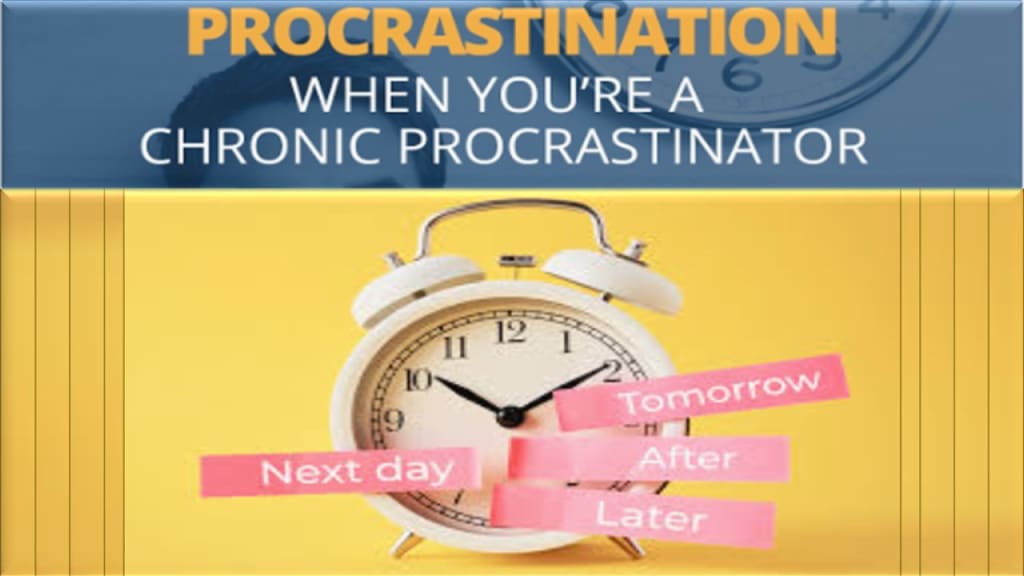
Procrastination
Is a common problem that many people struggle with. It refers to the tendency to delay or postpone tasks that need to be completed, often resulting in stress and anxiety as deadlines approach. While procrastination can affect anyone, it can be especially problematic for individuals who have difficulty with time management or who struggle with motivation.
Procrastination can be a difficult habit to break, but there are several strategies you can use to help you overcome it. Here are some tips:
1. Identify the root cause: Procrastination can be caused by a variety of factors such as fear of failure, lack of motivation, and poor time management. Identify the root cause of your procrastination to better address it.
2. Set realistic goals and deadlines: Break down tasks into smaller, more manageable parts and set realistic deadlines for each part. This can help you avoid feeling overwhelmed and give you a sense of accomplishment as you complete each step.
3. Remove distractions: Identify and remove any distractions that may be hindering your productivity. This may include turning off your phone or computer notifications, closing unnecessary tabs, and finding a quiet space to work.
4. Hold yourself accountable: Share your goals and deadlines with someone else or create a system of rewards and consequences to hold yourself accountable for completing your tasks on time.
5. Practice mindfulness: Take breaks throughout the day to practice mindfulness, such as deep breathing or meditation. This can help reduce stress and increase focus, making it easier to stay on task.
Remember that breaking the habit of procrastination takes time and effort, but with persistence and the right strategies, you can overcome it and achieve your goals.
Procrastination is dangerous because it can have a negative impact on many areas of our lives. Here are a few reasons why:
1. Reduced productivity: When we procrastinate, we delay getting started on important tasks or projects, which can lead to a decrease in productivity and a failure to meet deadlines.
2. Increased stress: Putting off tasks until the last minute can lead to a build-up of stress and anxiety, which can negatively affect our mental health and well-being.
3. Missed opportunities: Procrastination can cause us to miss out on opportunities, such as job opportunities, social events, or personal growth opportunities.
4. Poor quality work: Rushing to complete a task or project at the last minute can result in poor quality work, which can lead to negative consequences such as a loss of credibility or a damaged reputation.
5. Negative impact on relationships: Procrastination can cause us to be unreliable and unresponsive, which can strain our relationships with friends, family, and colleagues.
If you find yourself procrastinating frequently, there are several strategies you can try to help break the cycle. Here are some tips:
1. Break tasks down into smaller steps: Large or complex tasks can feel overwhelming, which can lead to procrastination. Instead, try breaking tasks down into smaller, more manageable steps. This can help you feel more in control and make the task feel less daunting.
2. Set deadlines for yourself: If you don't have a specific deadline for a task, it can be easy to keep putting it off. Try setting a deadline for yourself, even if it's an arbitrary one. This can help you stay motivated and focused.
3. Use a timer: Setting a timer for a specific amount of time can help you stay focused and productive. Try working on a task for 25 minutes, taking a 5-minute break, and then repeating the cycle. This technique is known as the Pomodoro Technique and can be very effective for combating procrastination.
4. Eliminate distractions: If you find yourself getting distracted easily, try eliminating distractions as much as possible. Turn off your phone, close unnecessary tabs on your computer, and try to create a quiet and distraction-free environment.
5. Get support: Sometimes, having someone to hold you accountable can be helpful in staying on track. Consider sharing your goals and progress with a friend or family member who can offer support and encouragement.
REMEMBER
Overall, procrastination can have serious consequences that can affect our personal and professional lives in significant ways. It's important to identify and address any tendencies towards procrastination in order to avoid these negative outcomes.
Breaking the cycle of procrastination takes time and effort. Be patient with yourself and keep trying different strategies until you find what works best for you.
About the Creator
Keep reading
More stories from Olanrewaju IsaacJoseph and writers in Education and other communities.
INFORMING INSPIRING INVOLVING
Education is a critical component of personal and societal growth, and as such, it is essential that it be approached in a way that effectively informs, inspires, and involves learners. Informing, inspiring, and involving are three key principles that should guide the design and implementation of educational programs, strategies, and initiatives.
By Olanrewaju IsaacJoseph3 years ago in Education
Kiranmala: The tale of Princess Who conquered Magic Mountain
Long ago, in a land far away, the queen was panicked, her grasp on reality seemingly slipping. She had given birth to two boys and one girl. But to her horror, before even meeting their father, each child vanished, something else taking their place. She faced accusations of witchcraft and demon sorcery. And though the king loved her, he was easily swayed. He soon grew doubtful and banished his wife, who left the kingdom in anguish. Little did they know, the queen’s jealous sisters were the ones to replace the newborns
By Munesh Yadav3 days ago in Education
Smart phones, Humans and Aliens.
WARNING. I will be tapping into one of your favorite creative tensions: The absurdity of humans worshipping their glowing rectangles as if they were tiny oracles. There’s something deliciously poetic about that contradiction, and it lends itself beautifully to an instructive proviso.
By Novel Allen6 days ago in Poets




Comments
There are no comments for this story
Be the first to respond and start the conversation.