
Prevention is the best intervention
How to take control of your class in 11 sneaky ways


Prevention is the best intervention is a continuation of my first article on 7 levels of a better classroom management. Classroom management depends a lot on the students’ dynamics and the teacher’s personality. I believe that with some prevention its possible to avoid behavioral issues to spiral out of control from the get-go so you can be smooth sailing through your classes.
1.Set the tone: catch their attention
When you prepare a lesson, especially if it’s a new topic, make it catchy from the beginning. You can do so by displaying an interesting image on the screen or have an object to show, there are many ways. The idea is to divert their attention towards that interesting item that you are displaying. We are blessed in science because there are many things you can show to make your lesson interesting. It can even be a question that you want them to answer. As students walk in they will be intrigued and they will want to know what is it that you were trying to show them. You can then proceed with the rest of your lesson and throughout the lesson come back to that interesting catchy item if you see fit.
2.Move the desks around
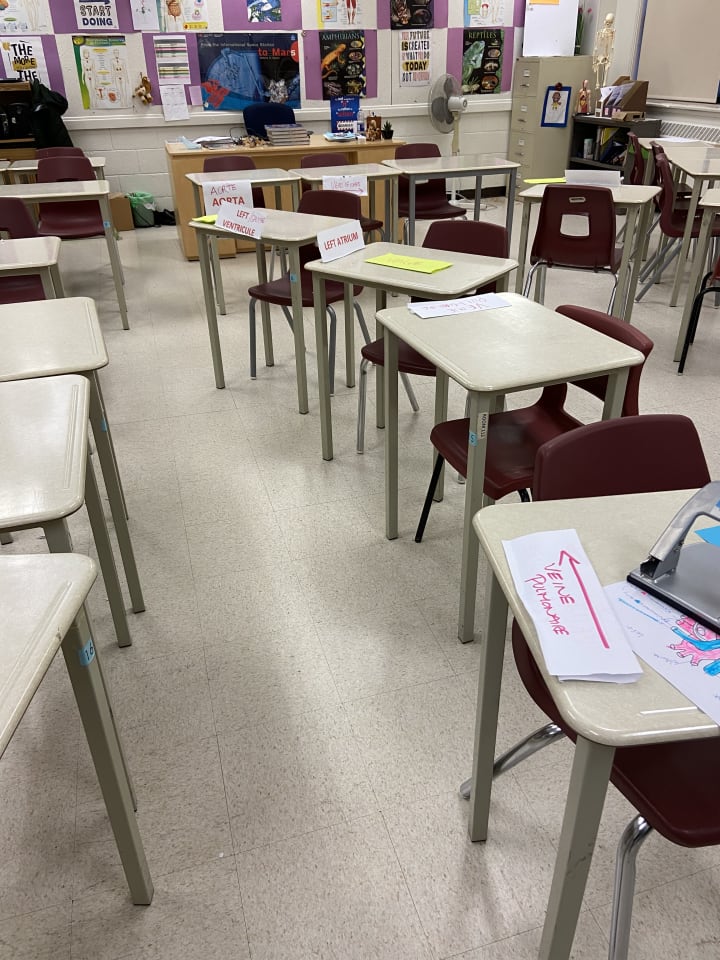
You can even go as far as displacing desks in a different seating arrangement. This catches their attention as well. It is out of the norm. I do this once a while depending on the topic. For example, I moved the desks around to explain the path that the blood takes from the lungs to the heart and body. I had signs up around the walls displaying the various arteries and veins. This intrigued the students and they were looking forward to understanding why were the desks placed that way. Each student then played the role of a red blood cell and they had to follow the path.
3. Have an element of surprise they can look forward to
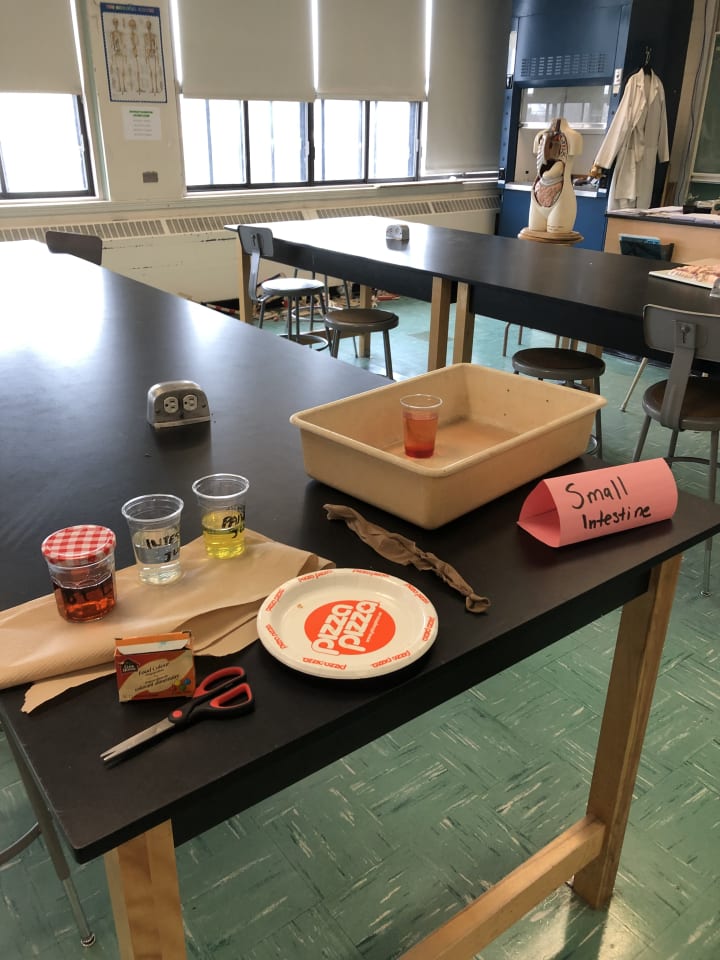
Students, no matter the age, like surprises. If you announce that there is a surprise next class, again they will be interested and engaged the following class. You can even announce that there is a surprise at the end of the period. Choose a surprise that you see fit for your students . It can be a movie, an interesting demonstration, a game, etc. For example, I was teaching the topic on the digestive system. I told the students that we will be making poop! They will remember this one!
4.set the tone: meditation
Mindful meditation is very effective in class as well. The goal is to get their energy level at a level that is conducive for learning and working if they come in after lunch or recess or after an exciting period. Sometimes the excitement is almost tangible. I assure you that if you don’t get your class to be calmer, it will be harder to start your lesson. Thus, taking a minute or two to do mindful meditation is worth it. Besides, you need your sanity too! You can find lots of meditating music on YouTube that also have a nice image to display on the screen. My favorite is the Japanese zen music!
When you are ready to begin teaching, you can slowly put the music down and start talking at a quiet, calm voice. Your intonation is very important. If you are relaxed, then the atmosphere is also relaxed. If you feel agitated, the atmosphere will also be agitated. I sometimes keep the music on while they’re working, and insist that I want to keep listening to the music. So this way they are obligated to be quiet in order to listen to the music. That’s a sneaky way to tell them to be quiet!
You can even use that technique with ambient sound, such as a fan. You can say that you want the noise level to be at a point where you can hear the fan running. If the noise gets too loud, redirect them to the sound of the fan.
5. Know where to have them seated
At the beginning of the year, most teachers place students in alphabetical order until they get to know them. This is fine because it will help you learn their names faster. However I have tried something new this year, and it is quite effective. I gave them the benefit of the doubt and let them sit wherever they want. They didn’t know that I was actually taking notes. Students will automatically sit with their friends. They will sit next to students they know and that they will most definitely chat with during your lesson. This is a sure way to find out quickly where should you then move them the next time you want to make a seating arrangement. When they sit in alphabetical order, it takes longer to find out who are they drawn to. Give it a few weeks and then you can change the seating arrangement for everyone, this way you will not single out any specific students and you will be on the fair side.
6. Keep them busy
Sometimes students that lash out are simply bored because either the work is too easy, or too difficult. The key is to make sure that your lesson has a plan for them to do work to keep them busy long enough. Ensure a reasonable amount of work.
Depending on your students, you may want them to read something at the beginning of class for 5 to 10 minutes if your time permits. For the rowdier groups this is a good way to get them to quiet down and settle into a learning energy. This gives you time to set up your lesson, take attendance, check homework, distribute papers etc.
You have to make sure that you demand everyone to be silent when they’re reading. And that you will not proceed with the lesson until everyone’s quiet and reading. I sometimes even put quiet music in the background. This really sets the tone.
This is important also when you’re transitioning between activities. Keep them busy while you are transitioning. Students take any opportunity to start talking if the teacher is busy transitioning and they have nothing to do.
7. Build a relationship
As cliché as this may sound, love is the way to go! You must invest in a relationship with them. Take the time throughout the first few months to ask questions about themselves. I like to start the year with a questionnaire about their lives. For example you can ask them about hobbies and pets. You can do the same and share some of your not-so-personnal interests. Slowly invest in getting to know them. Greet them at the door and in the hallways. Ask them about that hockey game. Ask them about the exam they had recently in math. Give them a compliment about their new hairdo! All these little things make a difference. It shows that you are interested in them and that you are invested in their well-being. If you can, give them a prize once a while. Praise them when they have done something good, even the students that crawl under your skin, make an effort to find out more about them. Try not to show them that they crawl under your skin, students feel everything. It’s very much like dating! The same rules apply, well most of them!
8. Keep the keener students close and the difficult ones closer
There is always a ringleader in your classroom, one that students follow, let’s name him Johnny. The Johnnys of the class are noticeable from the first week of school. If you get them working, then their friends will also be working, but the opposite is true to. This is the kind of student you want to keep a close eye on. Getting close to Johnny can prevent lots of discipline issues with him and his friends. The ringleader usually tries to catch your attention because he’s missing something. Take your time to get to know him as well. Don’t get intimidated by his presence in class. You are the boss after all. Redirect his energy to something useful.
If you want that type of student to be wrapped around your finger, make him feel needed and appreciated. For example he can be in charge of the computer. He can be in charge of distributing papers or taking attendance, whatever administrative task you can have him do. Choosing that particular student will sneakily get him active and focus in class because, again, he will be busy with the task that you have given him. He will feel appreciated because out of all students, you chose him to complete these tasks. The keener students will always be attentive and participate, you don’t have to worry too much about them. It’s those less motivated students that you need. Trust me on this, it works wonders. Johnny may be difficult in other classes, but in your class he might be working smoothly without problems, because he is intrinsically motivated.
9. Have a plan a and b
What we plan in class sometimes changes direction. Maybe you underestimated the time an assignment would take. Maybe you underestimated the students interest and engagement. Whatever it is, follow your intuition. Be ready to change your plan. Keep in mind that what works with some students doesn’t always work with another group of students. So having a plan B at the back of your mind is highly recommended.
10. Humor them
A little bit of laughter in class actually goes a long way. It’s OK to use puns or jokes related to your topic, or not! They lighten the air in the class. Students will feel that you are human too and that you can laugh as well with them. They will feel that you are approachable.
11. Get them involved
If you are planning a demonstration or some other explanation, get them involved! Again students feel appreciated when they are part of the process and not just on the outside of the receiving end. They will feel implicated and accepted.
These suggestions are sneaky because the students don’t know that you are actually preventing problems from happening in class. They will behave on their own. All you had to do was to give them opportunities to do so.
With all these suggestions in mind, you can reach a comfortable classroom environment that you and the students will enjoy. The underlying key element behind all the suggestions is motivation. (I will discuss motivation in my next article. Stay tuned!) In an ideal world, you want students to to be intrinsically motivated. Bottom line, YOU play a key role in this motivation, either from your relationship with the students and/or the quality of the lesson you prepare.
Best of luck!
About the Creator
Magy Dimitry
I have been teaching science in highschool for 23 years and have a passion in education and performing arts. I have a lot of knowledge to share about methods of teaching science and pedagogy in general.I believe that teaching can be an art!
Keep reading
More stories from Magy Dimitry and writers in Education and other communities.
7 levels to a better classroom management
Classroom management, where do I begin? It is quite the complex feat and is an ongoing and underlying challenge for all teachers new and veteran. Although it does get better with time as teachers figure out their style. It is challenging because every year we are faced with new students and methods that were used previously may need to be modified every year. I personally prefer the preventative way which I will discuss in another article. Below are a few tips that I suggest to teachers who are at a loss or are just beginning and need some guidance.
By Magy Dimitry4 years ago in Education
Expert Banking Digital Signage Energizes Customers
I'll never forget walking into my local branch last Tuesday morning, dreading the usual 20-minute wait just to deposit a check. Instead, I was greeted by a vibrant digital display showing my wait time (3 minutes!), current mortgage rates, and a helpful video about mobile banking features I didn't even know existed. That visit took seven minutes total, and I left with a new savings account. That's the power of banking digital signage done right.
By Jerry Kane 5 days ago in Education


Comments
There are no comments for this story
Be the first to respond and start the conversation.