
Preschool Play Reimagined: VR Adventures That Inspire and Educate
How Virtual Reality Enhances Early Learning, Boosts Engagement, and Sparks Creativity in Preschoolers
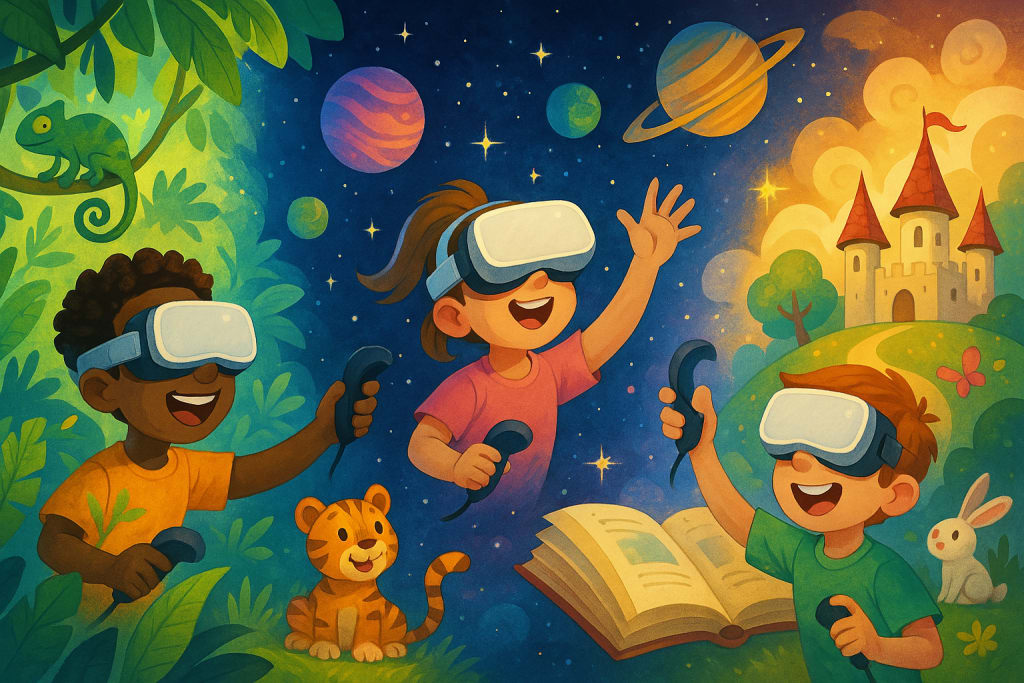
Imagine a classroom where young children embark on exciting adventures without ever leaving their learning space. Picture preschoolers exploring virtual jungles, diving into the depths of the ocean, or even journeying through space all within the safe and engaging environment of their classroom. This is the promise of Virtual Reality (VR) in early education. As technology continues to evolve, VR is emerging as a powerful tool to spark curiosity, enhance learning, and transform the way our youngest minds engage with the world.
The Power of Immersive Learning
Traditional teaching methods often rely on static visuals, textbooks, and rote memorization, which can sometimes struggle to hold the attention of preschoolers. In contrast, VR offers a multisensory learning experience that brings abstract concepts to life. When children wear a VR headset, they are transported into a three-dimensional world where learning becomes an adventure. This immersive experience is not only fun but also deeply impactful, as it encourages children to explore, interact, and make connections with the content.
Research from the Journal of Educational Psychology shows that immersive learning environments significantly enhance memory retention and cognitive development in young children. VR engages sight, sound, and even touch when combined with interactive elements, creating a rich learning environment that stimulates neural pathways and fosters better comprehension.
Why VR is Perfect for Preschoolers
Preschoolers are naturally curious and learn best through play and exploration. VR aligns perfectly with these developmental needs by providing a safe and controlled environment where children can experiment, discover, and learn at their own pace. Here are several reasons why VR is particularly well-suited for early education:
Enhanced Engagement: VR captivates young learners with vibrant visuals and interactive elements. Instead of passively listening to a teacher, children become active participants in their learning journey.
Safe Exploration: In a VR environment, children can safely explore scenarios that would be impossible or impractical in the real world like visiting a prehistoric world or exploring outer space.
Personalized Learning: VR programs can adapt to different learning styles. Whether a child is a visual learner, an auditory learner, or thrives on interactive play, VR experiences can be tailored to meet those individual needs.
Boosting Creativity: By immersing children in fantastical worlds, VR stimulates creative thinking and problem-solving. Children are encouraged to ask questions, make predictions, and explore new ideas without fear of failure.
Bringing a Variety of Subjects to Life
One of the most exciting aspects of VR in early education is its versatility. Whether it’s language, mathematics, science, or cultural studies, VR can transform any subject into an engaging experience.
Language and Storytelling
Learning a language at a young age is about more than just vocabulary; it’s about engaging with stories and ideas. VR can turn reading into an immersive experience where animated characters leap off the page and interact with the child. Imagine a virtual storybook where every word and illustration comes to life this not only boosts literacy skills but also ignites a lifelong love for reading and storytelling.
Mathematics Through Play
Mathematics is often seen as abstract and challenging, but VR has the power to demystify numbers and shapes. In a VR environment, preschoolers can interact with floating numbers, move shapes around, and solve puzzles in a three-dimensional space. By converting numbers and mathematical concepts into playful, tangible elements, children can build a strong foundational understanding of math in a way that feels natural and enjoyable.
Science and Nature Exploration
VR makes it possible for children to experience the wonders of the natural world firsthand. Virtual field trips can transport them to rainforests, oceans, or even outer space, allowing them to observe ecosystems, weather patterns, and astronomical phenomena up close. Such experiences foster a deeper understanding of science and nurture a sense of wonder about the world around them.
Cultural Awareness and Social Skills
In our increasingly interconnected world, understanding diverse cultures and traditions is essential. VR can offer immersive experiences that introduce preschoolers to different parts of the world, showcasing various customs, festivals, and lifestyles. These virtual journeys help children develop empathy, broaden their perspectives, and build early social skills by experiencing scenarios like virtual markets or collaborative games that emphasize teamwork and communication.
Real-World Applications and Success Stories
Innovative platforms are already harnessing the power of VR to make early education more dynamic and interactive. fotonVR is one such platform, offering age-appropriate content that supports a wide range of subjects while ensuring accessibility and safety for young learners. Learn more about AR for Preschool.
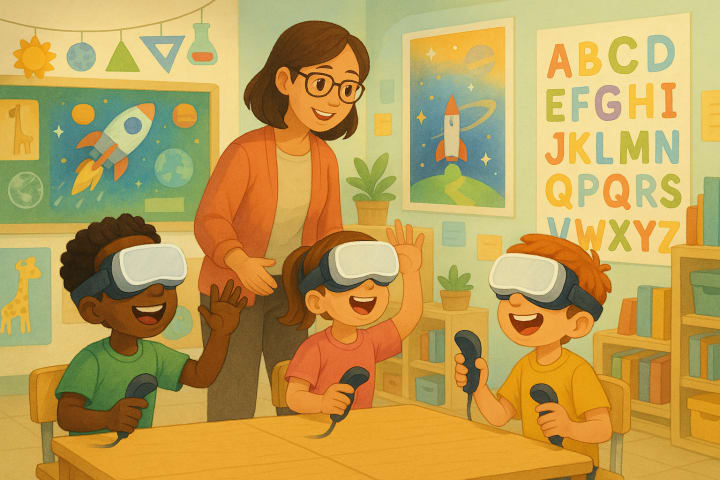
One common VR session for preschoolers might involve a child wearing a lightweight, ergonomically designed headset and being transported to a digital world filled with interactive educational games. In one scenario, the child might be visiting a virtual zoo, where animated animals interact with the environment, providing both factual information and playful engagement. In another, they might float among the stars, learning about the planets in a way that textbooks simply cannot replicate.
Addressing Safety and Accessibility Concerns
As with any new technology, it’s important to address concerns around safety and screen time. Modern VR systems for preschoolers are built with a focus on comfort and safety:
Child-Friendly Interfaces: VR applications designed for young children feature intuitive interfaces that are easy to navigate, ensuring that children can use them independently or with minimal guidance.
Parental and Educator Controls: Most VR platforms include robust monitoring tools that allow adults to oversee a child’s experience, ensuring that the content remains appropriate and beneficial.
Balanced Screen Time: Experts recommend that VR sessions be kept short and integrated with other types of play and learning. This balanced approach helps prevent issues related to excessive screen time while still leveraging the educational benefits of VR.
Ergonomic Design: The latest VR headsets are designed with the comfort of young users in mind, minimizing risks such as motion sickness through optimized frame rates and visual settings.
Looking to the Future: The Evolution of VR in Education
The potential for VR in early education is just beginning to be realized. As technology advances, we can expect even more innovative applications that further personalize and enhance the learning experience. Future VR platforms may include adaptive learning systems that adjust in real-time to a child’s progress, offering tailored challenges and feedback that promote continuous growth.
Additionally, as VR technology becomes more affordable, its integration into preschools around the world will likely increase, making high-quality immersive learning experiences accessible to a broader range of children. Collaborative efforts between educators, technologists, and policymakers will be crucial in ensuring that VR tools are not only cutting-edge but also equitable and widely available.
Conclusion
Virtual Reality is transforming the landscape of preschool education by turning learning into an interactive, immersive adventure. It bridges the gap between abstract concepts and tangible experiences, making subjects like language, mathematics, science, and cultural studies come alive in vivid detail. With its ability to engage multiple senses and adapt to individual learning styles, VR is not just a technological novelty it’s a revolutionary educational tool that nurtures creativity, critical thinking, and lifelong curiosity.
Embracing VR in early education is not only about enhancing academic performance; it’s about inspiring the next generation to dream big, explore boldly, and embrace the limitless possibilities of the digital world. The journey of learning has never been this engaging or transformative.
About the Creator
Ravi Patel
Virtual Reality in Education
Keep reading
More stories from Ravi Patel and writers in Education and other communities.
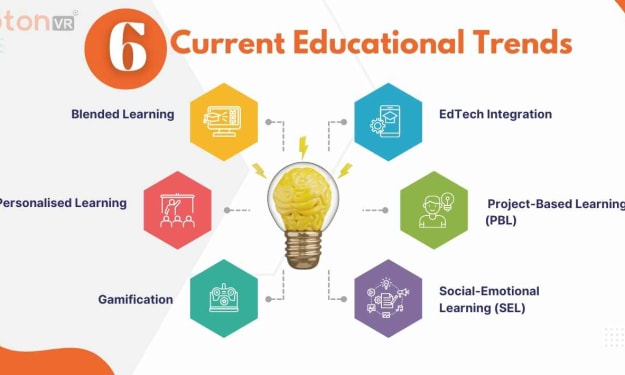
Current Educational Trends
In the rapidly changing landscape of education, technology innovations play considerable role in transforming the way we learn and understand various subjects. Some of revolutionary changes that have taken place recently are using Virtual Reality(VR) and Augmented reality (AR), in educational field. fotonVR provides such learning solutions with cutting edge VR and AR technology that take you through the immersive models making it interactive.
By Ravi Patelabout a year ago in Education
Smart Ways to Prevent AI From Taking Your Job
Artificial intelligence is changing the workplace faster than almost any technology before it. From automated customer service to AI-generated reports, images, and code, it’s natural to wonder: Will AI take my job?
By Anthony Bahamonde6 days ago in Education



Comments
There are no comments for this story
Be the first to respond and start the conversation.