
Precious Crafts of thatching and violinmaking are under threat
Old Tradition at Risk: Fight to save Thatching and violin making in the UK

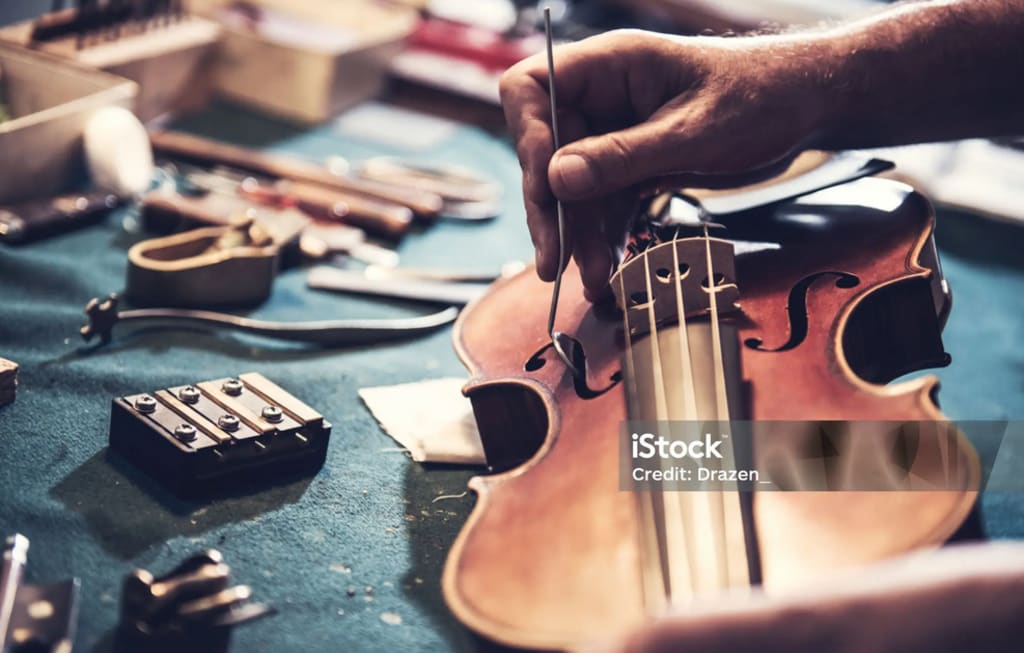
Old Traditions at Risk: The Fight to Save Thatching and Violin-Making in the UK
In many parts of the United Kingdom, the charm of traditional crafts has long been a part of the landscape and culture. From the curved roofs of cottages to the smooth, rich sound of a hand-made violin, these crafts tell stories of generations past. But today, two important traditions—**thatching** and **violin-making**—are facing serious threats.
These are not just hobbies or old-time skills. They are parts of British history, and their survival is tied closely to the people who care for them, the schools that teach them, and the places that still value them. Sadly, both crafts have recently suffered setbacks that could affect their future.
### **What Is Thatching and Why It Matters**
Thatching is the craft of building roofs using natural materials like straw, reeds, or heather. If you’ve ever walked through a village and seen a cozy cottage with a soft, rounded roof, you were likely looking at a thatched roof. These roofs are not just beautiful—they are also practical and have been used in Britain for centuries.
Recently, an article suggested that Welsh thatching is becoming more like English thatching, with some concern about the loss of unique regional styles. But Graham Cook, an expert in thatching from Somerset, says that this idea is not quite right. In fact, he says, there’s no such thing as purely “Welsh” or “English” thatching. According to him, thatching styles have always crossed borders and blended over time.
For example, the sharp, angular style of thatching seen in northern Wales is also common in places like Lancashire and Cheshire. On the other hand, the more rounded style found in southern Wales looks very similar to that in Somerset, Devon, and Cornwall. This crossover of styles has been happening for at least 200 years.
### **No Borders for Traditional Crafts**
Graham Cook points out something very important: traditional crafts like thatching don’t follow political lines. The way a roof is built depends more on the local weather and the materials available than on which side of the border you live. Early movement of people may have also helped spread techniques from one region to another.
One example is the “rolled gable,” a style of roof end that is still seen from Northamptonshire all the way to Dumfries in Scotland. Another is the decorative rope-like ridging seen in Wales, which also used to appear in Ireland. Straw ropes used in Wales can also be found in Irish thatched roofs.
Through his research for his website, *thatchinginfo.com*, Cook has discovered that what really shapes a region’s thatching style is nature—what materials grow nearby, how the wind and rain fall, and what people in the past found to be the most durable. These local needs shaped each version of the craft.
Sadly, thatching is now at risk. Fewer people are learning the craft, and many old buildings are being replaced or repaired with modern materials. As time passes, we may lose not just the roofs, but the stories and history they carry.
### **The Struggle of Violin-Making in the UK**
While thatching is fading quietly, another beautiful craft is also in danger—violin-making. Making violins, violas, and cellos by hand takes years of learning and a deep passion for detail. Britain has been home to some of the world’s most respected violin makers. But two recent events have shaken the foundation of this art.
The first is the passing of **Charles Beare**, a world-famous violin expert and restorer. For many years, Beare was a trusted name among musicians and instrument collectors. He knew everything there was to know about string instruments and supported young violin makers throughout his life. His death leaves a big gap in the community, especially in London, which was a global center for violin-making thanks to people like him.
The second major blow is the **closure of the violin-making degree at the Newark School of Violin Making**. This school, located in Nottinghamshire, has trained violin makers for over 50 years. Students from all over the world came here to learn how to craft and restore string instruments.
Sadly, the course won’t be offered this year due to a lack of new applicants. This is a major concern. Without schools like Newark, fewer people will learn the skills needed to keep this tradition alive. Over time, this could lead to the loss of the craft in the UK altogether.
### **Why This Matters More Than Ever**
Both thatching and violin-making are not just about creating things. They are about **keeping culture alive**. When these crafts disappear, we lose more than techniques—we lose part of our identity.
Crafts like these also offer something special in today’s fast-moving world. They remind us of the value of taking time, working with our hands, and passing skills from one generation to the next. In a world full of machines and digital tools, these traditional arts still rely on human touch, patience, and care.
### **What Can Be Done?**
There is still hope—but action is needed. More support for training programs, funding for craft schools, and public interest in heritage skills can make a big difference.
* **Awareness** is the first step. Articles like these help people learn about the issue.
* **Education** is key. Schools and workshops need students to keep going.
* **Community support** matters. Choosing to repair a roof with thatch or buy a hand-made instrument helps these crafts survive.
We can also encourage young people to consider these paths as careers. Not everyone needs to work behind a desk. There is real beauty and pride in working with your hands and keeping history alive.
### **Final Thoughts**
The future of British crafts like thatching and violin-making may look uncertain today. But with care, effort, and attention, they don’t have to fade away. These traditions have lasted for hundreds of years. Let’s not be the generation that lets them disappear.
Whether it’s a cozy thatched cottage or the beautiful sound of a hand-made violin, these crafts connect us to something deeper—our history, our land, and the creative spirit of the people who came before us.
Disclaimer:
This content has been generated by an artificial intelligence language model. While we strive for accuracy and quality, please note that the information provided may not be entirely error-free or up-to-date. We recommend independently verifying the content and consulting with professionals for specific advice or information. We do not assume any responsibility or liability for the use or interpretation of this content.
About the Creator
Strategy Before Software: Why Content Strategy Matters More Than Platform Technology
A strong content strategy matters more than platform technology because strategy shapes every choice a team makes. It guides tone, purpose, structure, and audience focus. Technology can help with speed and reach, but it cannot replace direction. A tool only works well when someone uses it with a clear plan. Without a strategy, even the best systems fail to connect with real people.
By James Kaminsky3 days ago in Education
"Beware the Ides of March"
Superstitious people may believe some days are unlucky. For instance, some think Friday the 13th is an unlucky day. Another day some people consider unlucky is March 15 because the English playwright William Shakespeare said in his famous play, Julius Caesar:
By Margaret Minnicksabout 5 hours ago in Education


Comments
There are no comments for this story
Be the first to respond and start the conversation.