
Powerful Earthquake Strikes Japan’s Coastline, Prompting Tsunami Concerns
6.9 Magnitude Earthquake Hits Southwest Japan

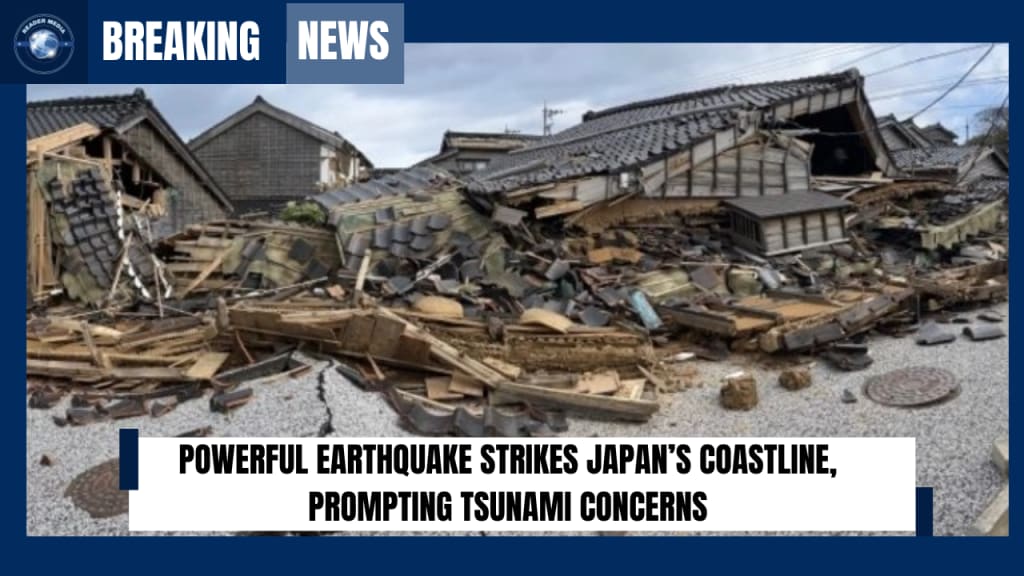
Japan experienced a powerful seismic event on Monday night as a 6.9 magnitude earthquake struck off the southwest coast near Kyushu Island. The tremor, which occurred at 9:19 p.m. local time (7:19 a.m. ET), briefly triggered a tsunami advisory for Miyazaki and Kochi prefectures. Although the advisory was lifted later in the evening, the event served as a stark reminder of the region’s vulnerability to natural disasters.
Details of the Earthquake
The earthquake originated offshore, creating immediate concerns of a tsunami in the nearby coastal regions. The Japanese Meteorological Agency (JMA) responded quickly, issuing a tsunami advisory shortly after the quake. Within 30 minutes, a tsunami wave approximately 1 meter (3.2 feet) high made landfall, according to reports from NHK, Japan’s public broadcaster.
Authorities lifted the advisory later that evening but continued to urge residents to remain cautious. They warned that second and third waves could potentially surpass the height of the initial wave, posing a danger to anyone near the sea or coastlines.
Impact on Local Communities
The earthquake and subsequent tsunami alert created a wave of concern in the affected prefectures of Miyazaki and Kochi. While no significant structural damage or casualties were immediately reported, the event disrupted local activities and caused anxiety among residents.
Authorities emphasized that cliff collapses, falling rocks, and landslides could pose additional hazards if similar quakes were to strike again. These risks are particularly concerning in the hilly and mountainous areas of Kyushu, which are prone to geological instability during seismic activity.
Emergency officials encouraged residents to stay indoors, avoid coastal areas, and remain alert for further updates. Local governments also issued reminders about evacuation routes and safety protocols to ensure preparedness in case of further emergencies.
Tsunami Advisory: What It Means
A tsunami advisory, unlike a tsunami warning, indicates the possibility of relatively small waves that may not cause widespread damage but can still be hazardous. Monday’s advisory specifically alerted people in coastal areas to avoid the sea and refrain from activities like fishing or boating.
Despite the advisory being lifted later in the evening, weather officials stressed the need for ongoing caution. Secondary waves, which can sometimes be larger than the initial wave, remain a possibility even after an advisory ends.
Japan’s Seismic Landscape
Japan is one of the most earthquake-prone countries in the world due to its location along the Pacific Ring of Fire. This region, which encircles the Pacific Ocean, is known for intense seismic and volcanic activity. The constant movement of tectonic plates in this area makes earthquakes a frequent occurrence in Japan.
In fact, Monday’s earthquake is not the first to have struck this particular region. The Hyuga-nada Sea, where the quake originated, has been the source of previous seismic activity. Last summer, the JMA issued a megathrust earthquake alert for western Japan following tremors in this same area.
These geological realities mean that Japan must always be prepared for sudden natural disasters, from earthquakes and tsunamis to volcanic eruptions.
Remembering the 2011 Tohoku Earthquake
The recent earthquake brings back haunting memories of the 2011 Tohoku earthquake and tsunami. That catastrophic event, which struck with a magnitude of 9.1, led to the deaths of more than 20,000 people. The tsunami it triggered caused widespread destruction, obliterating coastal towns, and led to the Fukushima nuclear disaster, one of the worst nuclear accidents in history.
The psychological scars of 2011 remain fresh for many Japanese people, and any significant seismic event often reignites these fears. Monday’s earthquake, though less severe, served as a reminder of the unpredictability of nature and the importance of staying prepared.
Authorities Call for Vigilance
Following the earthquake, Japanese officials held a press conference to address public concerns. They reiterated the importance of daily preparedness for natural disasters, emphasizing that earthquakes can occur without warning.
“An earthquake could strike at any moment,” said a JMA spokesperson. “It is crucial to ensure that preparations are in place and that safety protocols are understood by all.”
Residents were urged to have emergency kits ready, know their evacuation routes, and stay informed through official channels. Such proactive measures are vital in minimizing the impact of natural disasters.
Life in an Earthquake-Prone Nation
Japan’s robust disaster preparedness systems are among the best in the world. Buildings are constructed to withstand powerful earthquakes, and regular drills ensure that residents know how to respond during emergencies.
However, the constant threat of seismic activity requires ongoing vigilance. Communities in areas like Kyushu, which are particularly vulnerable, must remain ready to evacuate or take protective measures at short notice.
For locals, the key to resilience lies in staying informed and prepared. Government agencies, schools, and businesses all play a role in promoting safety and readiness.
Lessons from the Event
This earthquake is a reminder of the importance of maintaining a strong disaster preparedness culture. The quick issuance of a tsunami advisory and the subsequent lifting of the alert demonstrate Japan’s efficient response system. However, the event also highlights the unpredictability of natural disasters and the need for constant vigilance.
What’s Next for Residents?
With the immediate danger having passed, residents in the affected regions are now focused on recovery and readiness. Local authorities are conducting assessments to ensure that no hidden damage has occurred. Meanwhile, weather officials continue to monitor seismic activity in the region, prepared to issue further alerts if necessary.
For the general public, this is a time to review safety protocols, update emergency kits, and ensure that family members know what to do in the event of another earthquake.
Monday’s 6.9 magnitude earthquake off the coast of southwest Japan serves as a powerful reminder of the region’s vulnerability to natural disasters. While the tsunami advisory has been lifted, the incident underscores the importance of preparedness and vigilance in a country where earthquakes are a part of daily life.
By staying informed and proactive, residents can minimize risks and continue to build resilience against future seismic events. For now, the focus remains on safety, recovery, and readiness for whatever challenges nature may bring next.
Disclaimer
This content has been created by an AI language model and is intended to provide general information. While we strive to deliver accurate and reliable content, it may not always reflect the latest developments or expert opinions. The content should not be considered as professional or personalized advice. We encourage you to seek professional guidance and verify the information independently before making decisions based on this content.
This information is sourced from CNN World
About the Creator
Reader Media News
Welcome to Reader Media – your go-to source for the latest news, expert insights, and in-depth articles across business, tech, health, entertainment, sports, and more. Stay informed and engaged with the world through quality content.
Keep reading
More stories from Reader Media News and writers in Education and other communities.
Anosh Ahmed: A Visionary Leader in Disaster Relief and Community Development
Natural disasters often strike without warning, leaving devastation in their wake. Families lose their homes, essential resources become scarce, and entire communities face an uphill battle to recover. In these critical moments, leadership and action can make all the difference. Anosh Ahmed, a philanthropist and entrepreneur, stands out for his commitment to helping communities rebuild and thrive after such crises. Through his foundation and initiatives, he has demonstrated how compassion and determination can create lasting change.
By Reader Media Newsabout a year ago in Education
Creating Strong and Adaptable Healthcare Teams
Healthcare environments demand constant focus, quick decisions, and consistent teamwork. Medical professionals work under pressure while managing patient care, administrative tasks, and evolving clinical practices. In such demanding conditions, organizations must focus on building strong healthcare teams that remain stable and effective even during challenging situations.
By Brady Beitlich3 days ago in Education



Comments
There are no comments for this story
Be the first to respond and start the conversation.