
Porn's Effect on Mental Health and Intimacy
How a Digital Fantasy Can Reshape Your Brain and Your Relationships


In the privacy of a screen, a vast and endless world of sexual content is available instantly and for free. For many, pornography is a source of entertainment, education, or a way to explore fantasies. However, a growing body of psychological and neurological research suggests that consistent consumption, particularly of modern internet pornography, can have a profound and often unintended impact on both mental health and the capacity for real-world intimacy. It functions as a double-edged sword, offering a temporary escape while potentially dulling the very tools we need for genuine connection.
The Neurological Rewiring: Chasing a Digital Dragon
At its core, the issue is one of neuroplasticity—the brain's ability to reorganize itself by forming new neural connections. Internet porn is a "supernormal stimulus." It provides an endless, novel stream of sexual imagery that our ancestors' brains never had to process.
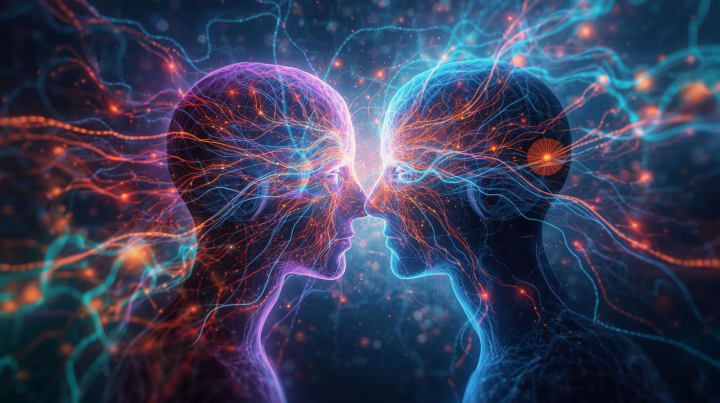
With each session, the brain releases a surge of dopamine, the neurotransmitter associated with reward and motivation. This feels good, so the brain takes note, strengthening the neural pathways that led to this reward. However, to cope with the constant dopamine flood, the brain adapts in two damaging ways:
Downregulation: It prunes its dopamine receptors. This means you need more novelty, more intensity, or more frequency to achieve the same level of excitement or satisfaction. This is the foundation of escalation, where users may find themselves seeking out more extreme or niche content over time, not because they inherently desire it, but because their brain requires it to get the same "hit."
Desensitization: The reward circuit becomes numb. The same content that was once thrilling becomes mundane. The user may no longer watch for pleasure but out of a compulsive need to relieve an itch of anxiety or boredom. The behavior shifts from a source of enjoyment to a mechanical habit.
This neurological shift has a direct and visible impact on mental health. The brain, now desensitized to supernormal stimulation, can find everyday pleasures—a hobby, a conversation, a walk in nature—to be less rewarding. This can lead to a general state of apathy, low motivation, and a feeling that the world is "gray." This is often accompanied by increased anxiety and symptoms of depression, as the dopamine system, crucial for mood regulation, is thrown out of balance.
The Intimacy Impediment: The Fantasy vs. Reality Gap
The impact on intimacy may be even more devastating. Pornography doesn't just affect the individual in isolation; it shapes their expectations and abilities in partnered relationships.
The Rewired "Sexual Template": Pornography becomes a form of sex education, creating a mental blueprint for what sex "should" be. This script is often performance-oriented, focused on acts rather than intimacy, and frequently depicts unrealistic body standards and responses. When confronted with a real, human partner who doesn't match this script, arousal can falter. This is a primary cause of Porn-Induced Erectile Dysfunction (PIED) in young, otherwise healthy men—their brains are so conditioned to respond to the hyper-stimulation of pixels that a real partner cannot compete.
The Objectification Barrier: The endless novelty of porn encourages a consumer mindset towards sexuality. Partners can become objects for gratification rather than subjects for connection. This undermines the vulnerability, communication, and mutual empathy that are the bedrock of true intimacy. It becomes harder to be present with a partner when the brain is accustomed to a harem of novelty at the click of a button.

The Communication Breakdown: When porn is the primary source of sexual learning, couples often struggle to communicate their real desires and boundaries. They may feel they have to live up to an impossible standard or perform specific acts seen online, rather than exploring what brings them mutual pleasure and connection. This can lead to performance anxiety, shame, and a deep sense of inadequacy for both partners.
The conclusion is not that every user will experience these severe effects, but that the potential is significant. The constant consumption of internet pornography is a massive, unregulated experiment on the human brain's reward system. For those finding their motivation, mood, or relationships suffering, the issue may not be a personal failing, but a neurological one. The path to recovery involves understanding this science, rebooting the brain's sensitivity through abstinence, and patiently relearning the subtle, messy, and profoundly human art of intimacy.
About the Creator
The 9x Fawdi
Dark Science Of Society — welcome to The 9x Fawdi’s world.
Keep reading
More stories from The 9x Fawdi and writers in Education and other communities.
From Shame to Self-Compassion: Reframing Masturbation in Modern Culture
For generations, masturbation has lived in the shadowy silence between medical fact and cultural taboo. While science has long recognized it as a normal, healthy part of human sexuality, our cultural narrative has often told a different story - one tinged with shame, embarrassment, and moral judgment. But a quiet revolution is underway, one that seeks to reframe this most private of acts from something shameful to an aspect of holistic self-care.
By The 9x Fawdi5 months ago in Education
Cover Assembly Screened in Aircraft Systems: Function, History, and Aerospace Applications
Introduction: My Research into Cover Assembly Screened Aircraft Components While studying aircraft hardware and aerospace structural parts, I recently explored a catalog listing dedicated to Cover Assembly Screened components used in aviation systems. During my research, I realized that even small parts like protective covers are essential for the reliability, safety, and longevity of aircraft electronics and mechanical assemblies.
By Beckett Dowhan4 days ago in Education
The Meaning Behind the Rules: What a Law Explains in Society
A law explains how people should behave within a society and what consequences may follow when they ignore those rules. Governments create laws to guide actions, protect rights, and maintain order. Because communities include people with different interests and values, clear rules help prevent conflicts and confusion. Therefore, laws serve as written standards that explain what society expects from its members.
By Juan Monteverde4 days ago in Education




Comments
There are no comments for this story
Be the first to respond and start the conversation.