
pituitary gland
Function, anatomy and posterior pituitary hormones.
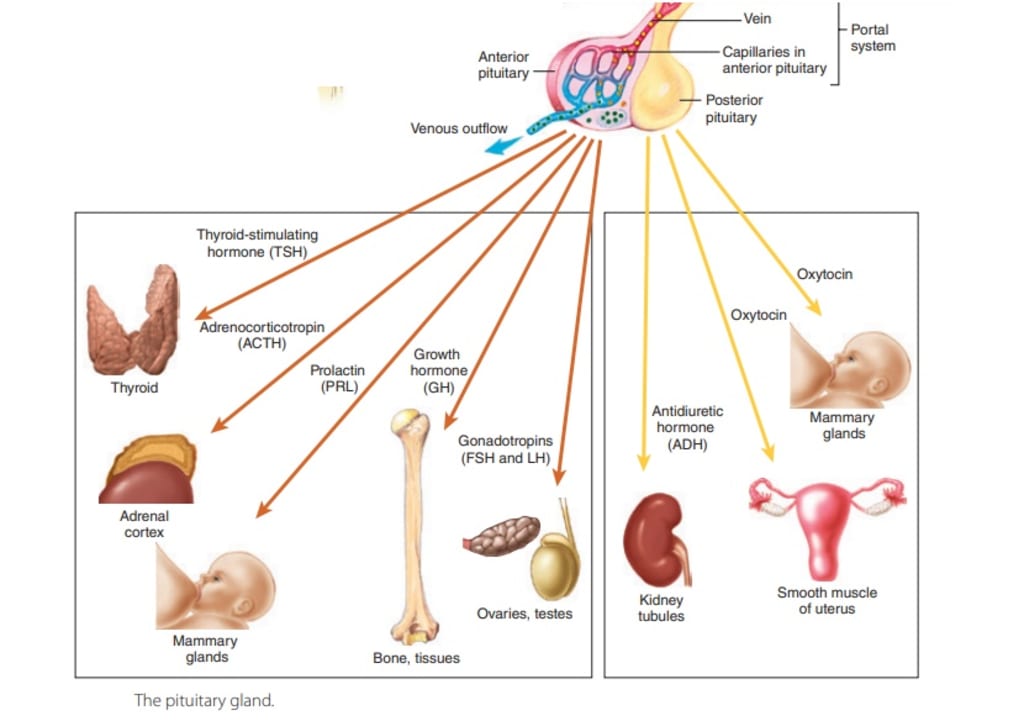
Pituitary gland:
Function and anatomy:
The pituitary gland is a tiny, oval-shaped organ. It is located just behind your nose, near the base of your brain. It is connected to the hypothalamus by a stalk-like structure called the infundibulum. The hypothalamus is a small portion of your brain. It's crucial for managing the balance of your body's physiological processes. It controls the production of hormones by the pituitary gland. The pituitary gland is referred to as the "master gland" since it governs and controls a wide range of biological activities, including:
Growth, development, and sexual and reproductive function
Organs (kidneys, uterus, and breasts) and Glands (including the thyroid, adrenal, and gonad glands).
Pituitary gland lobes:
There are two lobes that make up the pituitary gland: the anterior and posterior lobes. Each of the two lobes of the pituitary gland contains and generates distinct kinds of cells and hormones.
The anterior lobe makes up around 80% of the pituitary gland. It regulates metabolism, growth, and reproduction with the help of the hormones it generates. The pituitary receives chemical signals from the hypothalamus that either stimulate or inhibit the synthesis of these hormones.
Pituitary hormones in the posterior:
The posterior lobe of the pituitary gland is primarily made up of axons (extensions of processes) from two pairs of enormous clusters of nerve cell bodies (nuclei) in the hypothalamus. The supraoptic nucleus, one of them, is situated directly above the optic tract, and the paraventricular nuclei, the other two, are situated on either side of the third ventricle of the brain. These nuclei, the axons of the nerve cell bodies that make up the nuclei, and the nerve endings in the posterior pituitary gland make up the neurohypophyseal system.
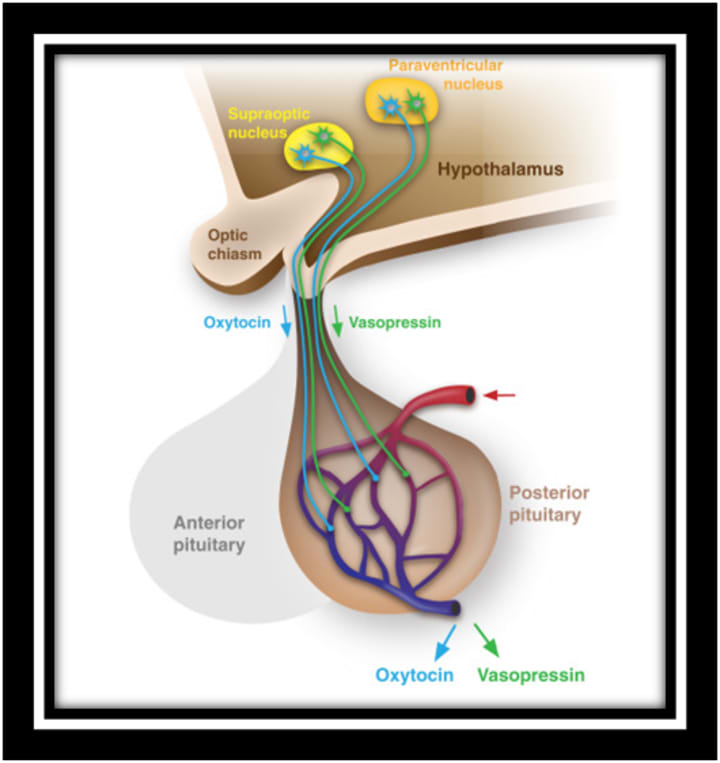
Pituitary gland hormones:
Oxytocin and vasopressin are produced by the neurohypophysis, which is located in the posterior lobe. When the hypothalamus communicates with the pituitary gland via nerve cells, these hormones are released.
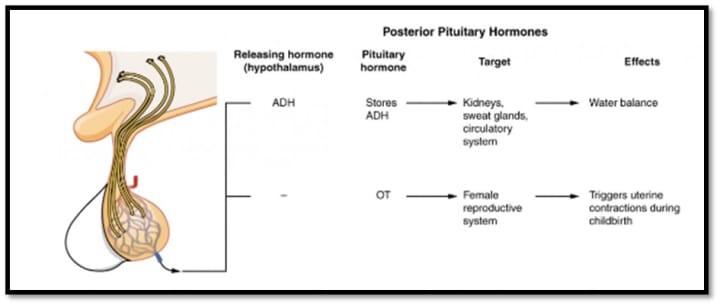
Vasopressin is often referred to as ADH, or antidiuretic hormone. It influences the kidney to conserve water and is crucial for maintaining the proper balance of fluids and electrolytes.
The smooth muscles of the uterus are stimulated to contract by oxytocin, which is crucial during birthing. In order to produce milk, oxytocin also causes the smooth muscle of the breast to contract.
Oxytocin hormone:
Function:
It affects dopamine's ejection. The anti-stress effects of oxytocin are greatly influenced by its ability to reduce noradrenergic neurons' activity in the central nervous system (CNS).
Oxytocin effects:
It encourages a variety of social relationships, including mother-infant bonding and mother-infant engagement. The calming effects of oxytocin also raise the threshold for pain and may lower inflammatory levels.
Release of oxytocin:
Hormones like oestrogen can promote the release of oxytocin. Additionally, numerous forms of sensory input can cause the release of oxytocin. Stressful situations might cause the release of oxytocin.
How come it's called:
Since oxytocin is also produced when we are in love and when we are thrilled by a sexual relationship. Because of this, it gets the moniker "love hormone" and "cuddle hormone."
Stimulus:
Oxytocin, a hormone generated from peptides (tocia- meaning "childbirth"), induces uterine contractions and cervix dilatation once foetal development is complete. Oxytocin hormone receptors are not highly expressed in the uterus for the majority of pregnancy.
Role of oxytocin:
Oxytocin promotes uterine contraction, which is crucial for labour and delivery as well as milk ejection during breastfeeding. Even though the mother's high blood levels of oxytocin start to fall right after delivery, oxytocin still has an impact on both maternal and newborn health.
ADH, or antidiuretic hormone
Antidiuretic hormone (ADH) Synthesis and Storage
The supraoptic and paraventricular nuclei of the hypothalamus are where ADH is synthesised. The neurohypophysial capillaries subsequently carry it to the posterior pituitary gland. Its production is finished in the posterior pituitary gland, where it is kept until it is ready to be discharged into the bloodstream.
Antidiuretic hormone (ADH) release
Several factors influence the release of ADH. Volume status and variations in plasma osmotic pressure are the two main influencing factors. Exercise, the hormone angiotensin II, and emotional states like pain are other variables that encourage the release of ADH. Atrial natriuretic peptide (ANP), which is released by stretched atria in response to rises in blood pressure, as well as alcohol and other medicines, all impede the release of ADH.
Action
The primary function of ADH in the kidney is to control the osmolarity and volume of urine. It specifically affects the collecting ducts (CD) and distal convoluted tubule (DCT).
Activities of ADH:
Vasopressin controls blood pressure and boosts renal water absorption, helping to preserve bodily water and fend off dehydration.This hormone controls your body's salt and water balance.
Drugs action on ADH:
Drugs' effects on ADH secretion are interestingly unpredictable. For instance, drinking alcohol prevents the release of ADH, which increases urine production and eventually causes dehydration and a hangover. persistent ADH underproduction that results in persistent dehydration is a hallmark of the illness diabetes insipidus.
About the Creator
Keep reading
More stories from Aiman Amjad and writers in Education and other communities.
The New Career Compass: How AI Is Redefining Work and Opportunity
Artificial intelligence has moved from science fiction into everyday working life. It now shapes how people find jobs, perform tasks, and plan long-term career paths. From creative fields to technical roles, AI is changing what skills matter and how success is measured. Instead of replacing ambition, this technology is becoming a powerful tool that helps workers adapt, grow, and stay relevant in a fast-moving job market.
By Greg Deshields8 days ago in Education
Trouble at the Tea Leafing Café
The rain had started right around the time that Annie was buttering her second thick slice of homemade toast for breakfast, and hadn’t paused since. Not that anyone could tell. The windows of the café were fogged over, and with every seat filled with happy customers munching on fresh baked pastries or steaming bowls of the delicious soup of the day, it was hardly surprising. Annie looked around the room, finally taking a moment to breathe after the lunch time rush. Her old life already felt like a bad memory, a part of her history, always, but just that. History.
By Hannah Moore4 days ago in Fiction



Comments
There are no comments for this story
Be the first to respond and start the conversation.