

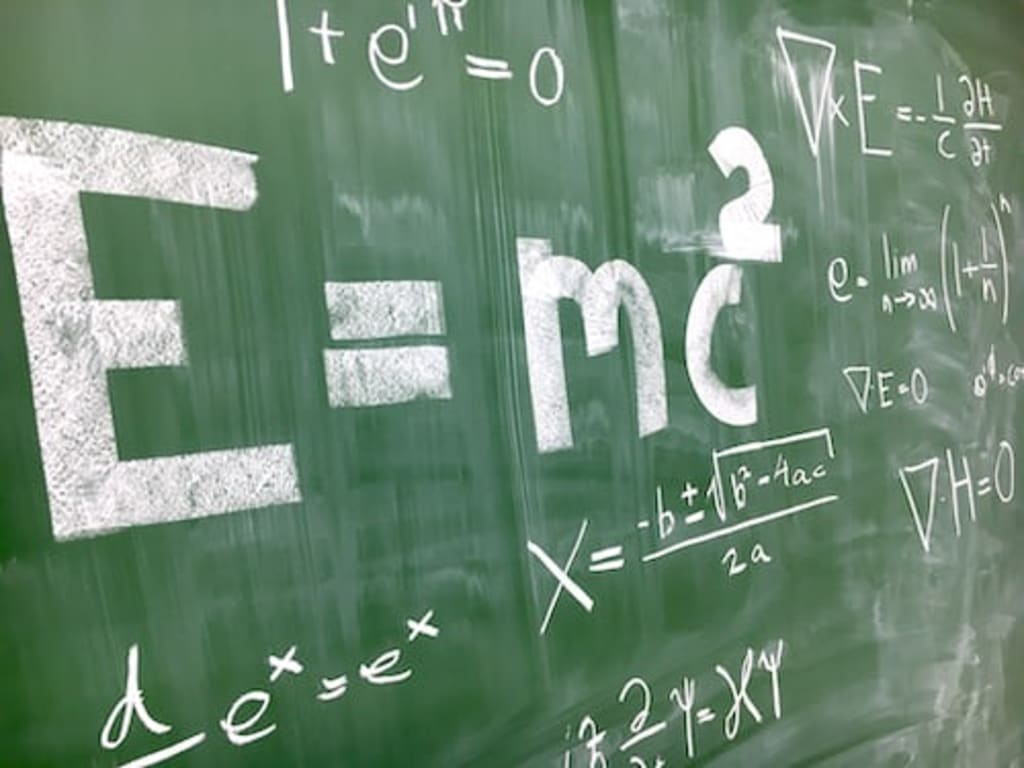
Physics is the branch of science that deals with the study of matter, energy, and their interactions. It is considered one of the most fundamental sciences and has contributed to some of the most significant discoveries and innovations in human history.
The origins of physics can be traced back to ancient civilizations such as Greece, China, and Egypt, where scholars and philosophers observed the behavior of natural phenomena and attempted to explain them through reasoning and logic. However, it was not until the Renaissance era that physics began to take shape as a distinct scientific discipline.
One of the most important figures in the early development of physics was Sir Isaac Newton. Newton's laws of motion and his theory of gravity revolutionized the way we understand the natural world and provided a foundation for the study of physics for centuries to come.
The field of physics has grown and evolved significantly over the past few centuries. Today, it encompasses a wide range of subfields, including mechanics, thermodynamics, electromagnetism, optics, quantum mechanics, and astrophysics, to name a few.
Mechanics is the branch of physics that deals with the motion of objects and the forces that cause that motion. This includes topics such as kinematics, which is the study of motion without considering the forces that cause it, and dynamics, which is the study of the relationship between motion and the forces that cause it.
Thermodynamics is the study of heat and temperature and their relationship to energy and work. It is essential to understanding many natural phenomena, such as the behavior of gases, the workings of engines and refrigeration systems, and the formation of stars and planets.
Electromagnetism is the branch of physics that deals with the relationship between electrically charged particles and electromagnetic fields. It is critical to understanding the behavior of charged particles, the workings of electrical circuits and devices, and the behavior of light and other electromagnetic radiation.
Optics is the study of light and its behavior, including the interaction of light with matter. This includes topics such as the properties of lenses and mirrors, the behavior of light waves, and the development of optical instruments such as telescopes and microscopes.
Quantum mechanics is the branch of physics that deals with the behavior of matter and energy at the atomic and subatomic level. It is a highly complex field that has led to some of the most significant discoveries of the modern era, including the development of the transistor and the laser.
Astrophysics is the branch of physics that deals with the study of the universe and its contents. This includes topics such as the behavior of stars and galaxies, the formation and evolution of the universe, and the properties of dark matter and dark energy.
One of the most important concepts in physics is the conservation of energy. This principle states that energy cannot be created or destroyed, only transformed from one form to another. This principle is essential to understanding many natural phenomena, including the behavior of objects in motion, the behavior of waves and electromagnetic radiation, and the workings of engines and other machines.
Another essential concept in physics is the theory of relativity, which was developed by Albert Einstein in the early 20th century. This theory revolutionized the way we understand space and time and provided a new framework for understanding the behavior of objects moving at high speeds.
The study of physics has contributed to some of the most significant technological advancements in human history, including the development of the automobile, the airplane, the computer, and the smartphone. It has also contributed to our understanding of the natural world and our place in the universe.
In conclusion, physics is a vital scientific discipline that has contributed to some of the most significant discoveries and innovations in human history. It encompasses a wide range of subfields, including mechanics, thermodynamics, electromagnetism, optics, quantum mechanics, and astrophysics.
About the Creator
solando
i am a content writer
script writer
prompt engineer
Speak and Be Heard: A Beginner’s Guide to Becoming a Podcast Host and Growing Your Audience
Becoming a podcast host is an exciting way to share your ideas, inspire others, and build a strong community. Whether you want to teach, entertain, or have great conversations, podcasting gives you a voice that can reach people around the world. But starting a podcast and growing an audience takes more than just a microphone. It requires planning, patience, and a real connection with your listeners. In this guide, you'll learn how to become a podcast host and grow your audience step by step.
By Spencer Hakimian4 days ago in Education


Comments
There are no comments for this story
Be the first to respond and start the conversation.