
Photosynthesis Process, Effects and Importance of Photosynthesis
Main stages of photosynthesis


Main Stages of Photosynthesis: In 1905, scientist Blackman divided the photosynthesis process into two main stages. The two stages are-
(a) Light dependent section and
(b) Light neutral section.
(a) Light dependent reactions: ATP and NADPH + H+ produced.
Light-dependent photosynthetic reactions take place in the thylakoid membrane. The phase of photosynthesis in which light energy is converted into chemical energy into ATP and NADPH + H+ is called the photosynthetic phase. Light is essential for this part.
Chlorophyll molecules absorb photons of light and store energy from the absorbed photons to produce high-energy ATP.
Also, in the light phase, H₂O breaks down to release O₂ and NADP dissolves to form NADPH + H+. The light chapter is shown as follows-
the light
2ADP + 2Pi + 2NADP+4H2O→2ATP + 2 NADPH + H+ + 2 H2O + O₂ High energy ATP and NADPH Ch
The vast amount of energy needed to create + H + comes from sunlight. The process of making ATP using the energy of sunlight is called photophosphorylation. As the energy of ATP and NADPH + H* is used to prepare sugars through CO₂ assimilation, ATP and NADPH + H+ are called assimilatory power.
Photophosphorylation: The process of attaching phosphate to a compound is called phosphorylation, and light energy
Phosphorylation is called photophosphorylation. The process of making ATP using light energy in photosynthesis is called photophosphorylation. Photophosphorylation can be non-cyclic and cyclic. They are described below in the light of current concepts:
1. Acyclic Photophosphorylation: The process of photophosphorylation in which the electrons ejected from photosystem-2 do not return to photosystem-1 is called acyclic photophosphorylation.
Both photosystem-1 and photosystem-2 participate in this process. The process is as follows:

1. Chlorophyll molecules of photosystem-II (PS – II) absorb light energy (673 nm). The absorbed light energy is transferred from one molecule to another and finally reaches the reaction center P680. Reactors can send energized electrons to acceptors.
2. Energized 2 electrons are ejected from the orbit of P680, which are accepted by the nearby electron acceptor pheophytin (not shown). At the same time, 2 electrons from water dissociation fill the electron deficiency of P680.
3. Electron 2 from pheophytin is immediately transferred to plastoquinone (PQ). PQ is a lipid and mobile carrier.
4. PQ donates its electrons to cytochrome f (Cyt.f) which is ready to accept electrons from pheophytin again. The energy released in this step combines inorganic phosphate with ADP to form an ATP.
5. Cytochrome F donates 2 electrons to plastocyanin (PC). PC is a membrane protein.
6. Plastocyanin (PC) donates electrons to P700 of photosystem-1 (PS – I) (because the absorption of light energy by PS-I has already ejected two energized electrons from the orbit of the chlorophyll-a molecule in the P700 reaction center, creating an electron deficit).
7. 2 electrons ejected from P700 accept ferridoxine (Pd).
8. NADP-Reductase accepts electrons from Fd, NADP reductase oxidizes NADP with two electrons (P700 ejected from the reaction center) and two protons (from water dissociation) to form NADPH + H*.
Electrons ejected from PS-11 do not return there but instead move to PS-1.
Photosystem-2 replaces the lost electrons with electrons from water. Electrons are continuously supplied from water to PS = II during the acyclic photophosphorylation process. Because, in the presence of Mn" and CI" at the same time, water dissociates O₂ into electrons (5) and protons (H'). Oxygen molecules move into the air. Electrons are accepted by photosystem-2. These two (proton (2H') and two electrons from PS-I (2c) of water oxidize NADP to form NADPH + H'. Therefore, the oxygen released in the process of photosynthesis is caused by the splitting of water in the acyclic photophosphorylation stage. Such splitting of water is called photolysis of water.

2. Cyclic photophosphorylation: In the process of photophosphorylation, the electrons emitted from photosystem-1 go around different carriers and return to photosystem-1 after generating an ATP is called cyclic photophosphorylation.
Only photosystem-1 (PS-1) participates in this process. Chlorophyll molecules of photosystem-1 (PS-I) absorb light with wavelengths greater than 680 millimicrons. Chlorophyll molecules are energized by absorbing light photons and this energy is then transferred to the reaction center (P700). Then two energized electrons are ejected from the P700 chlorophyll-a molecule. High energy electrons go to ferridoxine (Fd). The electron from Fd is then transferred to plastoquinone (PQ) (some say Cyt.b). Electrons from PQ come to Cyt.f. At this time, an ATP is formed with the help of ADP and Pi by the free energy of electrons. (Previously it was said that two ATP molecules are produced during cyclic photophosphorylation.) Electrons from Cyt.f are returned to P700 via plastocyanin (PC). Cyclic photophosphorylation occurs in bacteria. In cyano bacteria, algae and green plants, cyclic processes usually occur when the supply of NADP is cut off. Acyclicity does not occur when the water supply is cut off. Cyclic processes occur.
Scientists have not yet learned the details of this process.
(b) Light independent reactions: Carbohydrate production or carbon oxidation process.
The ATP and NADPH + H* generated in the light-dependent phase are used to produce carbohydrates (sugars) from CO₂ through special processes. In this chapter, CO₂ is oxidized to produce carbohydrates, so it is also called carbon oxidation chapter. Carbon oxidation process does not require any direct light so it is also called light neutral phase or dark phase. But in the presence of light carbon oxidation is more. This is because in the presence of light ATP and NADPH + H' supply is ensured and CO₂ and 0 exchange is easier as the stomata are open. The reactions of the photoneutral phase (or carbon oxidation reaction phase) take place in the stroma of the chloroplast. There are three recognized pathways for the formation of carbohydrates from atmospheric CO₂ through various chemical reactions, namely 1. Calvin cycle, 2. Hatch and snack cycle and 3. CAM process.
About the Creator
Reader insights
Good effort
You have potential. Keep practicing and don’t give up!
Top insight
Excellent storytelling
Original narrative & well developed characters
Keep reading
More stories from naime hoshen and writers in Education and other communities.
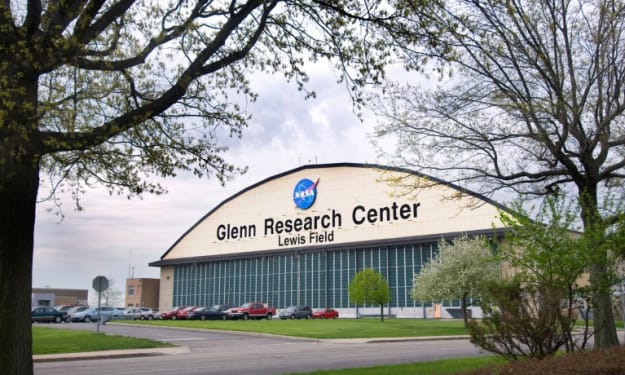
NASA Offers Free High School Engineering Program This Summer
**NASA Offers Free High School Engineering Program This Summer** NASA continues to inspire the next generation of scientists, engineers, and explorers through its free educational programs for high school students. One such opportunity is the **High School Aerospace Scholars (HAS)** program, a competitive, STEM-based initiative designed to give students hands-on experience in engineering and space exploration. This summer, eligible high school juniors and seniors can participate in an immersive learning experience that includes virtual coursework and a potential on-site internship at a NASA center.
By naime hoshen10 months ago in Education
The Road That Taught Him Silence
In the small village where the mountains met the fields, mornings arrived quietly. The sun did not rise in a hurry there; it climbed slowly, as if respecting the stillness of the land. Birds were the first to greet the light, their soft calls weaving through the narrow lanes and mud-brick houses. Aamir had learned to wake before the village did. At first, this habit was forced. Sleepless nights, heavy thoughts, and restless dreams had pushed him out of bed before dawn. He did not know where to go, only that staying inside the house made his chest feel tighter, his breath shorter, his mind louder. One morning, without purpose, he stepped outside and began walking toward the path that lay between the barley fields and the low, blue mountains. That path soon became his silent companion. Every day, he walked there — sometimes quickly, sometimes slowly, sometimes stopping for long minutes to watch the wind bend the crops like a green ocean. The path was narrow and uneven, yet it carried him faithfully, never asking where he was going or why. In its quiet presence, he found a strange comfort. Aamir was not unhappy in the usual sense. He had food, family, and education. He taught children in the village school and was respected by many. Yet inside him lived a deep confusion — a soft but constant question: Am I becoming what I was meant to become? He had dreams once — of writing, of speaking beautifully, of guiding others not only through lessons but through life itself. But responsibilities had grown faster than courage. Slowly, without noticing, he had begun to doubt himself. And doubt, unlike pain, does not shout. It whispers. On one such morning, when the mist still clung to the fields like a thin veil, Aamir noticed footprints beside his own. They were not fresh, but they were regular — the marks of someone who walked the same road every day. A few minutes later, he found their owner. An old man sat on a flat stone near the edge of the path, a wooden staff resting beside him, a small flock of sheep grazing quietly nearby. His beard was silver, his clothes simple, and his eyes clear in a way that surprised Aamir. Those eyes did not seem tired by age; they seemed polished by time. “Peace be upon you,” Aamir greeted. “And upon you, peace,” the old man replied warmly. “You walk early.” “So do you,” Aamir smiled. The old man nodded. “The morning is honest. It shows you who you are before the world begins to tell you who you should be.” The words struck Aamir gently, like a leaf touching water. From that day onward, they met often. Sometimes they spoke, sometimes they shared long silences. The old man never asked many questions, yet somehow Aamir found himself speaking — about his students, his ambitions, his fear of wasting his abilities, his constant comparison with others who seemed more confident, more successful, more certain. One morning, Aamir confessed, “I feel as if I am standing still while the world moves ahead.” The old man watched the sheep for a moment, then said, “Have you seen a tree grow?” “Yes.” “Does it run to become tall?” “No.” “Yet it becomes tall.” Aamir smiled faintly. “But people judge trees by their height.” “They do,” the old man agreed. “But trees are not planted to impress people. They are planted to become themselves.” The sentence stayed with Aamir long after the walk ended. Days turned into weeks, and weeks into months. With each walk, something inside him shifted — slowly, almost invisibly. He began to notice small beauties he had ignored before: the way dew rested on grass like tiny mirrors, the rhythm of his own breathing, the calm dignity of the mountains that never hurried yet never failed to stand firm. One morning, Aamir arrived to find the stone empty. No sheep. No staff. No silver-bearded teacher. For several days, he returned at the same hour, hoping to meet the old man again. But the path remained silent, as if it had never known such a presence. Disappointment crept into his heart. On the seventh morning, as he walked farther than usual, he noticed a small bundle placed carefully beside the path. Inside it lay a worn notebook and a folded piece of paper. The note read: “To the one who walks with questions, Do not search for me again. I was only a mirror, not a guide. The road has taught you silence. Silence has taught you clarity. Now let clarity teach you courage. Remember: You are not late. You are not lost. You are simply growing underground.” Aamir sat there for a long time, holding the paper with trembling hands. That day, when he returned home, he opened his old notebooks, the ones where unfinished writings slept like forgotten seeds. For the first time in years, he wrote not to impress, not to compete, but to understand himself. He began to speak more gently to his students, not only teaching lessons, but listening to fears. He encouraged them to walk, to observe, to think, to trust their own pace. And every morning, he still walked the same path. The road never answered his questions directly. But slowly, quietly, it returned something far more precious: The belief that becoming oneself is not a race — It is a journey best taken in silence, With steady steps, And an honest heart.
By Muhammad yaseen4 days ago in Education
Financial Intelligence: The Secret Weapon Behind Exceptional Hospitality Performance
Hospitality is no longer driven by service alone—it’s shaped by smart decisions, strong planning, and real-time awareness of costs and performance. Financial intelligence is now a key advantage that helps hotels, resorts, and restaurants maintain quality while staying profitable in a competitive market. With rising guest expectations and shifting demand patterns, leaders must balance excellence with efficiency every day.
By Asad Malik2 days ago in Education



Comments (1)
Thanks