
Optimizing Solar Panel Efficiency and Placement Using AI-Driven Project Management Tools
Maximizing Solar Efficiency with AI
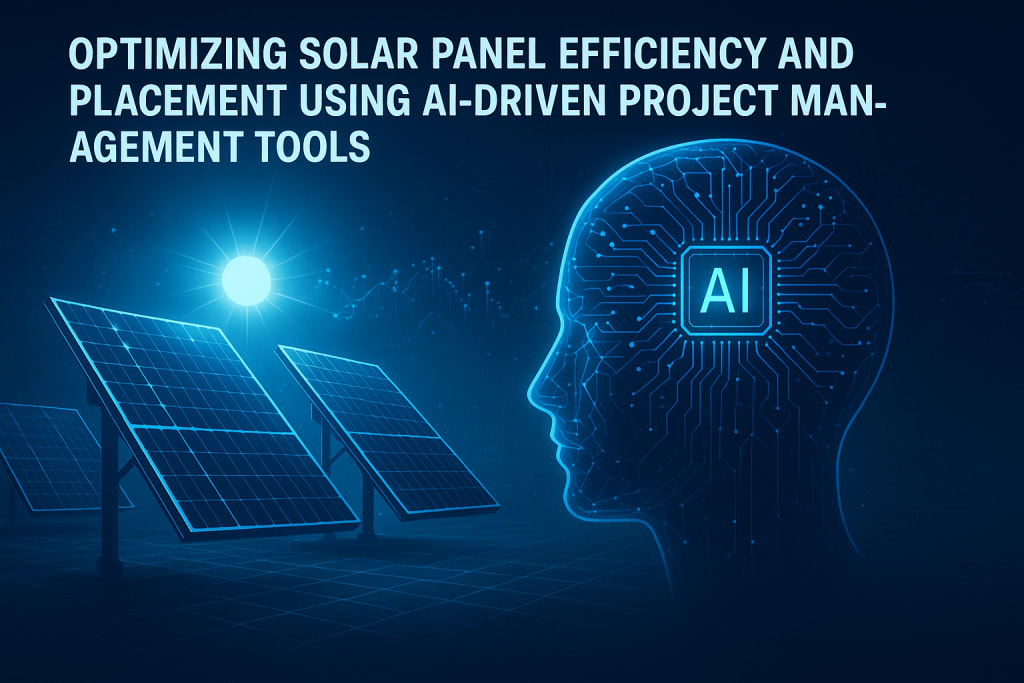
Artificial Intelligence (AI) is transforming how solar projects are planned, installed, and maintained. By combining data-driven decision-making with intelligent project management systems, AI makes it possible to capture more sunlight, reduce costs, and extend the lifespan of solar installations. From precise panel placement to predictive maintenance, AI is helping the renewable energy sector deliver cleaner, more reliable power.
Below is an in-depth look at how AI-driven project management tools are optimizing solar energy systems from start to finish.
1. Predictive Maintenance for Maximum Uptime
One of the most significant benefits of AI in solar energy is predictive maintenance—detecting issues before they lead to performance loss.
How it works:
Sensor Data Analysis: AI systems continuously monitor panels, inverters, and connectors, detecting temperature spikes, voltage drops, or unusual power patterns.
Early Alerts: Machine learning algorithms flag potential faults—like dirt buildup or micro-cracks—before they impact efficiency.
Lower Costs: Addressing problems early prevents expensive repairs and minimizes downtime.
Result: Longer-lasting panels and higher overall energy production.
2. AI-Powered Energy Forecasting
Solar output depends heavily on weather, but AI tools make production forecasts far more accurate.
Benefits of AI forecasting:
Weather-Driven Predictions: AI integrates satellite imagery, real-time meteorological data, and historical sunlight trends to forecast daily energy output.
Optimized Storage: Predicting peak generation times allows for smarter battery usage.
Grid Stability: Power supply is balanced with demand, reducing strain on local grids.
Example: A solar farm can prepare for cloudy days by storing surplus energy in advance.
3. Optimal Panel Placement and System Design
AI project management platforms don’t just manage timelines—they help design the perfect panel layout for each site.
Key advantages:
Site Analysis: AI assesses roof angles, terrain slope, shading, and local climate to find the most efficient orientation.
3D Simulations: Advanced tools create visual models to preview annual energy yield before installation.
Precision Placement: Panels are installed at the exact tilt and spacing needed to capture maximum sunlight.
Impact: Higher efficiency from day one, with no costly repositioning later.
4. Smart Energy Management
Beyond installation, AI-driven energy management ensures every kilowatt is used wisely.
Features:
Load Balancing: AI shifts energy use to times of peak solar production.
Battery Optimization: Energy is stored when it’s abundant and discharged when demand is high.
Cost Savings: Reduces reliance on grid power during expensive peak hours.
5. Streamlined Project Scheduling and Resource Allocation
AI-powered project management tools—such as Procore or Autodesk Construction Cloud—help solar developers deliver projects faster and more efficiently.
Capabilities:
Timeline Forecasting: Predicts delays due to weather or supply issues.
Resource Optimization: Ensures equipment and personnel are available exactly when needed.
Budget Control: Minimizes waste and unexpected costs.
6. Integration with Smart Grids
AI makes it easier for solar power to integrate seamlessly with local and national grids.
Advantages:
Real-Time Adjustments: AI balances output to prevent overloading the grid.
Microgrid Support: In remote areas, AI-managed microgrids ensure a steady power supply.
Reliability: Improves energy stability even during peak demand periods.
7. Improved Customer Experience
AI-driven insights don’t just benefit engineers—they empower customers too.
Examples:
Performance Dashboards: Real-time data on energy production, savings, and CO₂ reduction.
Personalized Maintenance Tips: AI suggests cleaning or servicing schedules based on performance patterns.
Virtual Assistance: AI chatbots handle customer queries instantly.
8. Driving Innovation in Solar Research
AI is also accelerating solar technology development by simulating materials, designs, and environmental conditions at scale.
Benefits:
Material Testing: AI models predict how different photovoltaic materials will perform in various climates.
Design Evolution: Simulations explore new shapes and configurations for higher energy capture.
Faster Prototyping: AI speeds up R&D cycles, getting better solar solutions to market sooner.
Summary
AI-driven project management tools are helping the solar industry move from good installs to perfectly optimized systems. From predicting maintenance needs to placing every panel at the ideal angle, these tools are boosting efficiency, lowering costs, and ensuring sustainability.
As AI technology evolves, the solar energy sector will become smarter, faster, and greener, making clean power more accessible than ever before.
About the Creator
Do you really need to take 10,000 steps a day?
While most people avoid spending the night in jail, Jean Béliveau jumped at the opportunity. For the past three years, Béliveau had been walking from country to country, with the goal of circumnavigating the globe on foot. This required sleeping in tents, strangers’ homes, and the occasional jail cell along the way. But this morning, as Béliveau was ready to leave, the police chief, who had agreed to his sleeping arrangement, was nowhere to be found, and the guards weren’t buying his story. Few people have the time or desire to walk such extreme lengths.
By Munesh Yadavabout 9 hours ago in Education
What’s the best position to sleep in?
In the 1970s, psychoanalyst Samuel Dunkell proposed a curious, albeit almost completely unsubstantiated, theory that the position you sleep in reflects your personality. For example, preferring to snooze in the so-called royal position indicated self-confidence, while sleeping semi-fetal meant you’re sensible and well adjusted. While Dunkell’s ideas lack any definitive proof, how we sleep can impact our health. So, what’s the best position to sleep in? Sleep positions go by countless creative names—
By Munesh Yadavabout 9 hours ago in Education


Comments (2)
Hi, I read your story and I really liked it. It seems like you are a professional writer because you give each scene its own unique value, which very few people manage to do. I really liked your work it was very, very good. Actually, I’m just a casual reader, and I really enjoy reading stories. and I liked it a lot, too. Also, how long have you been doing this work?
Hi, I read your story and I really liked it. It seems like you are a professional writer because you give each scene its own unique value, which very few people manage to do. I really liked your work it was very, very good. Actually, I’m just a casual reader, and I really enjoy reading stories. and I liked it a lot, too. Also, how long have you been doing this work?