
October 24: United Nations Day and World Development Information Day – Why Global Cooperation Still Matters
As the world faces conflict, inequality, and climate change, the message behind these two international observances reminds us that progress depends on shared knowledge and collective effort.

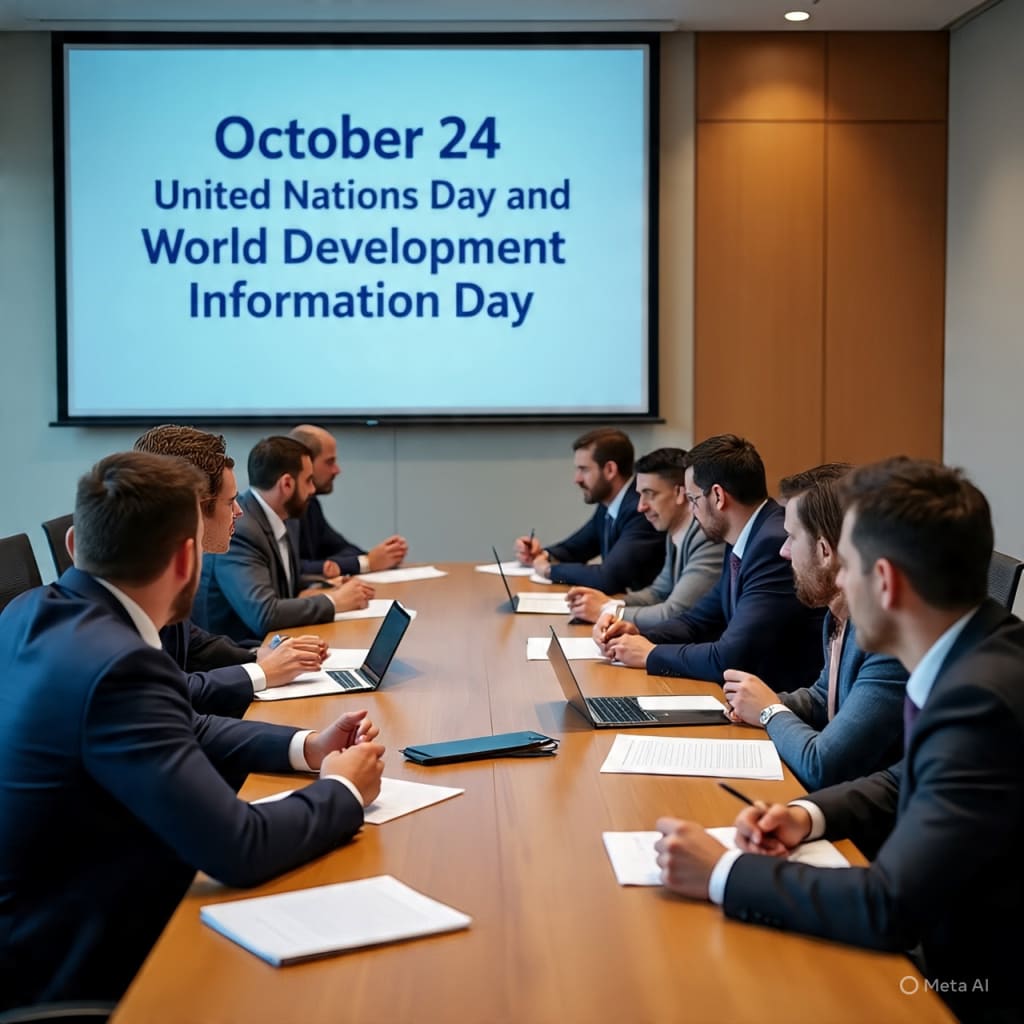
Why October 24 Matters
Every year on October 24, the world observes two important days — **United Nations Day** and **World Development Information Day**. Both are linked by a single purpose: encouraging countries to work together for peace, equality, and sustainable development.
In a world often divided by politics and conflict, these days remind us that international cooperation is not an abstract idea — it is a daily necessity. The challenges of our century, from climate change to poverty to digital inequality, cannot be solved by one nation alone.
The Birth of the United Nations
The United Nations (UN) was officially established on **October 24, 1945**, after World War II. Its goal was simple but profound: prevent another global war and promote peace through dialogue and cooperation.
Fifty-one countries signed the UN Charter that year. Today, there are **193 member states**, representing nearly every part of the planet. The organization’s work touches almost every global issue — peacekeeping, health, education, climate policy, and humanitarian aid.
UN Day marks the anniversary of the Charter’s entry into force. It is a time to reflect on how much progress has been made, and how much work remains to create a fairer and more stable world.
The UN’s Core Mission
The UN’s mission is guided by three pillars: **peace and security, human rights, and development**. These ideas sound broad, but they translate into concrete actions that affect millions of people.
* **Peacekeeping missions** help reduce violence and protect civilians in conflict zones.
* **Humanitarian programs** deliver food, shelter, and medical aid after disasters.
* **Health and education projects** support long-term stability by empowering people to build better futures.
From rebuilding war-torn regions to coordinating vaccine deliveries during the pandemic, the UN has become a backbone of global response systems.
World Development Information Day: The Power of Knowledge
While UN Day celebrates cooperation, **World Development Information Day** highlights the role of information in achieving that cooperation. Established by the United Nations General Assembly in **1972**, it aims to raise awareness about development problems and promote solutions through communication and education.
The idea is simple: development requires not only money or technology, but also **access to reliable information**. People and governments make better choices when they are well informed about global issues like poverty, energy, and environmental protection.
In today’s digital world, this message is more relevant than ever. Social media, data analytics, and open-source tools allow people everywhere to learn, connect, and act. But they also create challenges — misinformation spreads quickly, and not everyone has equal access to digital resources.
Information and Inequality
One of the biggest barriers to development today is the **information gap**. Many communities, especially in developing nations, still lack access to the internet or even basic media resources. This limits opportunities for education, innovation, and civic participation.
World Development Information Day reminds us that closing this gap is just as important as building roads or hospitals. When people have access to knowledge, they can make decisions that improve their lives — from managing crops more efficiently to learning about health and human rights.
Organizations like UNESCO and the International Telecommunication Union (ITU) work to expand internet access and digital literacy. Their goal is a world where information empowers everyone, not just those in wealthy nations.
The Role of Technology and Transparency
Digital technology has become a major force in global development. Governments, businesses, and international agencies now rely on data to design better policies and measure progress.
For example:
* The UN’s **Sustainable Development Goals (SDGs)** use data from countries around the world to track achievements and identify areas that need more attention.
* Open-data platforms allow citizens to hold institutions accountable by showing where funds are going and how programs are performing.
* Global collaboration on climate data helps scientists and policymakers plan for rising temperatures and natural disasters.
When information is transparent and widely shared, it strengthens democracy and trust — key elements for lasting development.
Why Cooperation Still Matters
Some critics argue that the UN is too slow or too bureaucratic. Others question whether international organizations can truly change entrenched problems. Yet, despite its flaws, the UN remains one of the few global spaces where all nations can speak, negotiate, and collaborate.
Without such cooperation, issues like pandemics, war, and climate change would only worsen. The COVID-19 crisis showed how deeply connected our world has become. No border can stop a virus, and no single country can rebuild the global economy alone.
The same principle applies to information. When scientists shared COVID-19 data across borders, vaccines were developed faster than ever before. That success proves the power of collaboration.
Global Challenges, Shared Responsibility
Both UN Day and World Development Information Day invite individuals to take part in global efforts — not just governments or organizations. Ordinary citizens can make a difference by staying informed, supporting reliable news sources, and promoting critical thinking in their communities.
Students can engage through UN programs, model diplomacy events, or volunteer projects. Journalists can highlight underreported issues. Even simple acts like sharing educational content or fact-checking online discussions can strengthen global awareness.
The Future of the United Nation
The UN of the 21st century faces a new set of challenges: digital security, climate migration, artificial intelligence, and economic inequality. Adapting to these realities will require innovation and youth participation.
Reforming institutions, making them more inclusive, and improving transparency are essential steps to keep the UN relevant. As new generations become more connected through technology, they can drive the organization toward greater accountability and effectiveness.
A Day for Reflection and Renewal
October 24 is more than just a date on the calendar. It is a reminder of how far humanity has come — and how far it still must go.
United Nations Day honors the vision of a world built on peace and shared values. World Development Information Day celebrates the belief that knowledge is the foundation of progress.
Together, they remind us that information, cooperation, and empathy are not just ideals — they are tools for building a fairer, safer, and more sustainable world.
About the Creator
Saad
I’m Saad. I’m a passionate writer who loves exploring trending news topics, sharing insights, and keeping readers updated on what’s happening around the world.
Surviving Cancer: Entering the Golden Alchemical Door to Teaching
It starts with love . . . Entering the Golden Door: Who Am I? Going through cancer treatments with chemo, a strange thing happened, for I started to forget things, even who I am because my wife ghosted me and my friends would have nothing to do with me. Without human contact, you forget what it means to be human. I am a professor at a university, but I forgot what I taught. . . .
By WILD WAYNE : The Dragon King2 days ago in Education


Comments
There are no comments for this story
Be the first to respond and start the conversation.