
Non-Invasive vs. Traditional Colonoscopy: Which One Is Right for You?
Your Guide to Modern Colonoscopy Options

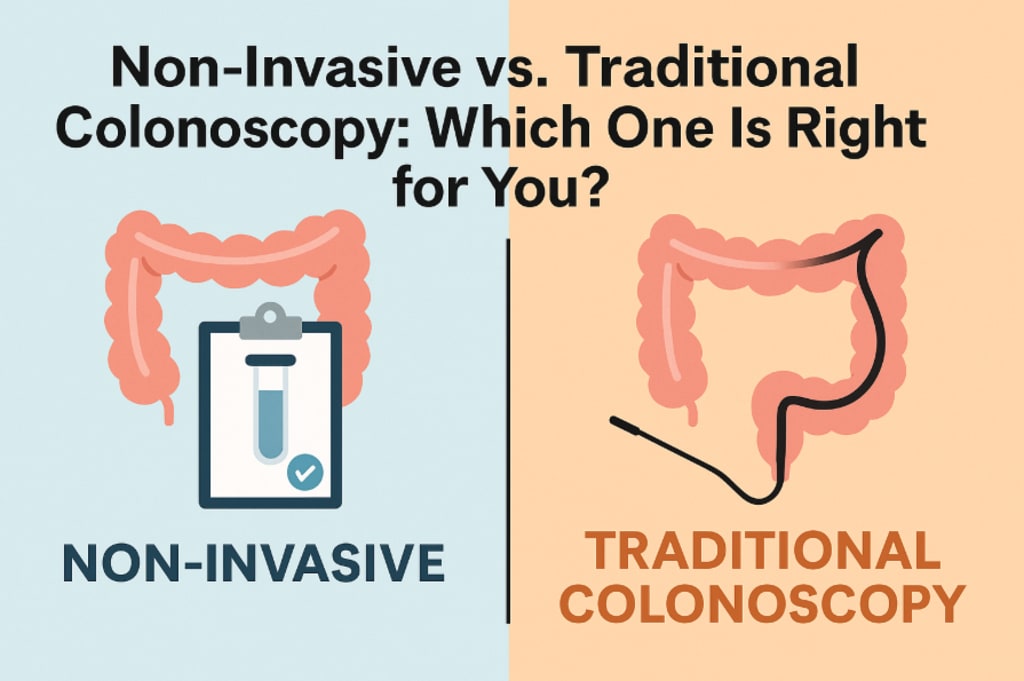
Colorectal cancer is one of the most preventable yet deadly cancers in the U.S. Early detection is key, and one of the best ways to catch it early — or prevent it altogether — is through routine colon cancer screening. But when it comes to screening, you’ve got options. The two major ones? Traditional colonoscopy and non-invasive tests like stool-based screenings or virtual colonoscopy.
So how do you know which one is right for you?
Let’s break down both options, their pros and cons, and what you should consider when making this important decision.
What Is a Traditional Colonoscopy?
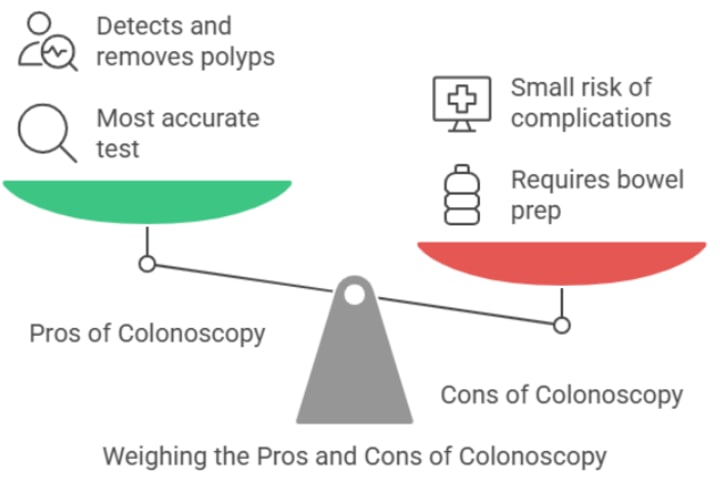
A traditional colonoscopy is the gold standard when it comes to colon cancer screening. It’s been around for decades and offers a full, real-time view of your colon and rectum.
How It Works:
During a colonoscopy, a doctor (usually a gastroenterologist) uses a thin, flexible tube called a colonoscope. This scope has a tiny camera at the end that allows the doctor to examine the inside of your large intestine. If they spot any polyps or suspicious tissue, they can remove them or take a biopsy — all during the same procedure.
The Prep:
Before the procedure, you’ll need to clean out your colon, which usually involves:
- Switching to a clear liquid diet a day before.
- Taking a prescribed laxative to flush everything out.
- Skipping food entirely the night before.
- Not glamorous — but necessary for a clear view.
The Procedure:
- You’ll be given a sedative or light anesthesia, so you won’t feel anything.
- The doctor gently inserts the scope through your rectum and inspects your colon.
- The whole thing takes about 30 to 60 minutes.
- You’ll need someone to drive you home afterward.
Pros of Traditional Colonoscopy:
- The most accurate test available
- Can detect and remove polyps during the same procedure
- Only needs to be done every 10 years (if results are normal)
- Detects a wider range of issues, including inflammation or bleeding
Cons:
- Requires bowel prep and sedation
- Time-consuming (you’ll need a day off)
- Small risk of complications like bleeding or perforation (very rare)
What Are Non-Invasive Colon Cancer Screening Options?
Not ready to go full scope just yet? That’s where non-invasive options come in. These gastroenterology tests and procedures are less intimidating, don’t require sedation, and can usually be done from the comfort of home.
Let’s go over the most popular ones:
1. FIT (Fecal Immunochemical Test)
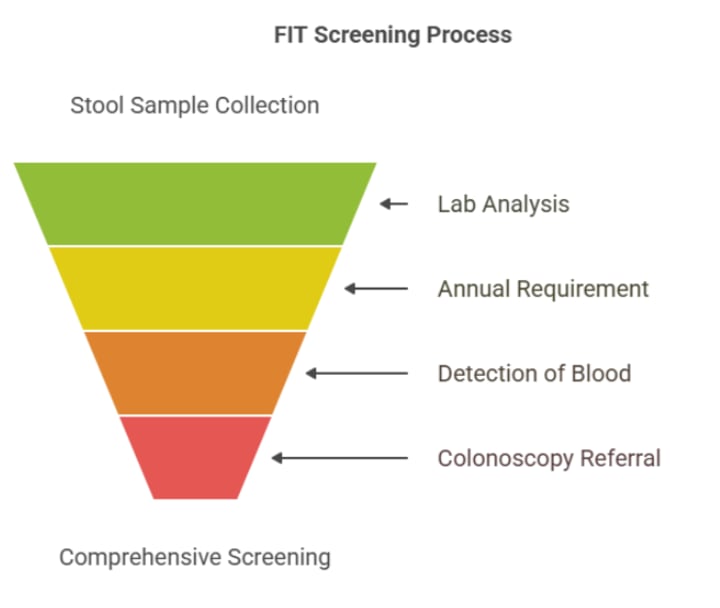
- What it does: Detects hidden blood in your stool.
- How it works: You collect a stool sample at home and mail it to a lab.
- How often: Once a year.
Pros:
- No prep, no sedation
- Simple and convenient
- Inexpensive and covered by most insurance
Cons:
- Must be done annually
- Can miss polyps
- If positive, you’ll still need a colonoscopy
2. Stool DNA Test (e.g., Cologuard)
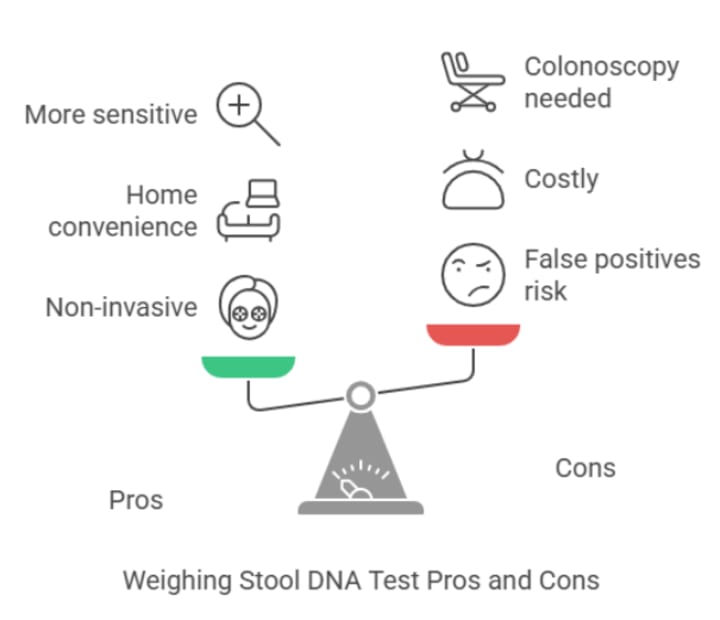
- What it does: Detects both blood and abnormal DNA linked to cancer or precancer.
- How it works: Similar to FIT — stool sample at home, mailed to a lab.
- How often: Every 3 years if results are normal.
Pros:
- Non-invasive
- Done at home
- More sensitive than FIT
Cons:
- Higher chance of false positives
- More expensive
- Positive result = colonoscopy
3. CT Colonography (Virtual Colonoscopy)
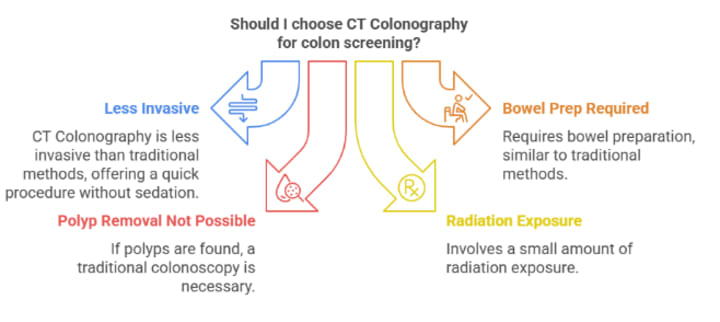
- What it does: Uses CT imaging to create 3D pictures of your colon.
- How it works: You still need to prep your bowel, but no sedation is involved.
- How often: Every 5 years if results are normal.
Pros:
- Less invasive than traditional colonoscopy
- No sedation needed
- Quick procedure (15-20 minutes)
Cons:
- Still requires bowel prep
- Can’t remove polyps — if any are found, you’ll need a real colonoscopy
- May expose you to a small amount of radiation
Side-by-Side Comparison
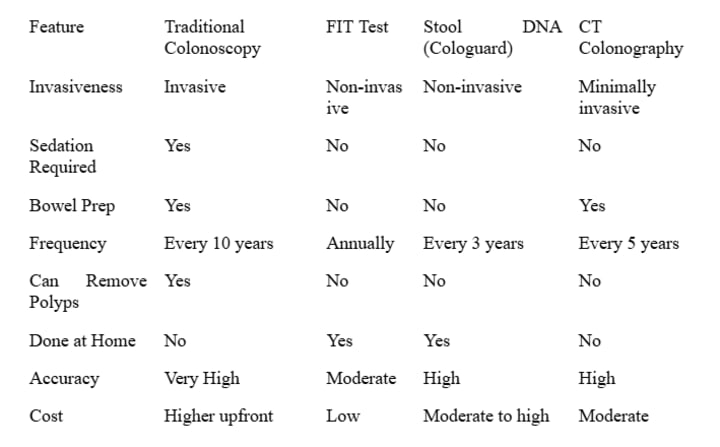
Which One Should You Choose?
That depends on a few things:
- Your risk level: If you have a family history of colorectal cancer, or inflammatory bowel disease, or are over 45, a traditional colonoscopy is likely your best bet.
- Your comfort level: If you’re nervous about invasive procedures, non-invasive tests can be a great first step.
- Your schedule: If you can’t afford to take a full day off, at-home tests might fit better with your lifestyle — just remember, a positive test means you’ll need to follow up with a colonoscopy anyway.
Here’s the bottom line: The best test is the one you’ll do. Whether it’s a full colonoscopy or a simple stool sample, taking action is what matters most.
About the Creator
Erika Phillips
Erika Phillips, a dedicated Health content writer, crafts heartfelt, insightful articles. Passionate about the power of knowledge, she simplifies complex health topics, empowering readers to take charge of their well-being.
Keep reading
More stories from Erika Phillips and writers in Education and other communities.
Can Colon Cancer Be Hereditary? Key Facts to Protect Your Health
Colon cancer, also called colorectal cancer, is one of the most common cancers in the United States. It can affect both men and women and often starts silently, with few noticeable symptoms. While factors like diet, age, and lifestyle can contribute to its development, family history and genetics play an important role, too.
By Erika Phillips about a year ago in Education
The Digital Nomad Blueprint
In a not-so-distant future, where technology thrived and the world became increasingly connected, many people chose to break free from traditional lifestyles. Among them was a young woman named Mia. Mia was a digital nomad, traveling the globe with her laptop, working remotely while exploring new cultures. Her heart was set on living life to the fullest, but she was also searching for something greater—a sense of purpose.
By Hamad Afridi a day ago in Education




Comments
There are no comments for this story
Be the first to respond and start the conversation.