
Noah's Ark: Unraveling the Mystery Behind One of History's Most Enduring Tales
Exploring Its Origins, Religious Significance, and Interpretive Challenges, from Ancient Mythology to Modern Adaptations.
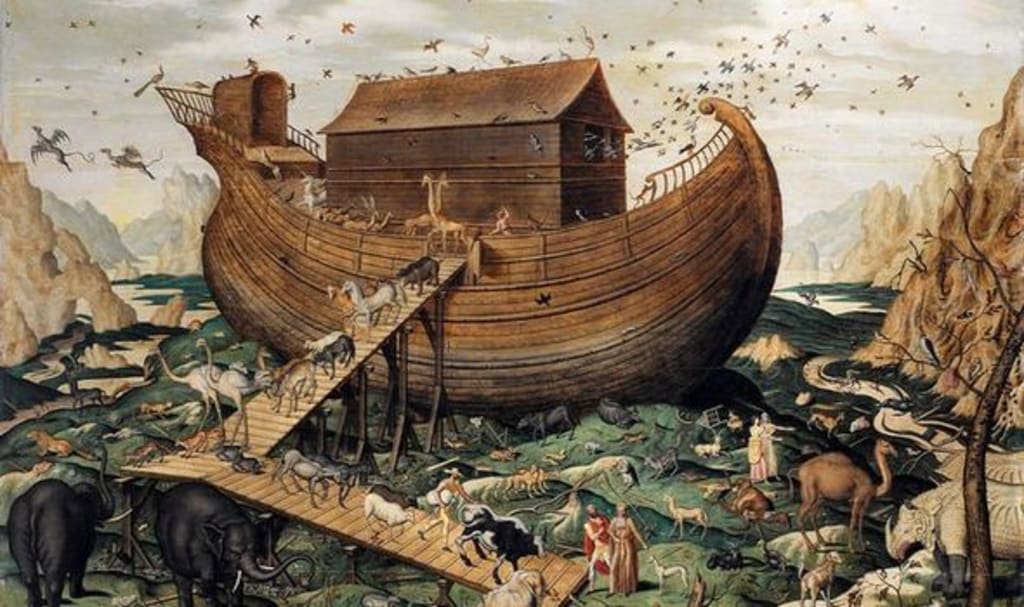
The story of Noah's Ark is one that has captured the imagination of people for centuries. This ancient narrative has been retold in countless ways, from religious texts to Hollywood blockbusters, each interpretation offering its own unique perspective on the events. But despite its enduring popularity, there is still much that we don't know about this fascinating story.
In this essay, we will explore the origins and meaning of the story of Noah's Ark, delving into its historical and cultural contexts, examining its religious significance, and considering its relevance for modern audiences. We will also examine some of the key interpretive challenges that the story presents, including questions about its historicity, its moral lessons, and its literary style.
Origins and Cultural Context
The story of Noah's Ark is found in the book of Genesis, which is part of the Hebrew Bible and the Christian Old Testament. According to the text, God becomes angry with humanity due to their wickedness and decides to punish them by sending a catastrophic flood that will destroy all life on earth. However, God selects Noah, a righteous man who has found favor in His eyes, to build an enormous boat that will save him, his family, and two of every kind of animal on earth.
The story of Noah's Ark is part of a larger cycle of flood narratives that are found in various cultures throughout human history. Flood myths are common across many different societies and often share certain core elements, such as a divine flood that wipes out humanity, a lone survivor who builds a boat or raft to ride out the storm, and a motif of renewal and rebirth after the waters recede.
One of the most well-known parallel flood myths is the Mesopotamian epic of Gilgamesh, which predates the biblical account by several hundred years. The Gilgamesh epic contains a story of a great flood that was sent by the gods to wipe out humanity, but a man named Utnapishtim is warned in advance and builds a boat to save himself, his family, and various animals. The similarities between the Gilgamesh and Noah stories are striking, leading some scholars to speculate that the biblical account was influenced by earlier flood myths from the region.
Another possible cultural influence on the story of Noah's Ark comes from ancient Egyptian mythology. The god Osiris was said to have built an ark-like boat called the "Barque of Millions of Years" to carry him and other deities across the waters of the underworld. This boat was seen as a symbol of rebirth and resurrection, and may have provided inspiration for the biblical tale of the ark as a vessel of salvation.
Religious Significance
For many religious believers, the story of Noah's Ark is regarded as a literal historical event, and its moral lessons are taken as divine guidance for how to live a righteous life. In Judaism, the narrative is seen as an example of God's justice and mercy, as well as a warning against the dangers of corrupt behavior. In Christianity, the story is often interpreted as a foreshadowing of the coming of Jesus Christ, who is seen as the ultimate savior who can deliver humanity from sin and death.
One of the key themes of the Noah narrative is the idea of obedience to God's will. Noah is described as a righteous man who follows God's commands without question, even when those commands seem impossible or irrational. His faithfulness is rewarded with salvation, while those who disobey are punished with destruction. This emphasis on obedience and faith has been influential in shaping religious attitudes towards authority and morality throughout history.
Another important theme of the Noah story is the idea of judgment and redemption. The flood is seen as a punishment for the wickedness of humanity, but it is also an opportunity for renewal and rebirth. Noah and his family are chosen to begin anew, carrying with them the seeds of humanity's future. This motif of judgment and redemption is a common theme in many religious traditions, and has been influential in shaping ideas about sin, punishment, and salvation.
Interpretive Challenges
Despite its enduring popularity, the story of Noah's Ark presents several interpretive challenges that have puzzled scholars and readers for centuries. One of the biggest challenges is determining the historicity of the narrative. While some believers see the events of the story as literal historical fact, others view it as a symbolic or mythological tale with no basis in reality.
There is little archaeological evidence to support the idea that a global flood ever occurred, and many aspects of the story seem implausible or impossible from a scientific perspective. For example, the idea that two of every species of animal could fit onto a single boat raises questions about logistics, food supply, and animal behavior. Some scholars have suggested that the Noah story may be based on localized floods or other natural disasters that were exaggerated over time.
Another challenge to interpreting the Noah story is understanding its literary style and purpose. The biblical text contains detailed descriptions of the ark's construction and cargo, which suggest a level of technical detail that is uncommon in ancient literature. This attention to detail has led some scholars to speculate that the story may have been intended as a kind of instructional manual, teaching readers how to build a boat or emphasizing the importance of practical skills.
Others see the detailed descriptions as evidence of the author's artistic and literary skill, using concrete imagery to create a vivid and memorable narrative. Some scholars have even suggested that the Noah story may have been intended as a kind of epic poem, with its rhythmic language and repetition of key phrases lending itself to oral performance and memorization.
The moral lessons of the Noah story have also been subject to much debate and interpretation. One of the most common interpretations is that the story is a cautionary tale about the dangers of sin and disobedience. Noah and his family are shown as the only righteous people on earth, while everyone else is portrayed as corrupt and wicked. The flood is seen as divine retribution for this sinful behavior, and Noah's survival is taken as evidence of the importance of faith and obedience.
However, other interpretations of the story have emphasized more nuanced themes, such as the idea of God's mercy and compassion. Despite humanity's wickedness, God chooses to save a remnant through the ark, demonstrating His willingness to forgive and redeem even the most wayward souls. Some scholars have also noted the role of women in the Noah story, such as Noah's wife and daughters-in-law, as evidence of the text's concern for gender issues and the importance of women in religious and social contexts.
Finally, the Noah story has continued to capture the imagination of artists, writers, and filmmakers throughout history. Its vivid imagery and dramatic plot twists provide fertile ground for creative interpretation and adaptation. From medieval tapestries to Hollywood blockbusters, the Noah story has been retold in countless ways, each version offering its own unique spin on the familiar tale. Some adaptations have emphasized the story's religious themes and moral lessons, while others have focused on the drama and spectacle of the flood itself.
Conclusion
The story of Noah's Ark is one of the most enduring and fascinating narratives in human history. From its ancient origins to its contemporary adaptations, the story has captivated readers and viewers across cultures and generations. Its themes of obedience, judgment, redemption, and faith continue to resonate with religious believers and secular audiences alike, reminding us of the enduring power of storytelling to connect us to our shared human experience. While much about the story remains shrouded in mystery and subject to debate, the Noah narrative remains a testament to the enduring power of myth and the transformative potential of faith.
About the Creator
Keep reading
More stories from Domenah Anarfi Emmanuel and writers in Education and other communities.
Uncovering The Hidden Link Between Social Media And Mental Health
Social media has become an integral part of our daily lives. It is hard to imagine a world without social media platforms such as Facebook, Twitter, Instagram, and TikTok. These platforms have changed the way we communicate, share information, and connect with people from all over the world. However, as social media continues to grow in popularity, concerns about its impact on mental health have also increased.
By Domenah Anarfi Emmanuel3 years ago in Education
What causes cavities
When a team of archaeologists recently came across some 15,000-year-old human remains, they made an interesting discovery. The teeth of those ancient humans were riddled with holes. Their cavities were caused by the same thing that still plagues us today: specific tiny microbes that live in our mouths.
By Munesh Yadava day ago in Education
How Business Coaching Helps Founders Scale With Clarity and Control
Business coaching assists founders to scale since hustle and reactivity are substituted with structure, systems and strategic leadership. Strategic coaching provides clarity in the marketing, operations, leadership, and decision-making roles of the business, eliminating the need to use the owner as the bottleneck, instead enabling the business to expand without havoc, burnout, or firefighting.
By Alice Adams6 days ago in Education




Comments
There are no comments for this story
Be the first to respond and start the conversation.