
Nikola Tesla the Forgotten Genius
Who Shaped Modern Civilization

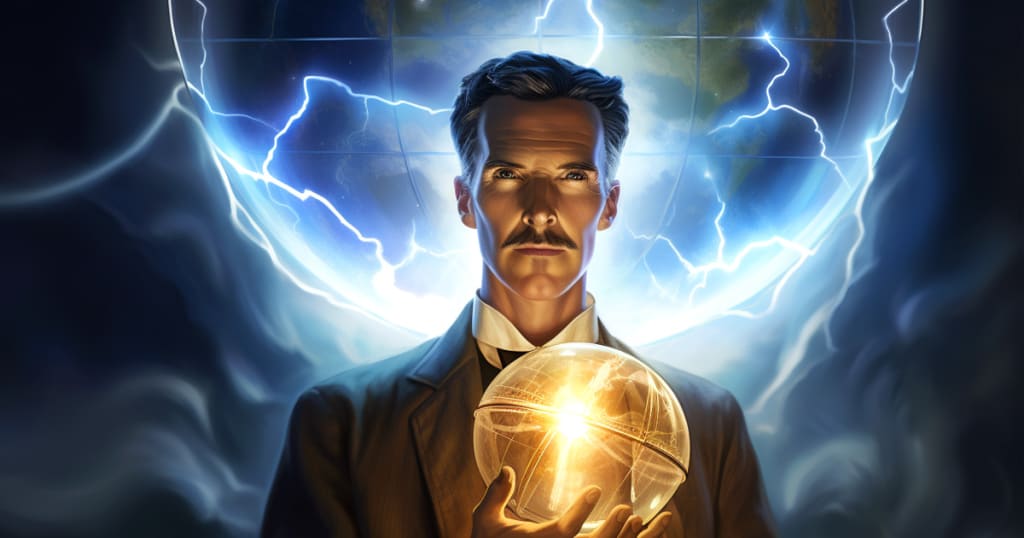
In the pantheon of history's greatest inventors, few names resonate with the same blend of admiration and mystique as Nikola Tesla. While figures like Henry Ford, the Wright brothers, and Thomas Edison are frequently celebrated, Tesla's profound contributions to technology often remain underappreciated. His innovations, from alternating current (AC) electricity to early radio technology, form the backbone of contemporary electrical systems. This is the story of Nikola Tesla, whose life concluded in obscurity but whose legacy is more relevant today than ever.
Origins and Early Life
Nikola Tesla was born on July 10, 1856, in Smiljan, within the Austrian Empire's borders, now Croatia. The dramatic backdrop of his birth—a lightning storm—was interpreted by his mother as a harbinger of his future brilliance. As a child, Tesla experienced the loss of his elder brother in a tragic horse-riding accident, an event that left an indelible mark on his psyche. Tesla's subsequent visions, characterized by intense flashes of light, were often perceived as a symptom of his profound intellectual abilities. These experiences facilitated his exceptional capability to conceive and perfect inventions mentally, circumventing the need for conventional design schematics.
Tesla's prodigious intellect was nurtured by his mother, Đuka Mandić, an inventive woman with an eidetic memory. Her influence and Tesla's inherent curiosity ignited his passion for engineering. Although his father, a clergyman, hoped Tesla would follow in his footsteps, Tesla's fascination lay in the realm of science and technology. His near-death experience from cholera in his teenage years led to a promise from his father to support his engineering studies, a promise that was fulfilled when Tesla survived. He pursued higher education at the Technical College of Graz in Austria, where his relentless work ethic and intellectual prowess became apparent.
Professional Struggles and Breakthroughs
Despite his brilliance, Tesla's career path was marred by difficulties. After an unsatisfactory stint in Europe, Tesla moved to New York City in 1884 with only four cents, having been robbed during his voyage. Initially employed at Thomas Edison's electric company, Tesla's impressive capabilities quickly earned him a reputation for excellence. However, his initial admiration for Edison was soon overshadowed by professional discord. The crux of their disagreement lay in the choice between direct current (DC) and alternating current (AC) systems for electrical distribution.
Tesla championed AC, which alternates the direction of the electric charge, allowing for efficient transmission over long distances without significant power loss. In contrast, Edison's DC system only allows electricity to flow in one direction, limiting its practical range. Edison's financial interests were vested in DC, leading to a contentious "War of the Currents." Edison undertook a campaign to discredit AC, including financing the development of the electric chair to demonstrate its supposed dangers.
Despite Edison's aggressive tactics, Tesla's AC system proved its superiority through a series of significant achievements. In 1893, Tesla and his partner George Westinghouse successfully illuminated the World's Columbian Exposition in Chicago, showcasing AC's potential to a global audience. Their triumph continued with the construction of the world's first large-scale AC power plant at Niagara Falls, which illuminated Buffalo, New York and marked a significant milestone in the use of renewable energy.
Generosity and Financial Misfortune
Tesla's professional life was characterized by both profound generosity and financial instability. In 1897, as Westinghouse's company grappled with substantial debt, Westinghouse sought to renegotiate Tesla's royalties to salvage the company. Demonstrating his deep gratitude and loyalty, Tesla agreed to tear up his contract, relinquishing a potential fortune valued at approximately $300 million in today's terms. Instead, he accepted a one-time payment of $216,000, equivalent to about $60 million today. This act of altruism ensured Westinghouse's company's survival but also left Tesla without the financial security he might have otherwise enjoyed.
Tesla's subsequent ventures included significant innovations, such as early neon lighting, the Tesla turbine, and pioneering work in x-ray technology. Among his notable inventions was the Tesla coil, a device capable of generating high-voltage electricity and enabling the transmission of powerful radio signals. However, a devastating fire in 1895 destroyed his laboratory, losing years of research and equipment. This setback and financial difficulties marked the beginning of a downturn in Tesla's fortunes.
The Radio Patent Controversy
Tesla's work on radio technology faced a significant setback when Italian inventor Guglielmo Marconi, backed financially by Edison, received widespread recognition. Despite Tesla's earlier developments and a patent application for radio, Marconi's successful transmission of the first transatlantic radio message in 1901 led to a contentious patent dispute. In 1904, the U.S. Patent Office awarded Marconi the patent for the radio, a decision that was later overturned in Tesla's favour only after his death. Marconi's subsequent Nobel Prize in Physics in 1911 further overshadowed Tesla's contributions, reflecting the complex interplay of scientific innovation and commercial interests.
Later Years and Legacy
Financial struggles and deteriorating mental health marked Tesla's later years. He lived in relative obscurity at the New Yorker Hotel from 1933 until his death on January 7, 1943. Despite being supported financially by the Westinghouse Corporation, Tesla's financial mismanagement and lack of commercial acumen left him impoverished at the time of his death.
Today, Tesla's contributions are increasingly recognized and celebrated. His pioneering work laid the foundation for modern electrical systems and wireless communication. The resurgence of interest in Tesla, partly fueled by modern entrepreneurs like Elon Musk, underscores the enduring relevance of his innovations. Tesla's visionary concepts, from AC electricity to early remote control technology, have profoundly influenced contemporary technology and continue to inspire future advancements.
Nikola Tesla's story is a testament to his unwavering commitment to science and his profound impact on modern civilization. Although he faced numerous personal and financial challenges, his contributions have fundamentally shaped the way we live today. Once obscured by the vicissitudes of his time, Tesla's legacy now stands as a beacon of innovation and a reminder of the transformative power of visionary thinking.
About the Creator
Horace Wasland
Research analyst, writer & mystical healer. Exploring the edge where science meets mystery. From mystery/the mystical, to facts, news & psychology. Follow for weekly insights on all four and please leave a tip if you like what you read :)
Reader insights
Nice work
Very well written. Keep up the good work!
Top insight
Eye opening
Niche topic & fresh perspectives
Keep reading
More stories from Horace Wasland and writers in Education and other communities.
Mind-Blowing Science
The last decade was undeniably one of the richest periods of scientific discovery. Researchers across all disciplines tested hypotheses, found proofs, and visited places that have made us rethink our understanding of not only our own planet but of the entire universe. It was the decade when we finally began to understand one of the greatest challenges humankind has ever faced, and we've learned far more than ever before about some of the most destructive objects in existence. Let's take a look at five of the most amazing scientific discoveries of the 2010s.
By Horace Wasland2 years ago in Education
Ferrara Enterprises Inc: A Trusted Manufacturer of NSN Components for Aviation and Industrial Systems
In the aerospace and defense supply chain, reliable component manufacturers play a crucial role in maintaining aircraft systems and industrial equipment. One such manufacturer is Ferrara Enterprises Inc, a company associated with producing components that appear in various National Stock Number (NSN) catalogs used across aviation, defense, and industrial sectors.
By Beckett Dowhana day ago in Education
The Power of Fellowship: Strengthening Faith Through Shared Moments and Unity
The Power of Fellowship in Everyday Faith The power of fellowship plays an important role in many faith communities. It brings people together through shared beliefs, prayer, and support. Fellowship is not only about gathering in one place. It is about building meaningful relationships that help people grow in faith.
By World Olivet Assembly3 days ago in Education
A Transparent Look at Vocal Challenges and Top Stories
Almost three years ago, we shared a resource article that served as a place for people to suggest new challenge prompts. We thought it would be a good idea to refresh that thread, and take the opportunity to answer a few common questions about top stories, how challenges are judged and how submissions are reviewed.
By Vocal Curation Team2 days ago in Resources


Comments (1)
Amazing content