
Never Use a Stopped Escalator As a Stairway, Here's Why
You use it every day without paying much attention to it

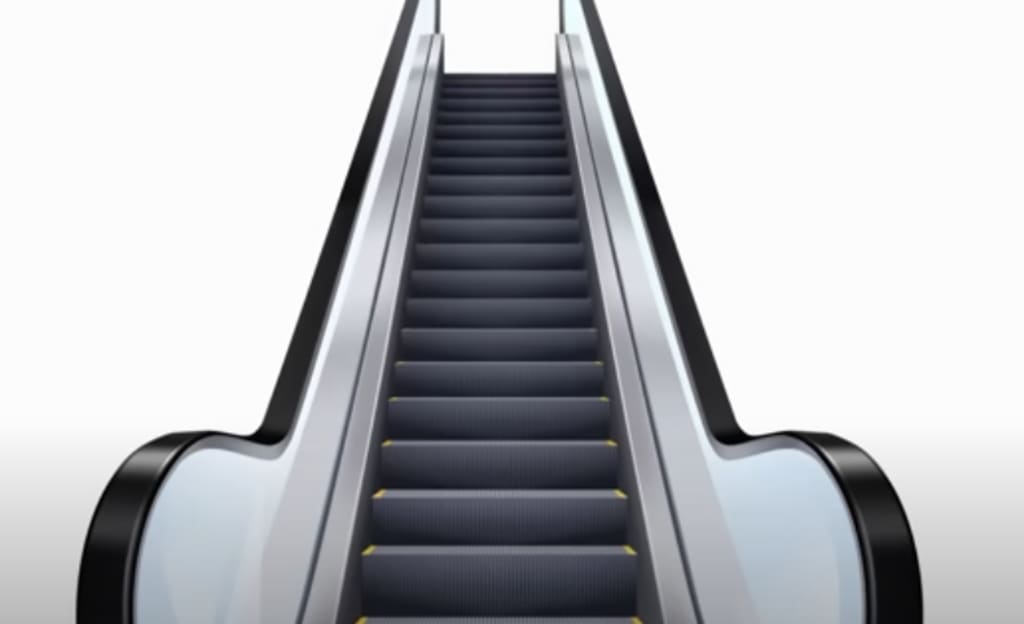
You're shopping at your favourite mall and it's time to get to the next level, you notice the Escalator stopped moving. So it's probably broken. You can choose to walk on it anyway or look for the stairs or an Elevator.
So what's it gonna be if you choose option A and bravely stepped onto a stopped Escalator? I have some bad news for you. You're putting yourself at risk since the Escalator isn't designed to be used as regular stairs.
In case the Escalator has stopped because of a mechanical failure, let's say the brakes suddenly stopped functioning, it could roll away under load at any time. You never know when it starts moving again, you might fall. The rise of the steps is normally higher on Escalators than on regular staircases. So depending on where the moving stairs stop, some of them won't be even.
You might trip on them easily especially when walking down plus Escalators are designed to carry only a certain load at the same time when people are moving like on a Conveyor belt. There's never too much weight at one moment. When the Conveyor belt is stopped, the weight can go beyond the limit and the Escalator might collapse.
If you still choose to walk on a non-working escalator be prepared to experience something known as the Broken Escalator phenomenon. Whenever you ride or walk on a properly functioning Escalator your brain marks it as a moving object. It fine-tunes the motor control of your legs and the balance mechanisms in your inner ear.
To adjust to this motion even when you see the Escalator is obviously still your unconscious brain recognizes it as the moving stairs. So once you're walking up or down a stopped Escalator, it feels weird and unnatural that it's not moving.
In 2015 London Underground, carried out research to see if it's more efficient to stand or walk on a moving Escalator. It turned out that standing only, escalators at Holborn Station could carry up to 30 percent more people during rush hours than Escalators that allow walkers on taller Escalators.
Most people tend to stand rather than walk leaving unused room on the left side. When all these spaces were filled, the waiting time to get on the moving stairs dropped sharply. As a result, the station only got overcrowded once compared to the regular several times a week.
The underground took note of these results but didn't ban walking on Escalators altogether since many people still wanted to be able to do it. Have you ever tried cleaning your shoes against those brushes you see on any Escalator? Well, they're actually there for safety.
These brushes are also called Skirt Deflectors. The Skirt is the gap between the Stairs and the Sun. The brushes keep your shoes, feet and loose clothing away from the Gap. When you get on an Escalator, you're mostly focused on keeping balance and hardly pay attention to little details. You won't notice the Gap when everything is fine. But if the Escalator goes out of order, it can give you a hard time.
The Gap leads down to the mechanism that makes the Escalator move if something like a bag or a jacket or even your toes get stuck there. It can interrupt the motor's work and cause an accident. Escalator Brushes are there to stop foreign objects from getting inside the gap or deflecting them. Some Escalators also have a yellow border to indicate danger and remind passengers not to stay too close to the edges.
New Delhi Metro has an extra safety feature inspired by the traditional draped outfit. Saris can get easily stuck on the corners on moving stairs to prevent that from happening, they added sorry guards on both sides of the Escalators. The concept of Escalators is much older than you could possibly imagine. Their Ancestors were used for the construction of the Great Pyramid of Giza in Egypt.
They put over 2 million stone cubes on tree trunks to roll them upwards on Artificial Earth Bridges around the construction site. The idea of constantly Rolling Wheels under the transported rocks, became one of the basic principles for future Escalators. Like with many inventions, several people are credited for having invented the moving staircases as we know it today.
American Inventor and Engineer Jesse Reno was one of them. He patented his invention in 1892. It was known as the incline Elevator and was installed at the old Iron Pier at Coney Island in New York City. It was extremely popular and 75,000 people are reported to have tried out the invention.
During the two weeks that it was showcased, the steam-powered conveyor belt was moving at a 25 degree angle and travelled to a height of seven feet. It was metal with a serrated surface much like the Escalators we know and love today. They were comb-like teeth at the top and bottom Landings to make the transitions move.
There was also a handrail for passenger safety already back then. Reno suggested that one Escalator should take passengers up and another one down. His invention was a success and it was installed at various locations. By the beginning of the 20th Century, it was later purchased by the Otis Elevator company.
Escalators have transformed shopping, thanks to them, the stores were able to grow to many levels but the first Escalator which was installed at the end of the 19th Century at London's Herod store, scared many customers. It was the first moving staircase in England and the people had no idea it was safe to use.
Some of them believed it could mess up with their internal organs. To calm them down somehow, the store staff offered terrified Shoppers drinks at the top of the Escalator which was only moving up.
The longest outdoor Escalator system in the world is Central Mid-level Escalator in Hong Kong. It runs for around half a mile. The idea behind this engineering Gem was to ease the traffic situation in this busy City District. They built 20 Escalators and three inclined moving walkways.
At the end of the 20th Century the system changes its direction to meet the needs of the commuters and runs downhill in the morning and uphill from 10:30 a.m until midnight. It's now popular not only with these local residents but also with tourists who use it to get through the historical district, up to the dining and nightlife hub.
The Escalator in the basement of Moore's department store in Kawasaki Japan, has made it to the Guinness Book of World Records as the shortest in the world. The particulator as it's called, only has five steps and it takes its passengers 2.7 feet down to another Lander from where they continued.
The Descent manually, there are regular stairs separated by a guardrail from the Escalator and they're a faster option for those in a hurry. No one knows the reason why the Escalator had to be installed here. It was probably to set a world record and attract more customers to the store.
All Escalators are custom made depending on where they'll be installed. There are some basic settings and mechanisms of course but the height, width, angle of incline and speed are varied to fit the customer's requirements. Some escalators even have a royal mode since they're designed for royalty. These models come with a button that allows the passengers to start and stop the moving staircase whenever they want.
There are also models with cooling units for hotter regions, so the passengers can safely touch the handrails. You wouldn't want to hold on to a frying pan! Would you? Mobile Escalators which travel on board, Airplanes can be used for boarding and disembarking passengers. There are also Escalators high in the Alps fitted with anti-slip treads for skiers and stairs moving underwater through transparent tunnels at aquariums around the world.
That's it for now.
So, hey if you pacified your curiosity, then give the story a Like and Share it with your friends.
Subscribe for more stories.
About the Creator
Keep reading
More stories from Kamusiime Comrade and writers in Education and other communities.
International Footballer Joins Forces With StoryZoo
An international footballer has joined forces with one of the UK’s main education platforms to launch a brand-new nationwide initiative. Levi Colwill who has played for both Chelsea and England aims to reverse the decline in children’s reading engagement by teaming up with StoryZoo to launch a brand-new scheme which will look at increasing the rate at which children gain the valuable skills they need to read.
By Ashish Prabhua day ago in Education
From Cockpit to Climb: Flight Teaching Skills in Mountain Environments
At first glance, flying an aircraft and moving across icy mountain terrain seem very different. However, both activities demand strong judgment, careful planning, and steady leadership. Because of this overlap, flight teaching skills in mountain environments are highly valuable for instructors who guide people in cold, high-altitude environments. The habits developed in aviation training help instructors stay focused, organized, and calm when conditions become difficult.
By Duke Valentour4 days ago in Education



Comments
There are no comments for this story
Be the first to respond and start the conversation.