
Need Emergency Dental Care in Chicago? Here’s What Your Insurance May Cover
Chicago Dental Care Guide

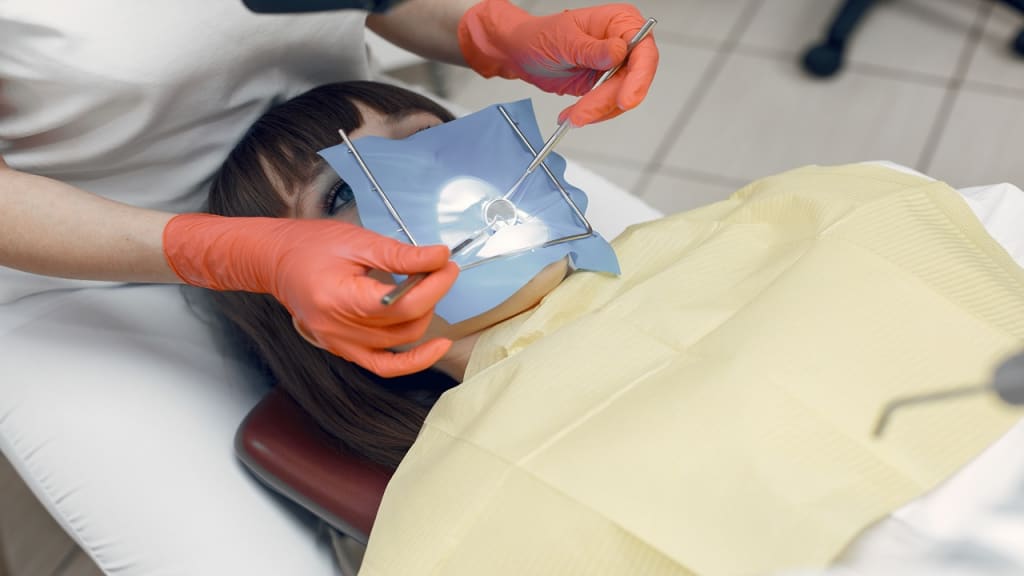
Dental emergencies rarely happen on schedule. Whether it’s a chipped tooth from a weekend mishap, a sudden ache that wakes you up at night, or a cracked molar just before a big meeting—when pain hits, the last thing you want to worry about is insurance coverage. If you’re searching for emergency dentist in Chicago, this guide breaks down what qualifies as an emergency, what your insurance might cover, and how to access timely help—especially when the clock is ticking.
What Counts as a Dental Emergency?
Many people delay treatment because they’re unsure whether their situation is urgent enough. Here’s a quick rundown of common issues that do qualify as dental emergencies:
- Severe toothache or swelling that interferes with daily activities
- Cracked, broken, or chipped teeth, especially with exposed nerves
- Knocked-out (avulsed) teeth due to trauma
- Uncontrolled bleeding from the mouth or gums
- Signs of infection such as pus, facial swelling, or fever
- Broken crowns or lost fillings causing pain or functional issues
- Dental abscesses that may pose a serious health risk
Even if you're unsure whether it's serious, it's always better to contact a dentist right away. If you find yourself searching 'is a cracked tooth an emergency?' or wondering what to do about a sudden toothache, remember—only a dentist can properly diagnose and treat the issue before it worsens.
Where to Turn for Emergency Dental Care in Chicago
When a dental emergency strikes—especially outside of 9-to-5 hours—knowing where to go can feel overwhelming. Chicago is home to a wide range of emergency dental providers, including private dental practices, urgent dental care clinics, and community health centers. However, not every office is equipped to handle urgent cases promptly or offer flexible scheduling, which is why it’s essential to know your options ahead of time.
If you’ve found yourself searching for terms like “emergency dentist near me” or “dentist open on Saturday near me”, you’re likely looking for providers that offer extended hours, weekend availability, or same-day appointments. These services are crucial for managing sudden issues like a chipped tooth, a dental abscess, or the need for an emergency extraction—problems that can escalate quickly if left untreated.
When evaluating emergency dental clinics in Chicago, consider the following:
- Availability of same-day or walk-in appointments
- 24/7 phone support or after-hours contact options
- Range of emergency treatments offered (e.g., root canals, temporary restorations, extractions)
- Transparent pricing or payment plan options
- Whether they accept your insurance or offer flexible financing
Many modern dental practices now integrate emergency care into their regular services, meaning you don’t necessarily need to visit a dedicated "emergency clinic" to get timely help. Instead, look for general or cosmetic dentists who list emergency care as part of their service offerings. These providers often offer more personalized care and can seamlessly continue treatment after the crisis is addressed.
Having a go-to emergency dental care provider in your neighborhood—or even one open on weekends downtown—can make all the difference in minimizing discomfort and preventing further complications. That peace of mind is especially important in a city like Chicago, where traffic, weather, and scheduling conflicts can delay care if you're not prepared.
Insurance and Emergency Dental Care: What’s Covered?
Here’s where things can get confusing—and where preparation matters. Emergency dental treatment coverage depends on the type of insurance you have (dental vs. medical), the nature of the emergency, and your individual plan benefits.
Let’s break it down:
1. Dental Insurance Coverage
Most traditional dental insurance plans (like Delta Dental, Guardian, or MetLife) cover a portion of emergency services, especially for issues like:
- Exams and X-rays to diagnose pain
- Emergency extractions of damaged or infected teeth
- Temporary fillings or repairs for lost restorations
- Palliative treatments to manage severe discomfort
Limitations may apply, such as annual maximums, co-pays, or waiting periods—especially if your policy is new.
2. Medical Insurance in Dental Emergencies
If the emergency involves trauma to the face or jaw, your medical insurance may step in. For instance, an ER visit after a car accident causing dental damage could be billed through your medical plan, especially if imaging or hospitalization is required.
3. Out-of-Pocket Options
If you don’t have dental insurance—or if your coverage doesn’t include emergencies—don’t panic. Many Chicago dental offices offer:
- In-house dental memberships with discounted emergency care
- Payment plans and third-party financing (like CareCredit)
- Transparent pricing for walk-in or same-day appointments
Common Emergency Treatments—and Their Coverage Odds
To better understand what might be included under your plan, let’s look at specific scenarios:
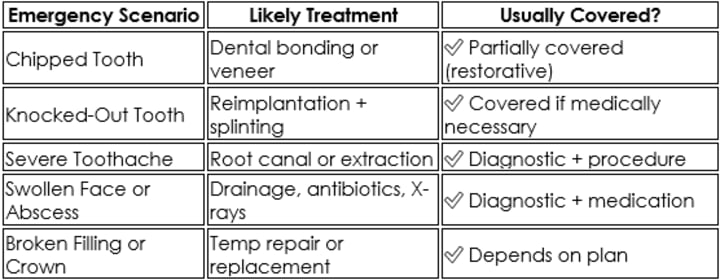
Note: Always check with your provider or dentist’s billing team to verify.
What To Do When a Dental Emergency Strikes
Here’s a quick plan to follow:
- Don’t delay—call your dentist as soon as possible.
- Use home remedies temporarily (ice packs, rinsing, OTC pain relief).
- Save any lost pieces (e.g., chipped tooth or knocked-out tooth).
- Bring your insurance card and details when you arrive.
- Ask about payment plans before treatment begins if cost is a concern.
Why Acting Fast Matters
Waiting out a dental emergency can turn a simple fix into a complex, costly problem. A cracked tooth left untreated might lead to infection or even extraction. A minor chip can worsen and affect your bite or speech. Even a small gum infection can spread to other parts of your body.
Timely treatment not only saves your tooth but often saves your wallet, too.
Getting Help When You Need It Most
Emergency dental care isn’t just about pain relief—it’s about protecting your long-term health. Whether it’s a sudden injury, a nagging ache, or a fractured crown, knowing where to go and what your insurance will (or won’t) cover makes all the difference.
Because dental emergencies don’t wait. And neither should you.
About the Creator
Hannah Elise
Hannah Elise is a dental health writer with 12+ years of experience. With a Master’s in Public Health and coming from nursing background, she crafts patient-focused content to improve outcomes and support dental professionals.
Keep reading
More stories from Hannah Elise and writers in Education and other communities.
Dental Implants in 2025: What’s New, What’s Affordable, and What You Should Know
Dental implants have come a long way—and in 2025, they’re more advanced, reliable, and accessible than ever. Whether you’ve lost a tooth due to decay, injury, or aging, modern implant dentistry offers long-term solutions that restore both function and confidence. With innovations in materials, placement techniques, and patient comfort, understanding the full landscape of implant options is essential before moving forward.
By Hannah Elise7 months ago in Education
Surviving Cancer: Entering the Golden Alchemical Door to Teaching
It starts with love . . . Entering the Golden Door: Who Am I? Going through cancer treatments with chemo, a strange thing happened, for I started to forget things, even who I am because my wife ghosted me and my friends would have nothing to do with me. Without human contact, you forget what it means to be human. I am a professor at a university, but I forgot what I taught. . . .
By WILD WAYNE : The Dragon King2 days ago in Education
Wild Card Weekend Recap: What Happens Now?
I think I figured out why I love Wild Card Weekend so much. It's because it's the first playoff anything of the calendar year. The NFL season starts in the fall, and once upon a time, the champion was crowned either on or slightly before New Year's. The evolution of the NFL schedule has resulted in the playoffs starting just into the New Year, and currently, the final week of the season falls on the first weekend of the New Year, with Wild Card Weekend coming a week after that. So yes, chronologically, the NFL's Wild Card Weekend serves as the first playoff anything of the calendar year.
By Clyde E. Dawkins6 days ago in Unbalanced



Comments
There are no comments for this story
Be the first to respond and start the conversation.