
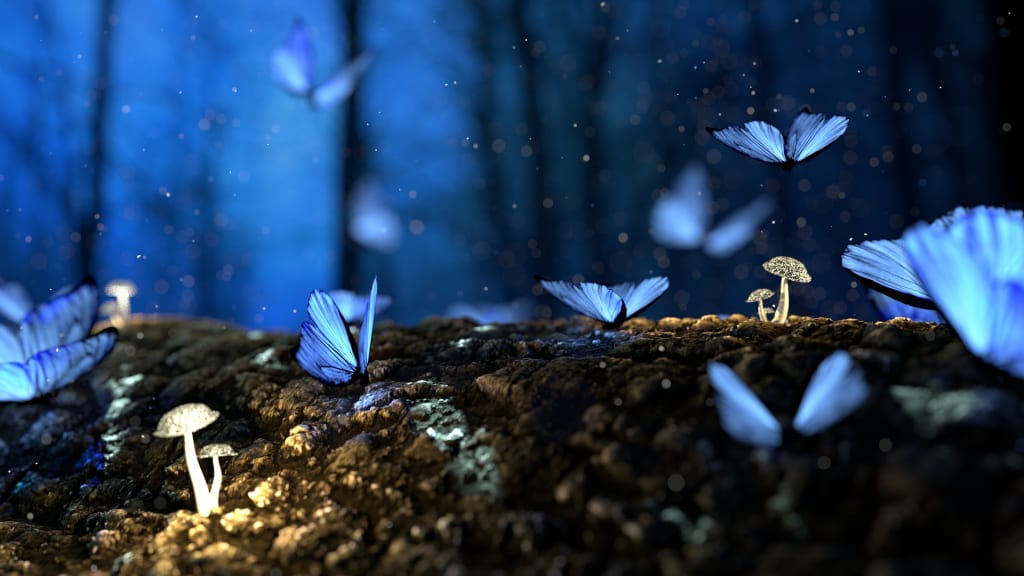
Nature is an incredibly complex and diverse system that encompasses everything from the smallest microorganisms to the vast expanse of the universe. Here are some interesting facts about nature that demonstrate just how amazing and awe-inspiring it can be:
There are over 8.7 million known species of living organisms on Earth, but scientists believe there may be as many as 100 million more waiting to be discovered.
The Amazon Rainforest is home to more than 2,000 species of birds, 427 species of mammals, and 2.5 million species of insects.
The tallest mountain on Earth is Mount Everest, which stands at a height of 29,029 feet (8,848 meters).
The largest waterfall in the world is the Angel Falls in Venezuela, which drops water from a height of 3,212 feet (979 meters).
The Great Barrier Reef is the largest living structure on Earth, stretching for over 1,600 miles (2,600 km) along the coast of Australia.
The oldest tree in the world is a bristlecone pine in California called Methuselah, which is over 4,800 years old.
The fastest animal on Earth is the peregrine falcon, which can dive at speeds of up to 240 miles (386 km) per hour.
The blue whale is the largest animal on Earth, weighing up to 200 tons and reaching lengths of up to 100 feet (30 meters).
The deepest part of the ocean is the Challenger Deep, which is located in the Mariana Trench and reaches a depth of 36,070 feet (10,994 meters).
The Sahara Desert is the largest hot desert in the world, covering an area of 3.6 million square miles (9.4 million square kilometers).
The world's largest flower is the Rafflesia arnoldii, which can grow up to 3 feet (1 meter) in diameter and weigh up to 15 pounds (7 kg).
The oldest known fossil is a 3.5 billion-year-old stromatolite, which is a type of rock-like structure created by ancient bacteria.
The sun is actually a star, and it's located at the center of our solar system. It's estimated to be about 4.6 billion years old.
The Northern Lights, also known as the Aurora Borealis, are caused by electrically charged particles from the sun colliding with particles in the Earth's atmosphere.
The Grand Canyon, located in Arizona, is 277 miles (446 km) long and up to 18 miles (29 km) wide.
The Great Salt Lake in Utah is the largest saltwater lake in the Western Hemisphere, covering an area of 1,700 square miles (4,400 square kilometers).
The largest volcano on Earth is Mauna Loa in Hawaii, which stands at a height of 13,678 feet (4,169 meters) above sea level.
The Arctic Circle is a region of the Earth that receives 24 hours of daylight during the summer solstice and 24 hours of darkness during the winter solstice.
The Dead Sea, located between Jordan and Israel, is the lowest point on Earth and has a salt concentration that's 10 times higher than the ocean.
The Great White Shark is the largest predatory fish in the world, with some individuals growing up to 20 feet (6 meters) long.
The monarch butterfly is known for its incredible migration. Every year, millions of monarch butterflies travel up to 4,800 kilometers (3,000 miles) from Canada and the United States to Mexico, where they spend the winter months.
The Earth's magnetic field is created by the movement of molten iron in the planet's core.
The Baobab tree, found in Africa, has a unique ability to store water in its trunk. Some Baobab trees can reach enormous sizes and can store up to 120,000 liters (32,000 gallons) of water within their trunks.
About the Creator
Keep reading
More stories from Muhammed Asim Shahzad and writers in Education and other communities.
Nature and human relationship
Nature is a vast and complex system of living and non-living elements that exist on our planet. It encompasses everything from the smallest microbes to the largest animals, and from the tiniest particles to the vast expanses of space beyond our atmosphere. At the same time, humans are an integral part of this system, with a unique ability to shape and interact with nature in a variety of ways. In this essay, we will explore the relationship between nature and humans, and the ways in which we can foster a more harmonious and sustainable coexistence.
By Muhammed Asim Shahzad3 years ago in Education
The Balanced Parent: Embracing Parenthood Without Losing Yourself
In today’s fast-paced society, the demands on parents have never been higher. From managing work deadlines to preparing meals and helping with homework, the modern parent juggles countless responsibilities daily. Amid all this, it’s easy to feel overwhelmed. Yet, being a hands-on parent is one of life’s most rewarding roles when approached with intention and heart.
By Alfonso Kennard5 days ago in Education



Comments
There are no comments for this story
Be the first to respond and start the conversation.