
Natural Phenomena That Seem to Break the Laws of Nature
Volume 1
Snow donuts, also known as snow rollers, are a rare meteorological phenomenon in which large cylindrical snowballs form naturally in certain conditions. They are created when a thin layer of ice forms on the surface of the snow, followed by a layer of loose, wet snow that is just sticky enough to adhere to the ice. If the wind is strong enough to move this layer of wet snow, but not strong enough to break it apart, it can roll along the surface and gather more snow as it goes, forming a cylinder-shaped snowball that can be several feet in diameter. The resulting snow donut may have a hollow center and can have a ring-like shape due to the layers of snow that have been rolled up. Snow donuts are quite rare and require very specific weather conditions to form. They are typically found in open areas with little or no vegetation, such as fields or meadows, and are most commonly observed in regions with cold, snowy winters and high winds.
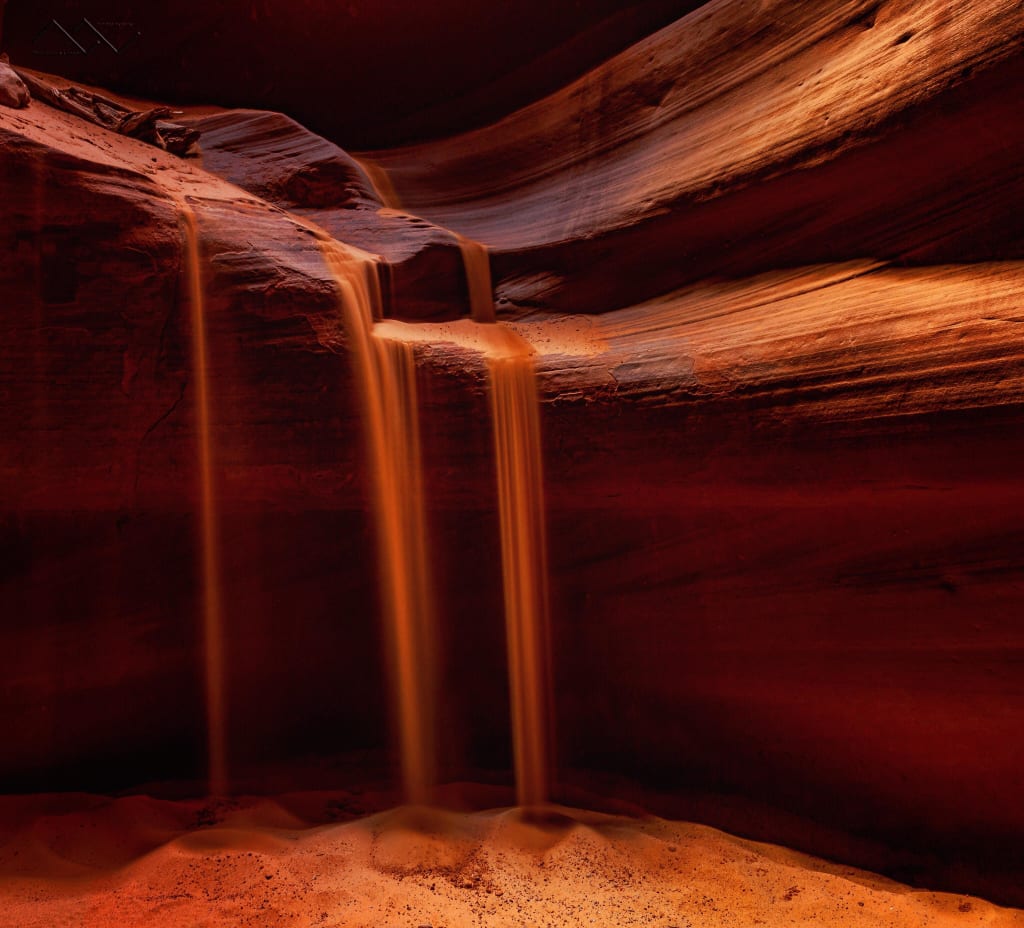
A sand waterfall is a unique geological formation where sand appears to be flowing down a slope like a liquid waterfall. Sand waterfalls can occur in certain types of sand dunes, particularly those with a steep slip face or a concave slope that allows the sand to flow downward in a continuous stream.
The sand waterfall effect is caused by the angle of the slope, the size and shape of the sand particles, and the presence of moisture in the sand. When sand particles are able to roll downhill without sticking to one another, they can form a cascading effect that resembles a waterfall. This process is known as "avalanching." Moisture can help to reduce the friction between the grains of sand, making it easier for them to move and creating a smoother, more fluid flow.
Sand waterfalls are typically found in desert regions, particularly in areas with large sand dunes, such as the Sahara Desert or the Arabian Desert. They are a rare and fascinating natural phenomenon that can provide a striking visual display, particularly at sunrise or sunset when the light can create dramatic shadows and colors on the sand.
Fairy rings are a naturally occurring phenomenon that appears as a circular ring or arc of mushrooms, grass, or other vegetation in a grassy or wooded area. The rings can range in diameter from just a few inches to over 100 feet and are often surrounded by dead or brown grass.
The formation of fairy rings is typically caused by certain species of fungi that grow in a circular pattern underground. These fungi form a network of filaments known as mycelium that spread out from a central point and break down organic matter in the soil. As the mycelium expands, it can form a ring of fungi that extends to the surface and produces mushrooms or other fruiting bodies.
Fairy rings can be found in many different types of habitats, including grassy fields, forests, and even in urban areas. In some cultures, fairy rings are associated with mystical or supernatural beliefs, and are said to be the result of dancing fairies or other magical creatures.
While fairy rings can be a beautiful and intriguing natural phenomenon, they can also cause damage to lawns and gardens. The mycelium can compete with grass and other plants for nutrients, causing the vegetation within the ring to die off. Additionally, some species of fungi that produce fairy rings can be poisonous, so it is important to exercise caution when observing or handling mushrooms or other fungi.
Red rain is a meteorological phenomenon in which rainfall appears to be colored red, pink, or orange. This phenomenon has been reported in various parts of the world, including India, Sri Lanka, and parts of Europe.
The cause of red rain is still a matter of debate among scientists, but there are several theories that have been proposed. One theory suggests that the red coloration is caused by the presence of airborne particles such as dust or pollen, which can give the water a reddish tint. Another theory proposes that the red rain is caused by the presence of microorganisms, such as algae or bacteria, that have been swept up into the atmosphere and then brought down by precipitation.
One of the most well-known incidents of red rain occurred in Kerala, India, in 2001. The rain persisted for several days and was accompanied by reports of other strange phenomena, such as yellow and green rain, as well as reports of meteor sightings. Researchers who analyzed samples of the red rain found that it contained a high concentration of red-colored cells, which were initially thought to be a type of algae. However, subsequent studies found that the cells did not contain chlorophyll, and their exact nature and origin remain a mystery.
Overall, while the cause of red rain is not yet fully understood, it is generally believed to be a natural phenomenon and not a sign of any impending disaster or supernatural occurrence.
About the Creator
Keep reading
More stories from Zahim Goulbourne and writers in Education and other communities.
The Architecture of Community Strength: Uniting Faith, Family, and Financial Responsibility
Communities that endure social, economic, and cultural challenges are rarely held together by policy alone. Their strength lies in shared values, stable relationships, and the responsible use of resources. Faith, family, and finance represent three foundational forces that shape how communities function and grow. When these forces are aligned, they form a reliable framework for building stronger, healthier, and more resilient communities.
By Jason Barakat5 days ago in Education
Telemedicine Speeds Crisis Care When Time Matters
When a crisis strikes, time matters more than anything else. People may face injury, fear, or sudden illness. Roads may be blocked, clinics may be damaged, or staff may be overwhelmed. In these moments, help must arrive fast. Using telemedicine technology to deliver crisis aid faster has become a powerful answer to this challenge. It allows care teams to reach people right away, even when face-to-face care is not possible.
By Dr. Seth Eidemiller6 days ago in Education
Whiskey At Dusk
Guess the whiskey was more important to you in the end, wasn’t it? It was more than the well-being of your friends; more vital than showing up to the places you promised you would and could come to; more critical of a matter than fulfilling your damn responsibilities and getting the press off your back.
By Snarky Lisa2 days ago in Humans


Comments
There are no comments for this story
Be the first to respond and start the conversation.