
Nasa rover Curiosity visits 'Scotland' on Mars
A Touch of Scotland on the Martian Frontier
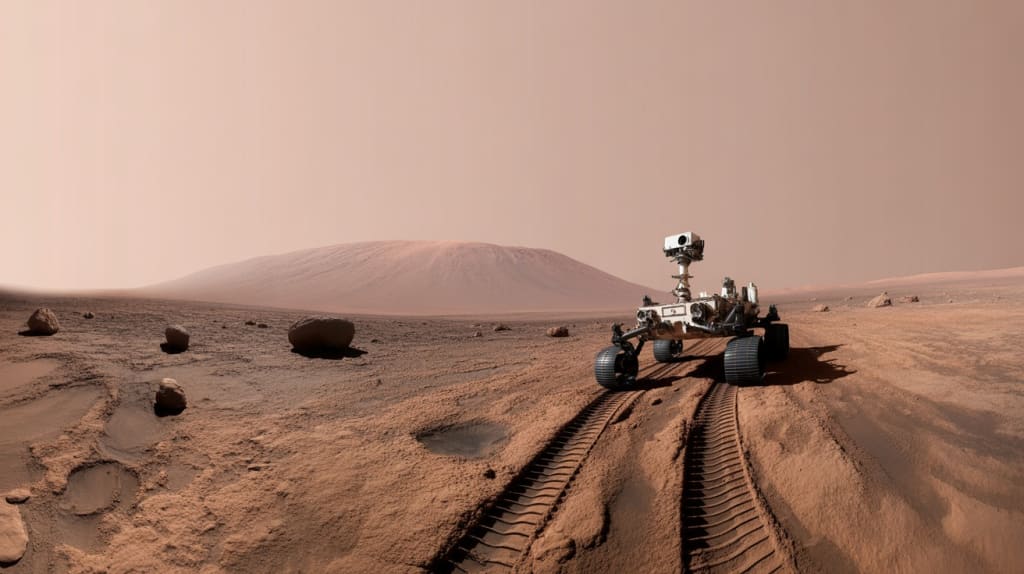
NASA's Mars rover Curiosity is currently exploring a fascinating region of the Red Planet that has been named after Torridon, a rugged and geologically significant area in the northwest Highlands of Scotland. This is part of NASA’s tradition of naming Martian geological features and exploration zones after places on Earth—particularly those that share similarities in landscape, structure, or scientific interest.
The area Curiosity is surveying lies within what NASA scientists refer to as the Torridon quadrangle, a sector on Mars that pays homage to Scotland's ancient geological legacy. The choice of "Torridon" is particularly meaningful because of the Torridonian Supergroup, a rock formation in the Scottish Highlands that dates back over a billion years. These rocks contain some of the oldest known evidence of life in the United Kingdom, making the name fitting for a Martian site where scientists are hunting for signs of ancient microbial life.
This isn't the first time NASA has used Scottish names on Mars. In recent years, the Curiosity mission has passed through Martian landmarks dubbed Siccar Point, Muck, Wick, Sandwick, and Holyrood, all named after real places across Scotland. These names are not just symbolic—they help mission teams identify and communicate about different locations and rock targets on the Martian surface.
In fact, about five years ago, a celebration marked Curiosity’s arrival at another Scottish-named site: Glenelg. Coincidentally, the Glenelg on Mars was explored just as people in the real Glenelg, Scotland, held a special event to commemorate the link between Earth and Mars.
Through these names, Scotland's rich geological heritage now has a unique and lasting presence on another world.
Berwickshire coast
Prof John Bridges, of the University of Leicester and a participating scientist on the Mars Science Laboratory Mission, said the Red Planet had been divided up into quadrangles by scientists studying it.
Curiosity is scheduled to spend a year exploring the Torridon quadrangle.
Prof Bridges told BBC Alba: "The group thought it appropriate to have a Scottish quadrangle because Scotland is really the birthplace of geology.
"Torridon has this red sandstone called the Torridonian which are the oldest sediments in the UK, and they are a great analogue for what we are seeing on Mars."
Geological features on the planet, such as rocky outcrops, have also been given Scottish names.
These include Yell and Sandness in Shetland, Coll, Arran, Oban and also Siccar Point on the Berwickshire coast, an area of geology studied by Edinburgh-born 18th Century geologist James Hutton.
Talisker and Laphroaig, the names of two Scottish whiskies, have also been used.
Another of the features has been called Stonehaven, where there is a chip shop that claims to be the birthplace of the deep-fried Mars bar.
In October 2012, the quiet, picturesque village of Glenelg, nestled along the western coast of the Scottish Highlands, became the center of an extraordinary celebration. The occasion? The arrival of NASA’s Curiosity rover at a site on Mars that had been given the same name—Glenelg—as the Scottish village. To mark this unique interplanetary connection, the local community organized a traditional ceilidh, a joyful Scottish gathering featuring music, dance, and storytelling. It was a rare and memorable fusion of ancient culture and cutting-edge science.
The event drew notable guests from the world of space exploration and astronomy, including Dr. Bonnie Dunbar, a former NASA astronaut, and Professor John Brown, Scotland’s Astronomer Royal. Their presence underscored the significance of the moment, linking a remote Scottish hamlet with the grand human endeavor of exploring another planet.
Dr. Dunbar is an esteemed veteran of the U.S. space program. During the 1980s and 1990s, she flew on five space shuttle missions, including flights aboard Challenger and Columbia. In 1995, she made history by participating in the first American space shuttle mission to dock with the Russian space station Mir, symbolizing a new era of international cooperation in space. She returned in 1998 on the final shuttle mission to deliver a U.S. astronaut to Mir, closing a significant chapter in the Shuttle-Mir program.
Her connection to Scotland was also deeply personal. Dr. Dunbar’s paternal grandparents were both born in Scotland—her grandfather Charles Dunbar hailed from Dundee, while her grandmother Mary was born near Gardenstown, a small coastal village close to Banff in northeast Scotland. Their Scottish roots added an emotional resonance to the event, as Dunbar stood in the land of her ancestors, celebrating a Martian landmark that bore a name linked to her heritage.
Through that night of music, memory, and cosmic connection, the people of Glenelg bridged the vast distance between Earth and Mars—one reel, one story, and one rover at a time.
About the Creator
Kamran Khan
Proffessor Dr Kamran Khan Phd General science.
M . A English, M . A International Relation ( IR ). I am serving in an international media channel as a writer, Reporter, Article Writing, Story Writing on global news, scientific discoveries.
Keep reading
More stories from Kamran Khan and writers in Education and other communities.
Empowering Your Financial Journey: The Role of Wellness and Coaching
Financial success is not only about numbers, budgets, and investment strategies. It is also deeply connected to mindset, habits, and overall well-being. Many people work hard to improve their financial situation, yet they often overlook the emotional and behavioral aspects that influence financial decisions. Empowering your financial journey means recognizing that financial wellness and coaching can play a powerful role in building lasting stability and confidence.
By Mario Payne7 days ago in Education
How Problem-Solving Shapes the Success of Modern Entrepreneurs
Entrepreneurship today is defined by constant change and relentless challenges. Business leaders are no longer operating in stable, predictable environments; instead, they face shifting markets, evolving customer expectations, and rapid technological advancements. In this environment, problem-solving has become the cornerstone of entrepreneurial success. The ability to identify issues, analyze them critically, and create practical solutions separates thriving ventures from those that struggle to survive. Entrepreneurs who develop strong problem-solving skills are better equipped to innovate, make strategic decisions, and guide their businesses toward sustainable growth.
By Greg Warnockabout 9 hours ago in Education



Comments
There are no comments for this story
Be the first to respond and start the conversation.