
My Essay Almost Got Me Kicked Out — Until I Understood AI Detection
I didn’t think a Google Doc could threaten my academic record.

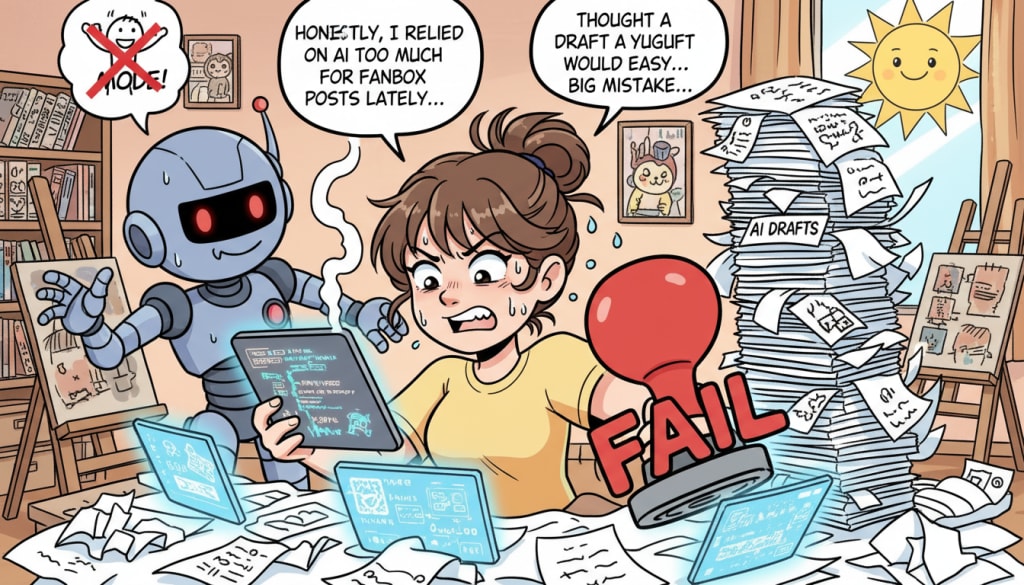
I didn’t think a Google Doc could threaten my academic record.
But at 2:17 a.m., staring at the submission portal, I genuinely thought I was in trouble.
My final paper — 4,300 words, weeks of research, carefully cited sources — was flagged.
“High probability of AI-generated content.”
I felt my chest tighten.
The Moment Everything Tilted
I didn’t use ChatGPT to write it.
I didn’t outsource it.
I didn’t cheat.
I edited. I refined. I restructured awkward sentences. I polished transitions. I tried to make it sound academic — confident, structured, coherent.
Apparently, that was enough.
The detection tool didn’t explain anything. It just gave me a number. A big one.
And suddenly, I wasn’t thinking about grades anymore. I was imagining academic misconduct meetings and uncomfortable conversations.
Numbers Without Answers
In panic mode, I ran my essay through three different detection tools.
One said 63%.
Another said 52%.
A third jumped to 71%.
None of them told me why.
They didn’t show structure. They didn’t show patterns. They didn’t highlight problematic phrasing. Just percentages — like verdicts with no reasoning attached.
That’s when I realized something unsettling:
If I didn’t understand what was triggering the flag, I couldn’t fix it.
The First Time I Used an AI Checker That Explained Itself
Out of desperation, I searched for something more transparent and found an AI Checker that actually broke things down visually.
Instead of a single intimidating percentage, it highlighted patterns:
Overly uniform sentence length
Mechanical transitions
Predictable paragraph rhythm
Repetitive structural phrasing
For the first time, I could see what detection models react to.
It wasn’t accusing me of cheating.
It was reacting to structure.
That difference mattered more than I expected.
The Uncomfortable Realization
When I try to sound “smart,” I become rigid.
My sentences become evenly spaced.
My transitions become formulaic.
My tone becomes unnaturally consistent.
In trying to sound academic, I had removed the human rhythm from my writing.
The AI Checker wasn’t exposing dishonesty.
It was exposing predictability.
And predictability, in large language models, looks suspicious.
Editing With Awareness Instead of Fear
Once I understood the structural patterns, I stopped randomly swapping words.
Instead, I:
Varied sentence length intentionally
Broke overly polished transitions
Added natural emphasis and nuance
Allowed small stylistic imperfections
The result? The probability score dropped significantly across multiple AI Checker tools.
But more importantly, the essay felt like me again.
Where AI Humanization Comes In
At one point, I experimented carefully with an AI Humanizer feature to analyze whether certain sections sounded overly mechanical.
What surprised me wasn’t that it “rewrote” my essay.
It showed how subtle phrasing patterns can unintentionally mimic AI-generated cadence — even when the ideas are entirely original.
That perspective shifted how I edit forever.
The Bigger Lesson About AI Checkers
AI detection isn’t disappearing.
Professors aren’t abandoning AI Checker tools.
And students aren’t going to stop worrying about false positives.
The real issue isn’t detection itself.
It’s opacity.
When an AI Checker only gives you a score, it creates anxiety.
When an AI Checker shows structural reasoning, it creates control.
And control is what students need right now.
Why This Experience Changed How I Write
Before this happened, I thought AI detection was about catching cheating.
Now I understand it’s often about pattern recognition.
Large language models generate text with statistical regularity — consistent rhythm, smooth transitions, balanced paragraphs.
Ironically, high-achieving students often mimic those same patterns when trying to sound “professional.”
That overlap is where confusion begins.
An AI Checker that reveals structure instead of just assigning blame becomes less of a threat — and more of a diagnostic tool.
The Relief I Didn’t Expect
After revising with awareness, I re-ran the paper through several AI Checker systems.
The scores stabilized at much lower levels.
But the real relief wasn’t the number.
It was knowing why.
I wasn’t guessing anymore.
I wasn’t spiraling.
I wasn’t editing blindly at 3 a.m.
I understood the mechanics.
Final Thought
That night could have turned into a disciplinary nightmare.
Instead, it became a lesson about voice, rhythm, and the invisible patterns behind modern writing.
In 2026, writing isn’t judged only by argument quality.
It’s analyzed for structural signals.
And sometimes, the difference between panic and confidence isn’t rewriting everything.
It’s using an AI Checker that actually shows you what’s happening beneath the surface.
What surprised me most wasn’t how detection tools work — it was how little most students understand about the mechanics behind them. We’re told to “write originally,” but rarely taught how statistical writing patterns are interpreted by algorithms.
The overlap between polished academic tone and machine-like regularity is thinner than most people realize. That gray area is where anxiety grows.
Understanding structure changed how I approach every paper now. I don’t write defensively anymore.
I write naturally first, then refine with awareness. And that shift — from fear to clarity — might be the most valuable thing I learned from the entire experience.
About the Creator
peggykang
An AI enthusiast who loves writing
Keep reading
More stories from writers in Education and other communities.
The Silent Surge Mapping China USD 28.35 Billion E-Bike Future (2025–2033)
The 2025-2026 "Cash for Clunkers" Boom The most critical driver of market volume in the last 18 months has been the National Electric Bicycle Trade-In Program. Launched in late 2024 and expanded in early 2025, this government initiative aimed to replace millions of aging, lead-acid battery bikes with safer, lithium-ion, and smart-connected models.
By Neeraj kumar3 days ago in Education
7 Books That Changed the World (And Will Change You Too)
There are books we read for entertainment, books we read for information, and then there are books that fundamentally alter who we are. The seven books on this list have done more than top bestseller charts—they've sparked revolutions, challenged oppressive systems, and given voice to the voiceless. Whether you've read them all or none, understanding their impact offers insight into the power of the written word to shape human history.
By Waqar Khan4 days ago in Education



Comments
There are no comments for this story
Be the first to respond and start the conversation.