
Moonlight Solar Panels: How Stanford Scientists Are Turning Night into a New Source of Renewable Energy
Stanford University’s new solar panel technology captures energy even after sunset, offering a sustainable solution for 24/7 power generation.

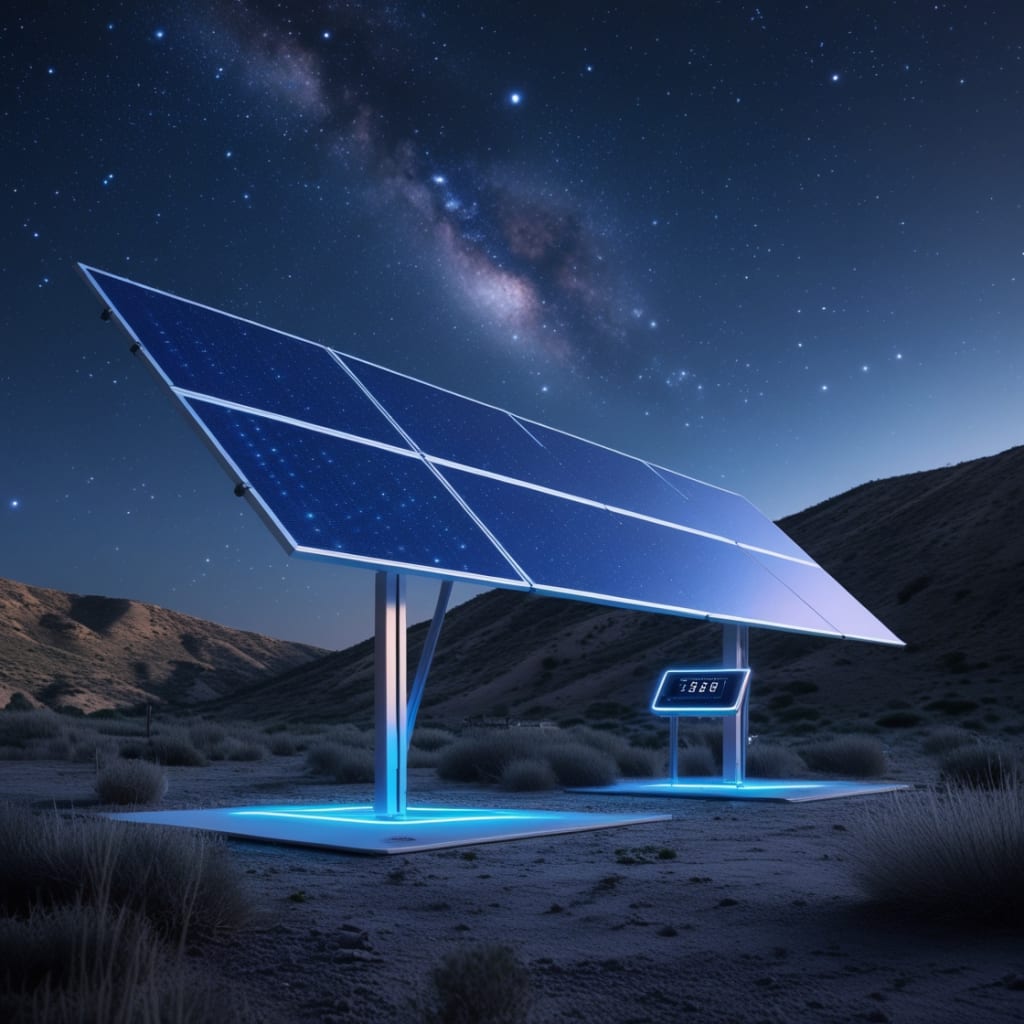
In a groundbreaking shift that could redefine the way we harness solar power, researchers at Stanford University have developed a new kind of solar panel that can generate electricity even at night. While it may sound like science fiction, this innovation could soon become a reality that revolutionizes the clean energy landscape—especially for off-grid regions and locations with limited sunlight.
This cutting-edge development centers around *radiative cooling* and the integration of *thermoelectric generators*—a combination that allows panels to continue producing power after sunset. This article explores how this technology works, why it matters, and what the future might hold for solar energy solutions that don’t stop working when the sun goes down.
Why Traditional Solar Panels Fall Short
Traditional solar panels depend solely on sunlight to function. When the sun sets, these panels essentially go to sleep, unable to generate power until daylight returns. This limitation has long been a challenge for renewable energy advocates. In places where energy storage solutions like batteries are either too expensive or unsustainable due to material demands, there’s been an urgent need for alternatives.
Although solar panels have been widely adopted around the world, their dependency on daylight limits their effectiveness, particularly in remote areas and during the winter months when sunlight hours are reduced. That’s where the new Stanford research steps in—with a game-changing alternative that works even under moonlight.
The Science Behind Nighttime Electricity Generation
The technology developed at Stanford hinges on a principle known as **radiative cooling**, where surfaces lose heat to the cold night sky. At night, the Earth emits infrared radiation outward into space, which is much colder than the planet's surface. This creates a natural temperature difference between an object (like a solar panel) and the surrounding air.
Stanford engineers have found a way to capture this temperature difference using **thermoelectric generators**. These generators convert temperature gradients directly into electrical voltage. By attaching them to commercial solar panels, the researchers created a hybrid system that can function both during the day and at night.
Though the current output is relatively modest—about **50 milliwatts per square meter**—it’s a powerful proof of concept. During the day, standard solar panels generate up to **200 watts per square meter**, but the nighttime function still holds significant promise, especially for powering small, low-energy devices.
Real-World Applications and Benefits
While 50 milliwatts per square meter might not sound like much, it’s enough to keep small electronic devices running through the night. This includes essential equipment such as **LED lights, weather monitoring sensors, or small Internet of Things (IoT) devices**. In remote or off-grid settings where power is scarce, even this minimal output can make a significant difference.
One of the most promising aspects of this technology is its potential to **reduce reliance on batteries**. Batteries, while effective for energy storage, are often expensive and require rare minerals that come with environmental and ethical concerns related to mining and disposal. A solar panel system that can operate around the clock without depending on batteries offers a cleaner, more sustainable alternative.
Additionally, these new panels can be integrated into existing solar arrays. Homeowners and businesses that have already invested in solar infrastructure wouldn’t need to start from scratch. Instead, thermoelectric components could be **retrofitted** into their current setups, making this a scalable and cost-effective upgrade.
Looking Ahead: What’s Next for Solar Tech?
The Stanford team, led by Professor Shanhui Fan, is continuing to refine the technology with the goal of improving its efficiency and expanding its commercial viability. While it may take a few more years before nighttime solar panels hit the mainstream market, this innovation opens the door to a future where solar power is truly 24/7.
As the global community continues to combat climate change and reduce dependence on fossil fuels, innovations like these become increasingly vital. Nighttime solar panels represent more than just an exciting scientific breakthrough—they mark a **major leap toward continuous, renewable energy production** that could change the game for clean energy access worldwide.
Final Thoughts
This breakthrough from Stanford proves that solar technology still has plenty of room to grow. By leveraging thermoelectric generators and the physics of radiative cooling, researchers have unlocked a new frontier for sustainable energy.
Imagine a world where solar panels don’t shut down when the sun sets—where rural areas, developing nations, and even cities can keep their lights on without relying on polluting generators or expensive batteries. With continued innovation, that world might not be far off.
If you’re a clean tech enthusiast, a sustainability advocate, or simply someone curious about the future of renewable energy, this is definitely a development to watch. Nighttime solar panels could soon become an essential part of how we power our homes, devices, and communities—no matter the hour.
About the Creator
Tech Horizons
Exploring the future of technology, AI, gadgets, and innovations shaping tomorrow. Stay updated with Tech Horizons!
Keep reading
More stories from Tech Horizons and writers in Education and other communities.
EMF Defense Bracelet: A Comprehensive Review of Protection, Science, and Style
In today’s tech-driven world, concerns about electromagnetic field (EMF) exposure from smartphones, Wi-Fi routers, and 5G networks are rising. Enter the EMF Defense Bracelet—a wearable promising to shield users from “harmful radiation.” But does it live up to the hype? In this in-depth review, we explore its claims, science, and whether it’s worth your investment.
By Tech Horizons9 months ago in Education
Do you really need to take 10,000 steps a day?
While most people avoid spending the night in jail, Jean Béliveau jumped at the opportunity. For the past three years, Béliveau had been walking from country to country, with the goal of circumnavigating the globe on foot. This required sleeping in tents, strangers’ homes, and the occasional jail cell along the way. But this morning, as Béliveau was ready to leave, the police chief, who had agreed to his sleeping arrangement, was nowhere to be found, and the guards weren’t buying his story. Few people have the time or desire to walk such extreme lengths.
By Munesh Yadavabout 15 hours ago in Education
What’s the best position to sleep in?
In the 1970s, psychoanalyst Samuel Dunkell proposed a curious, albeit almost completely unsubstantiated, theory that the position you sleep in reflects your personality. For example, preferring to snooze in the so-called royal position indicated self-confidence, while sleeping semi-fetal meant you’re sensible and well adjusted. While Dunkell’s ideas lack any definitive proof, how we sleep can impact our health. So, what’s the best position to sleep in? Sleep positions go by countless creative names—
By Munesh Yadav3 days ago in Education



Comments
There are no comments for this story
Be the first to respond and start the conversation.