
MIND BENDERS, SHAPERS, AND INFLUENCERS
Learning Big Ideas
I will share with my readers, the writers whose ideas I always carry with me because they shaped my mind and life.
Baruch Spinoza
Baruch Spinoza was a Dutch philosopher who made significant contributions to humanity. He was highly controversial due to his unorthodox views, which were often met with hatred. His most notable contribution was his development of the ethical system of rationalism. This system was based on the idea that all truth is founded in reason, and that knowledge comes from the application of reason. This was revolutionary, as it rejected the traditional notion of morality based on religion and instead proposed an ethical system based on rationality. His contribution to humanity was further evidenced in his works on politics, psychology, and theology, which sought to explain the natural world in terms of rational principles. For fiction writers, a section of his Ethics, give a detailed description of human emotions that no writer should ignore.
Thomas Hobbes
Thomas Hobbes was a renowned philosopher and political theorist who wrote numerous influential treatises in the 17th century. His most notable works include Leviathan and De Cive. His major contribution to humanity was his revolutionary ideas about social contracts and the basis of government. He argued that the power of the government should come from the people, not from a divine source. He also argued that life in the state of nature was "solitary, poor, nasty, brutish, and short". This idea underpins much of modern political theory and philosophy. Hobbes' writings have influenced generations of thinkers and remain relevant to this day.
Immanuel Kant
Immanuel Kant was a German philosopher who is widely considered one of the most influential thinkers of modern times. His Critiques may have been a bit long and tedious, but they were packed with original and revolutionary ideas. Kant's most significant contribution to humanity was his groundbreaking work in the field of ethics, particularly his formulation of the categorical imperative. This concept states that people should treat others with respect and fairness, and that they should never use others as means to an end. Kant's writing also had a major impact on aesthetics, epistemology, and metaphysics. His work is still studied and referenced today, and his philosophy continues to shape the way we think about morality, ethics, and human behavior.
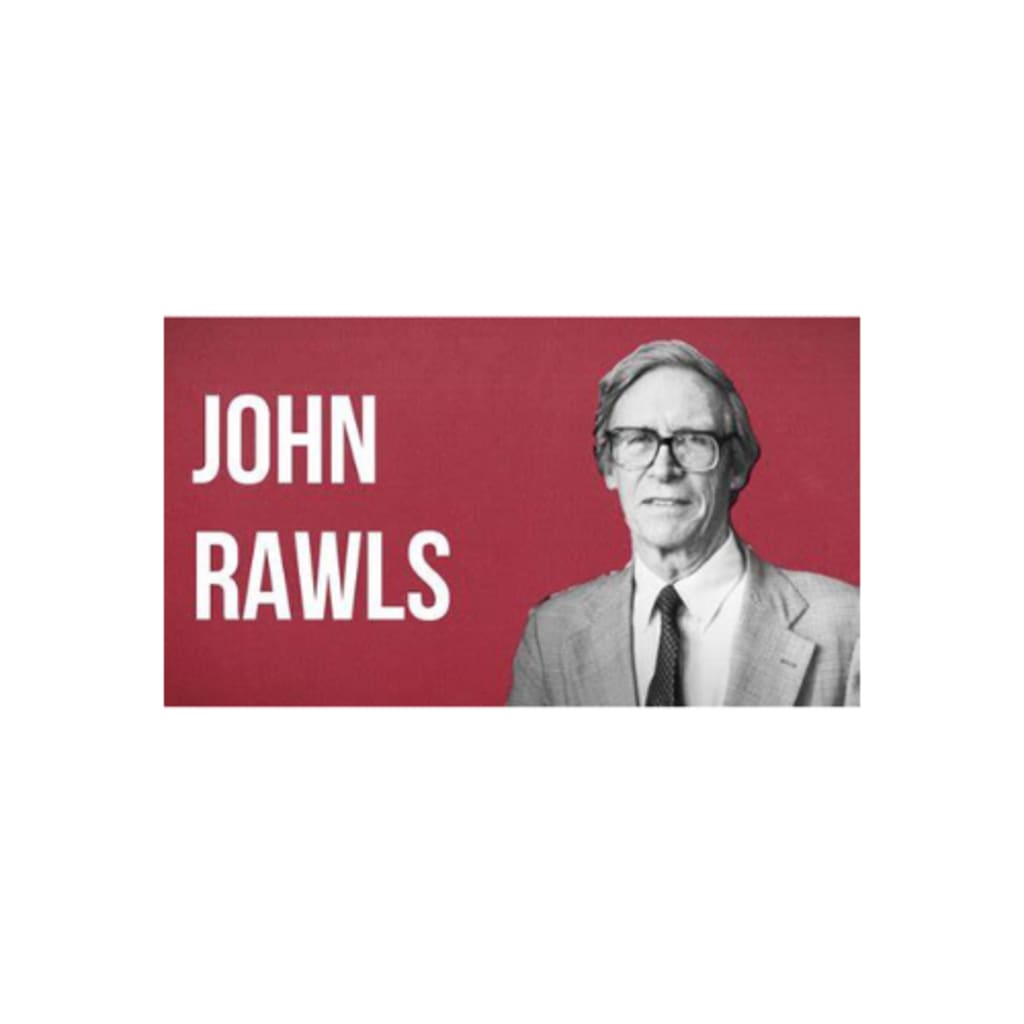
John Rawls
John Rawls' "veil of ignorance" is a thought experiment designed to consider what kind of society we should have by removing personal biases from the equation. The idea is that we should design our society as if we were ignorant of our own place in it. This means we would not know our gender, race, socio-economic status, or any other personal identifiers. In this way, we could create a society that is fair and just for everyone, regardless of their background. In summary, Rawls' "veil of ignorance" is a thought experiment that encourages us to design a society that is fair and just by removing personal biases from the equation.
Thomas Nagel
Thomas Nagel's "view from nowhere" is a concept that suggests that objects, events, and experiences can only be analyzed objectively, without bias or personal opinion. The idea is that an absolute, unbiased view of reality must exist, and that all individuals must strive to achieve it in order to understand the world around them. To achieve this goal, individuals must be able to step outside their own personal experiences and opinions and take a neutral, impartial stance to gain a deeper understanding of the natural world. Nagel's view from nowhere suggests that if individuals can do this, then they can gain a better understanding of reality and the world around them.
John Locke
John Locke is one of the most influential philosophers in history, particularly for the American founding fathers. His writings on government, liberty, and the social contract heavily informed the writing of the American Constitution. Locke believed that people have natural rights to life, liberty, and property, and that governments should be formed to protect those rights. He also argued that governments must be based on the consent of the people and that the people have a right to revolt if the government fails to protect their rights. Locke's writings were essential in forming the principles and ideas that led to the creation of America's founding documents.
Rene Descartes
Rene Descartes is widely renowned for his profound contributions to the fields of philosophy and mathematics. He developed a method of rational inquiry, known as Cartesian doubt, which proposed that knowledge should only be accepted if it can be logically and systematically proven. He also developed the concept of analytic geometry, which uses algebra to explain geometric relationships. Descartes’ work is still used as a foundation for mathematical and scientific thinking today, and his philosophy has had a profound impact on the Western world. His clear and succinct writing style has made his work accessible to a wide range of readers and thinkers. Descartes’ profound contributions to philosophy, mathematics and science are undeniable and have endured throughout the centuries. His ideas “I think, therefore I am,” and the duality of mind and body prevail through our times.
Moliere
Jean-Baptiste Poquelin, known by his stage name Molière was a witty French playwright who was renowned for his sharp wit and clever satire. His plays often explored the hypocrisies of the French upper class, and his works remain some of the most iconic pieces of French literature. Moliere's greatest contribution was his ability to recognize the often-hidden truth in everyday life. He highlighted our tendency to engage in certain behaviors while not recognizing the motivations behind them or even having the right name for them; for example: Monsieur Jourdain said, “For forty years I’ve been speaking prose without knowing it.” He showed us that although we might not always have the right words, we have the right intentions. In this way, Moliere was able to make us laugh while simultaneously teaching us a lesson.
Voltaire
François-Marie Arouet whose pseudonym was Voltaire was a French philosopher, writer and historian known for his wit and satire. He was a passionate advocate of civil liberties and religious tolerance. His works, such as Candide, Zadig and Letters on the English, were highly acclaimed during his lifetime and remain popular in the modern age. Voltaire was a vocal critic of Leibniz, a contemporary German philosopher. He believed that Leibniz philosophy was too optimistic and dismissed his ideas as “manifestly absurd.” In fact, he wrote the novel Candide to make fun of Leibniz. Voltaire was a strong advocate of the Age of Enlightenment and sought to challenge the traditional beliefs of the time. His works have since become an integral part of Western culture and have been praised by many authors, including Jean-Jacques Rousseau. Through his writings and criticisms, Voltaire left an indelible mark on history and inspired generations of readers.
Find my books below:
Find my books below click here or in this link too.
My articles are first written by Writesonic (AI) and then I edit them. Of all the AI software out there, Writesonic is the best and most economic.
https://writesonic.com?via=marciano89
About the Creator
Marciano Guerrero
Marciano Guerrero is a Columbia University graduate, retired business executive, retired college professor, and a disabled Vietnam Veteran. I enjoy writing fiction, and essays of human interest. I also have a keen interest in AI.
Keep reading
More stories from Marciano Guerrero and writers in Education and other communities.
Smart Healthcare Systems: Transforming Medical Operations Through Digital Innovation
The healthcare industry is undergoing a profound transformation as digital technologies reshape the way medical organizations operate. Hospitals, clinics, and healthcare networks are increasingly adopting advanced technological solutions to enhance efficiency, improve patient outcomes, and reduce administrative burdens. As healthcare demands continue to rise globally, technology has become an essential tool for streamlining operations and supporting better coordination among healthcare professionals.
By Brady Beitlichabout 12 hours ago in Education
Review of 'Man on the Run'
My wife and I saw Man on the Run, a nearly 2-hour documentary on Amazon Prime, about Wings, Paul McCartney's group that flew around the world from shortly after The Beatles broke up in early 1970 to shortly after John Lennon was murdered at the end of 1980, making a Beatles reunion forever impossible.
By Paul Levinson7 days ago in Beat


Comments
There are no comments for this story
Be the first to respond and start the conversation.