
McGruff the Crime Dog: Teaching Generations To Take a Bite Out of Crime
How a cartoon bloodhound sparked a nationwide safety movement

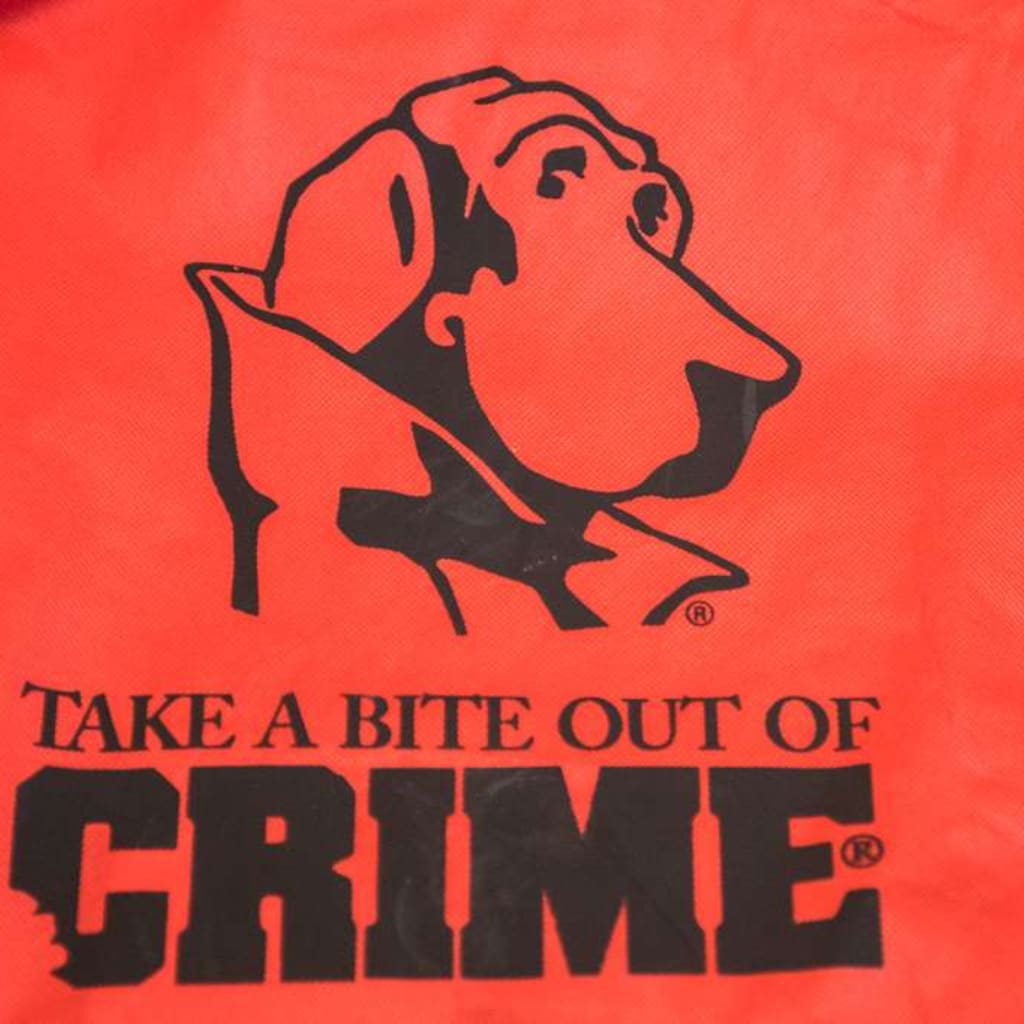
A Brief History of PSAs
We hear them constantly, on the radio, before YouTube videos, and in between TV shows. Public Service Announcements, or PSAs, are everywhere. They tell us to buckle up, quit smoking, say no to drugs, and remind us that dogs aren't just for Christmas.
But PSAs aren't just informational soundbites; they are a message with a mission. A mission to spark change, raise awareness, mobilise the public, or even rally everyday people to do some good in the world.
And while they feel like a staple of modern media, PSAs have been around way longer than you might think.
Today, we will focus on the historical roots of American public service announcements, which date back to the American Civil War.
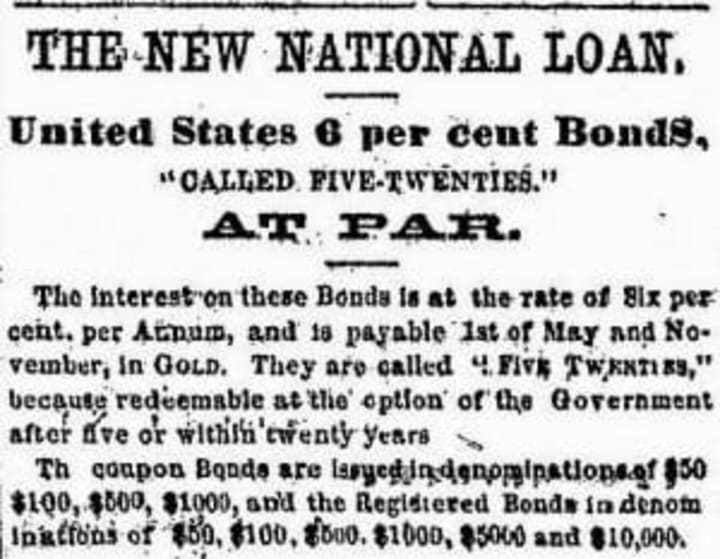
The 1860s weren't exactly known for catchy slogans or slick ad campaigns, but the government had to get creative. They needed money to fund the Union's war effort. So what did they do? They turned to the press.
Newspaper ads appeared across the Northern states, urging citizens to purchase war bonds. The message was clear: Help your country by putting your money where your patriotism is. Think of it as the 19th-century version of crowdfunding.
However, it wasn't until World War I that public service announcements went full blockbuster.
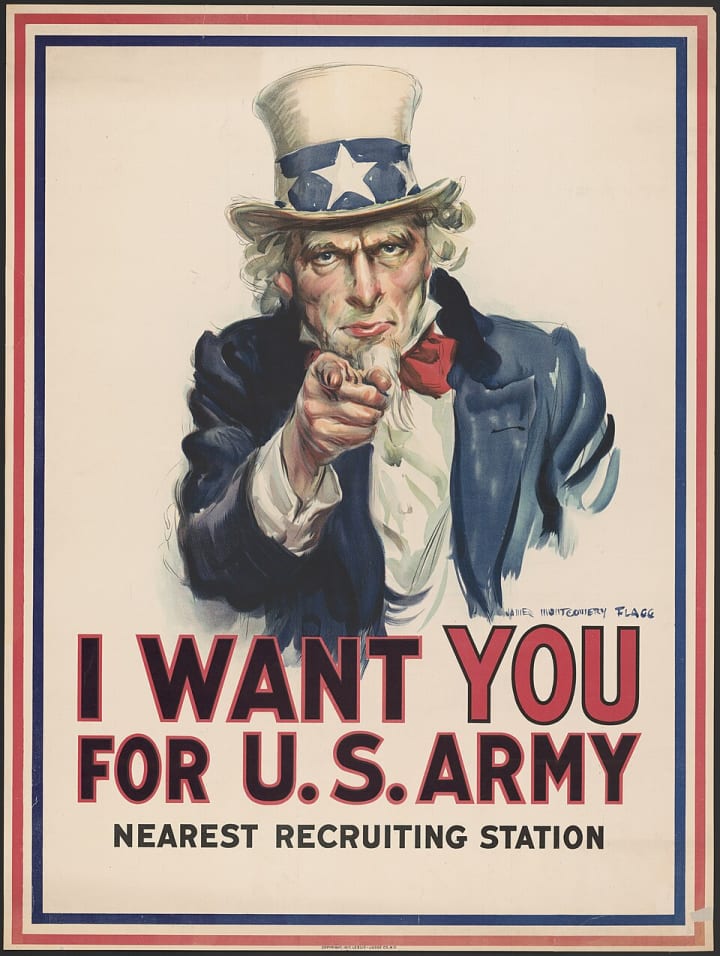
A quintessential example of this is the legendary Uncle Sam poster, a powerful call to action from the U.S. government. You've definitely seen him before, the stern-faced guy in the star-spangled top hat, pointing straight at you with that iconic demand: "I want YOU for the U.S. Army."
It's more than just a recruitment poster; it was personal and not some faceless call to patriotism. This was YOU, being told directly by Uncle Sam that your country needed you.
It's one of history's most legendary pieces of visual propaganda. And it worked.
The mandatory conscription probably helped too.
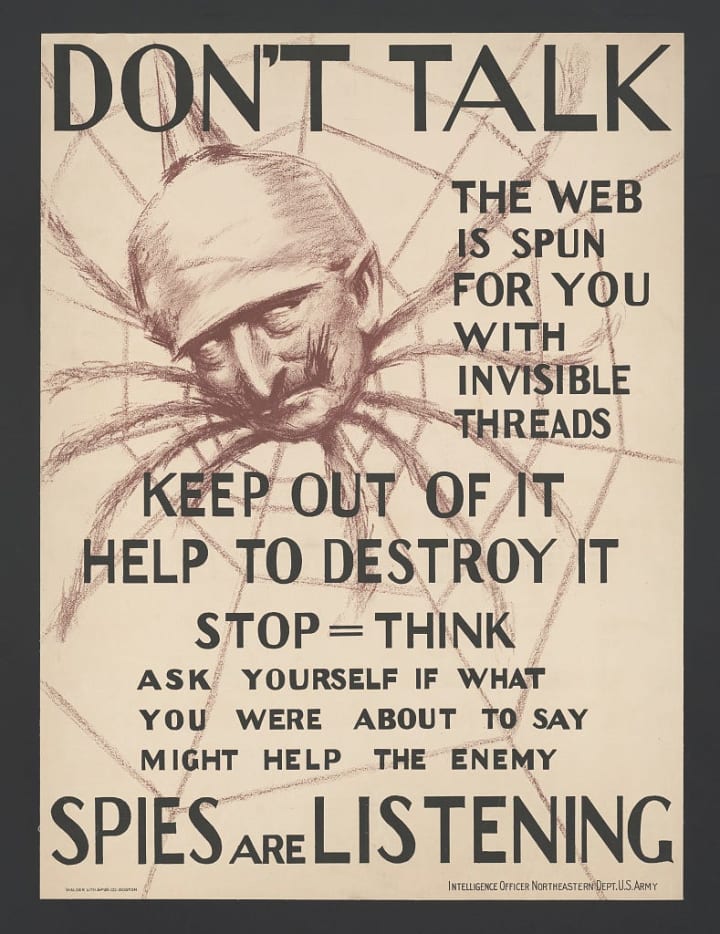
As America entered the 1920s and '30s, a new medium emerged on the domestic scene: radio. Suddenly, public service announcements weren't just confined to newspapers or posters; they were in your living room.
Radio stations, especially those operated by universities like Penn State and major public broadcasters like the BBC, began airing a range of content, from health tips to war-readiness advice and educational messages, as part of their commitment to serving the public interest.
Fun fact: On Friday, 18 April 1930, the BBC Radio news bulletin from London stated, "Good evening. Today is Good Friday. There is no news," followed by piano music for the remainder of the 15-minute program.
Of course, politicians got in on the radio action. But no voice soothed the airwaves quite like Franklin D. Roosevelt's. Starting in 1933, his famous "fireside chats" helped a nation reeling from the Great Depression feel like they were getting updates from a trusted friend, not a distant politician. Whether addressing economic collapse or looming war, FDR made the public feel heard and part of something bigger.
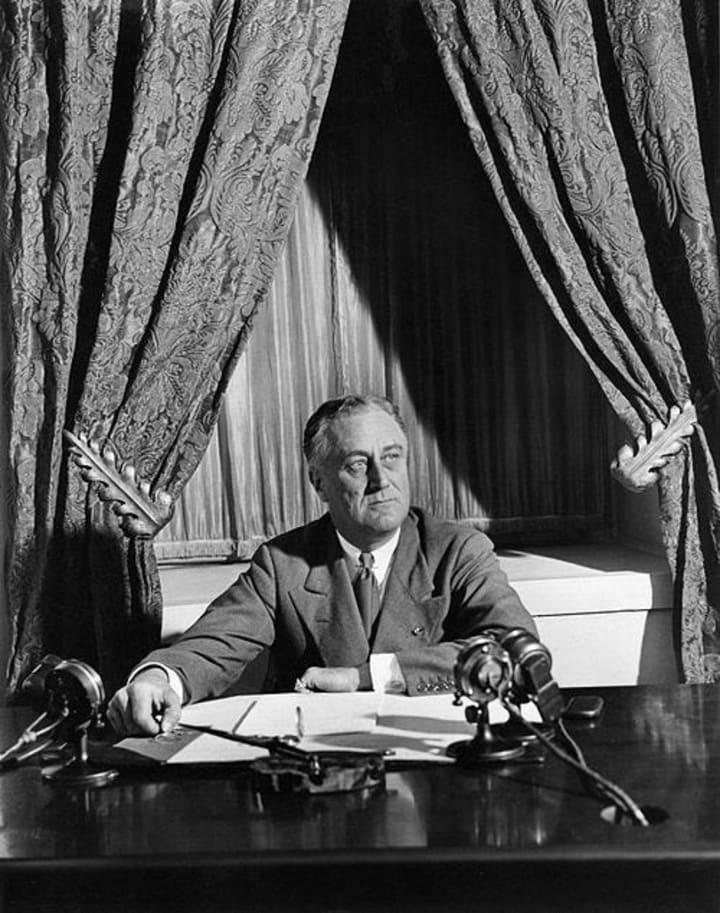
A few years later came World War II and, with it, the golden age of public service media. Enter Voice of America (VOA). Founded in 1942, VOA was more than another station on the dial; it was America's response to Axis propaganda.
VOA didn't just instruct people to ration food or conserve fuel; it broadcast news, music, and cultural content, promoting democratic values around the world.
That same year, the U.S. government partnered with the advertising industry to establish the War Advertising Council in order to mobilise support for the war effort. This organisation, now known as the Ad Council, quickly became a staple of American public communication.
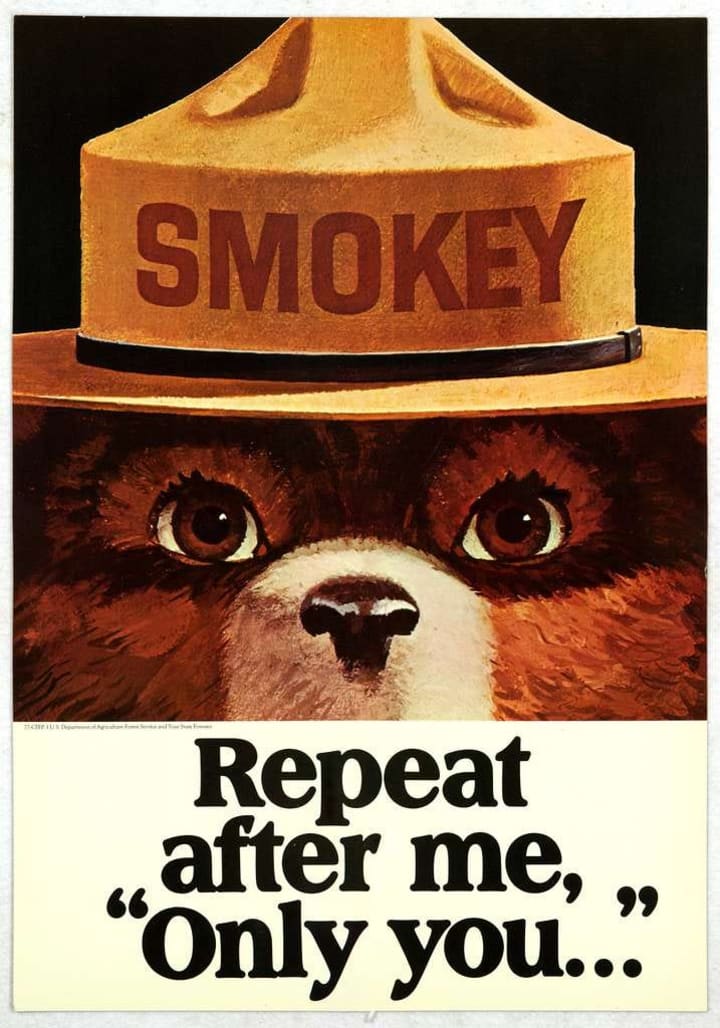
The Ad Council played a pivotal role in creating some of America's most iconic and influential campaigns.
For instance, in 1944, the Ad Council introduced Smokey Bear to America with the earnest plea, "Only YOU can prevent forest fires." Smokey didn't just teach fire safety; he made it feel like a moral responsibility and fostered a collective sense of environmental responsibility among citizens.
Through colouring books, cartoons, classroom materials, posters, and children's books, kids and adults alike learnt vital lessons, such as never leave a campfire unsupervised, don't play around with matches, be wary of weather conditions, and make sure your campfire is fully extinguished before you leave.
That same year, Rosie the Riveter rolled up her sleeves and stared down wartime gender roles. Her confident pose and "We Can Do It!" message symbolised female empowerment that still resonates today.
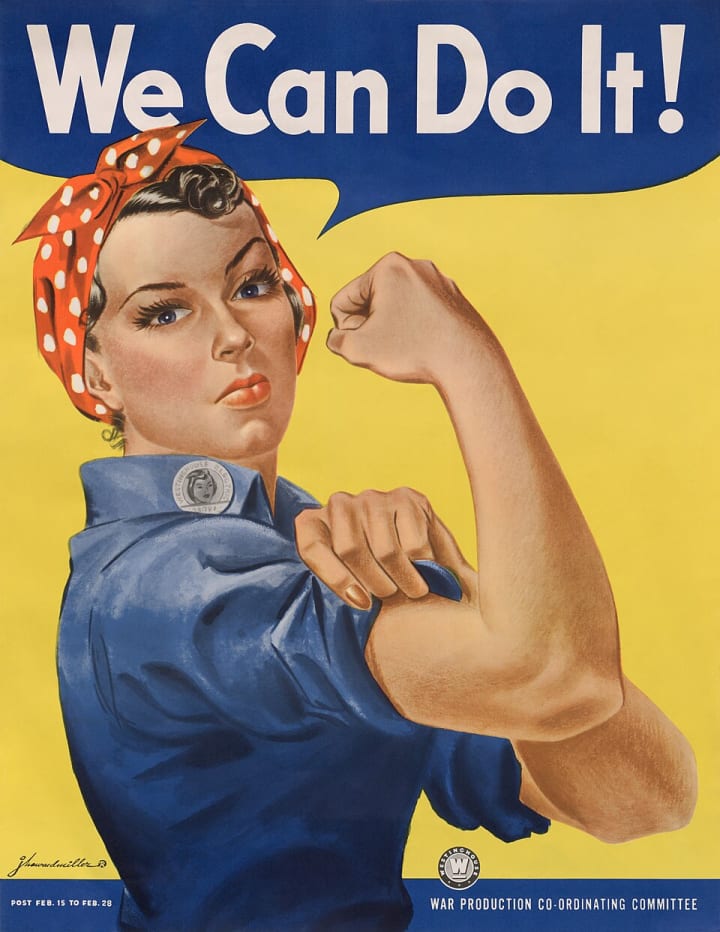
By the time TVs started appearing in homes across America in the 1950s and '60s, PSAs had a powerful new platform to address emerging societal issues, including civil rights, drug abuse, and environmental protection.
One of the most unforgettable advertisements from this time came from the Keep America Beautiful campaign. In this short clip, a Native American man stands silently as people litter around him, and a single tear rolls down his cheek. The imagery was powerful and emotional, sparking a national conversation about environmental responsibility.
And it worked. According to the Ad Council, the commercial, which ran from 1971 to 1983, had a significant impact, helping to reduce litter by 88% and demonstrating the power of PSAs in addressing societal issues.
Did You Know: The Crying Indian was portrayed by actor Iron Eyes Cody, an Italian-American.
Around the same time, PSAs took a darker turn to address serious public health risks. Anti-smoking and drunk driving campaigns ditched soft appeals in favour of raw, jarring visuals - from blackened lungs to shattered windscreens. The stakes were high, and the tone shifted accordingly to highlight the dangers of such vices.
Sometimes, they got it right, and then there was "This is Your Brain on Drugs."
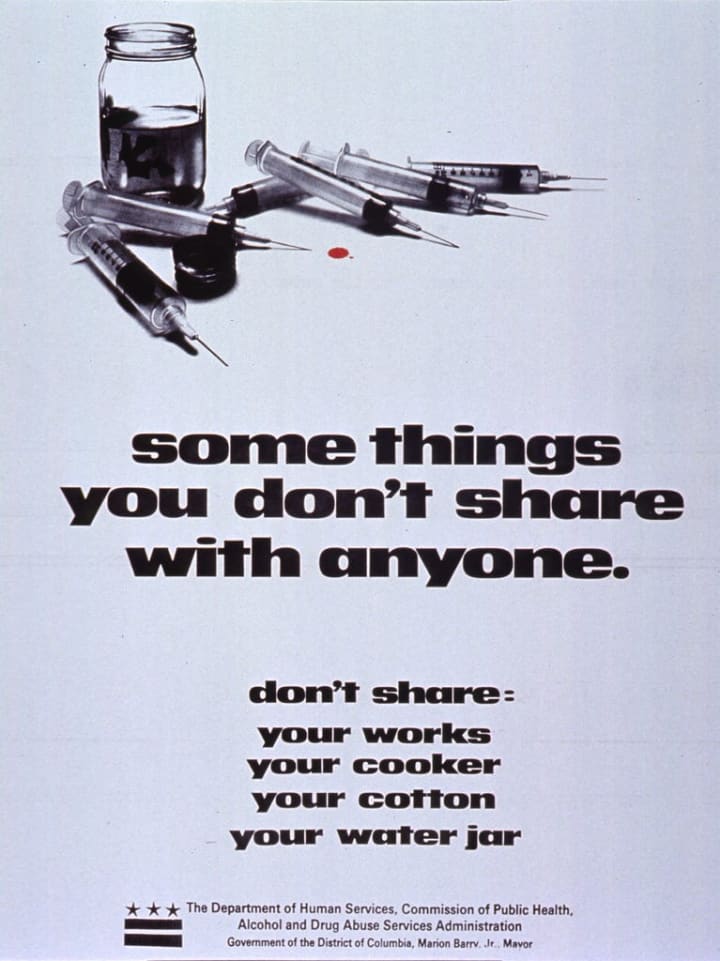
Fast-forward to the late '90s and early 2000s. The internet changed everything. Suddenly, anyone with a computer and, later, a smartphone could access PSA content at lightning speed. Campaigns were no longer limited to TV slots or radio hours.
And for the first time, it wasn't just ad agencies and government departments calling the shots. The playing field levelled out. Activists, nonprofits, advocacy groups, and public health officials were suddenly creating tailored, targeted PSAs that spoke directly to specific communities.
Whether it was a viral video on anti-bullying, a tweet about mental health awareness, or a grassroots campaign for LGBTQ+ rights, digital platforms provided a space for voices that had long been overlooked. Instead of speaking to audiences, today's PSAs can now speak with them, engaging in real-time, building communities, and sharing personal stories that resonate more deeply than any traditional ad ever could.
The Birth of McGruff the Crime Dog
But let's get back to the main reason for this story.
In the early 1980s, America faced a significant crime problem. I suppose problem isn't quite the right word. Homicide rates were at an all-time high, crack was escalating into an epidemic, and gangs wielded a particularly violent grip on the streets.
People were worried, and Newsweek and TIME magazines didn't exactly help matters by shouting "DANGER" from the newsstands. The nightly news wasn't much better, reporting consistently and disproportionately on murder, drugs, burglaries and violence. After all, if it bleeds, it leads.
Americans were feeling helpless.
So, what's a country to do when it's scared?
Cue the Ad Council.
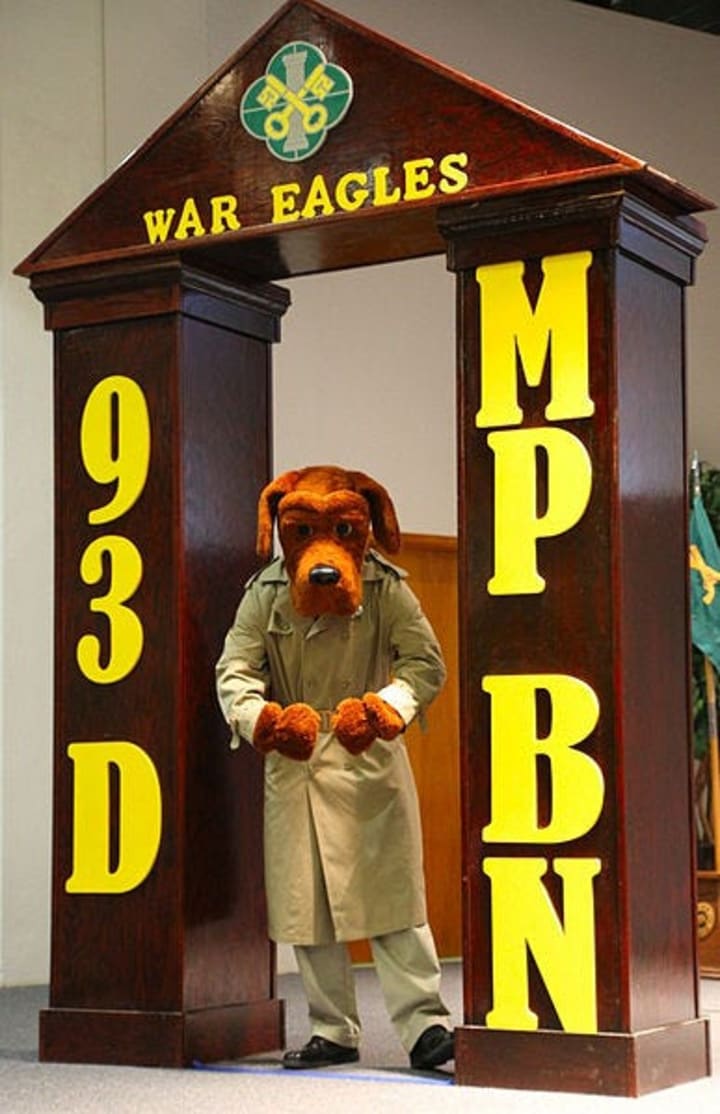
The Ad Council had an idea: shift the narrative. Not by sugarcoating the crime wave but by empowering the public. Crime couldn't be erased, but maybe it could be slowed. Maybe if people cleaned up their parks, locked their doors, and looked out for their neighbours, criminals would have a harder time getting away with it.
But this couldn't be another dry PSA lecture.
Between the Ad Council, the National Crime Prevention Council (NCPC), and the U.S. Department of Justice, they envisioned a national campaign that would inform the public without inciting fear. Of course, they weren't going to do the work themselves!
That's when the ad agency Dancer Fitzgerald Sample got the call. The ad agency was tasked with turning this vague "stop crime but make it cute" concept into a campaign. One creative, Jack Keil, pitched the idea of using a dog because if Smokey Bear could convince us to care about wildfires, maybe a dog could talk us down from our true crime panic.
After a few sketches, trials and errors, the figure we know as McGruff the Crime Dog was born.
Why did McGruff work so well?
Well, to start with, he looked the part. A bloodhound in a detective's coat was just cartoonish enough to disarm kids, while adults recognised the authority he represented. He struck that rare balance between friendly and authoritative, which meant he could hold the attention of both audiences at once.
And then there was the voice.
Initially voiced by Jack Keil, his low, gravelly delivery struck a perfect note: firm, yet not frightening. You heard that voice once and remembered it. Of course, when you combine that gruff voice with a slogan like "Take a bite out of crime," you have a winner. Short, punchy, and endlessly repeatable, you couldn't forget the slogan if you tried!
Plus, his timing was spot on. McGruff's first commercials debuted in 1980, when crime was a growing concern in the United States.
He didn't pretend crime wasn't a problem, but he offered something rare and much needed: a sense of control.
While superimposed over grainy scenes of break-ins and shady vans parked near schools, McGruff gave viewers tips that anyone could do. He advised viewers to lock their doors, monitor their neighbours, remain vigilant, contact the police, and engage in conversations with their children about safety. Suddenly, crime prevention wasn't some abstract concept. It was as simple as paying attention.
Fun fact: McGruff had a family! In the 1990s, ads featured his fictional nephew, Scruff McGruff, who focused on child-specific safety issues.
And McGruff wasn't just on TV.
He was everywhere! And I mean everywhere!
He was a mainstay in classrooms, school assemblies, on posters, and in safety brochures. He even showed up on sitcoms like Webster and, more recently, Family Guy, marched in parades, and made thousands of public appearances.
Local police departments and schools helped spread the word, making McGruff feel both official and familiar. In fact, by 1988, a staggering 99% of children aged six to 12 recognised him and reported following his guidance.
Taking a Bite Out of Crime
By the mid-1980s, McGruff was actively encouraging citizens to join Neighborhood Watch and participate in community cleanup efforts to deter criminal activities. His tips were clear and simple: neighbourhood cleanups, locking doors, leaving porch lights on, reporting suspicious behaviour, keeping properties maintained and keeping an eye on your neighbours create an environment where crime struggles to thrive.
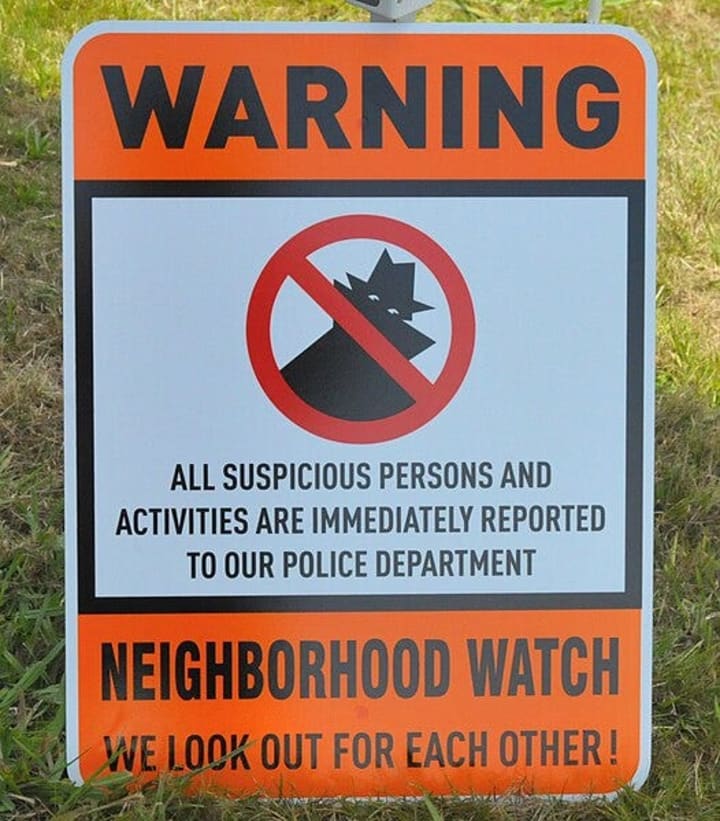
The NCPC backed it up with toolkits, posters, TV spots, and how-to guides, all starring McGruff. The campaign worked.
According to evaluations, areas with active Neighborhood Watch programmes experienced reductions in crime rates, increased use of crime prevention measures, and improved relations between citizens and law enforcement.
By the mid-1980s, McGruff was doing more than warning folks to lock their doors. He was stepping into the classroom and speaking directly to kids about drugs, peer pressure and "stranger danger."
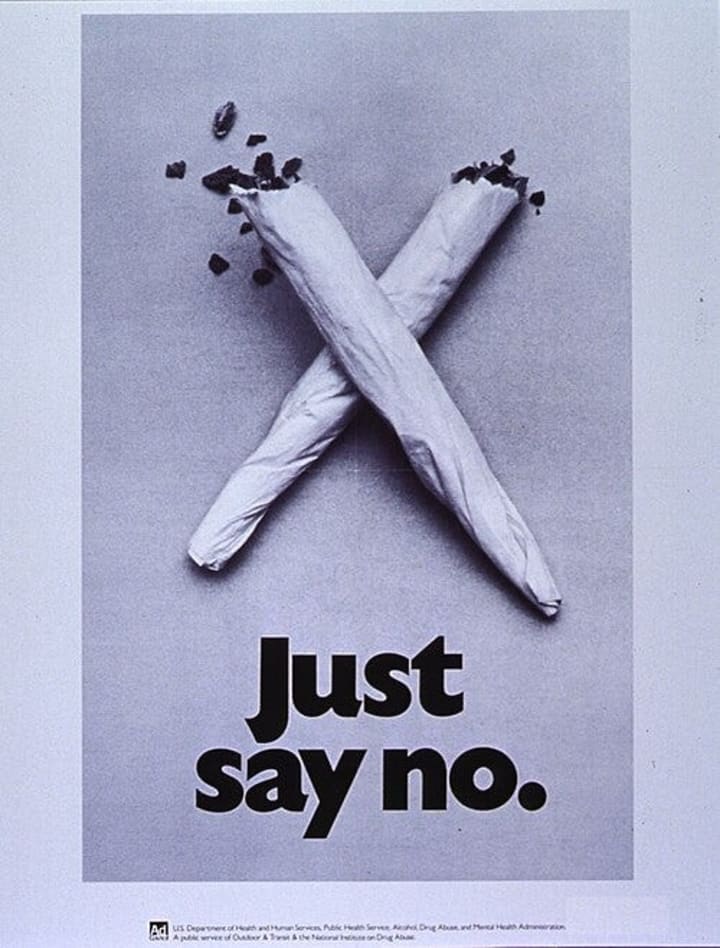
His anti-drug campaigns were tailor-made for younger audiences, striking a balance between friendly guidance and firm warnings. With commercials that featured McGruff playing the piano while crooning anti-drug tunes like "Users are Losers" and classroom kits distributed nationwide, McGruff took on the role of moral authority for a generation raised on "Just Say No."
As an aside, the song "Cocaine and Crack" from McGruff's Smart Kids Album is surprisingly catchy and will be your new favourite song!
During the early and mid-1990s, as gun violence made more headlines and tragic stories of children finding firearms at home came to light, McGruff shifted gears. He started working with schools and community groups to talk about the real-life consequences of guns.
In one memorable PSA, a character named Jimmy, who is a friend of Scruff, discovers a gun in his dad's room and wants to show it off to the other kids in the neighbourhood. Scruff tells his uncle, McGruff the Crime Dog.
McGruff immediately assumes a responsible adult mode. He tells Scruff very clearly and firmly that kids should never touch a gun.
McGruff explains to us, the audience, that the shootouts kids see on TV might look exciting, but in real life, they can seriously hurt or kill someone. Even toy guns, which are harmless in themselves, can lead to dangerous consequences if you point them at people because not everyone can tell if they're real or fake.
His message was crystal clear: guns aren't for play, and they're definitely not for settling arguments. If you ever see a gun, especially in the hands of another kid, walk away and tell an adult.
McGruff and Scruff didn't stop at PSAs. In partnership with the National Shooting Sports Foundation (NSSF), the National Crime Prevention Council released a couple of educational shorts that teach kids what to do if they see someone bring a gun to school or find one.
These videos became part of Project ChildSafe, which has evolved into the largest firearm safety education initiative in the U.S. Since its launch in 1999, Project ChildSafe has distributed over 37 million free gun safety kits through more than 15,000 law enforcement agencies nationwide.
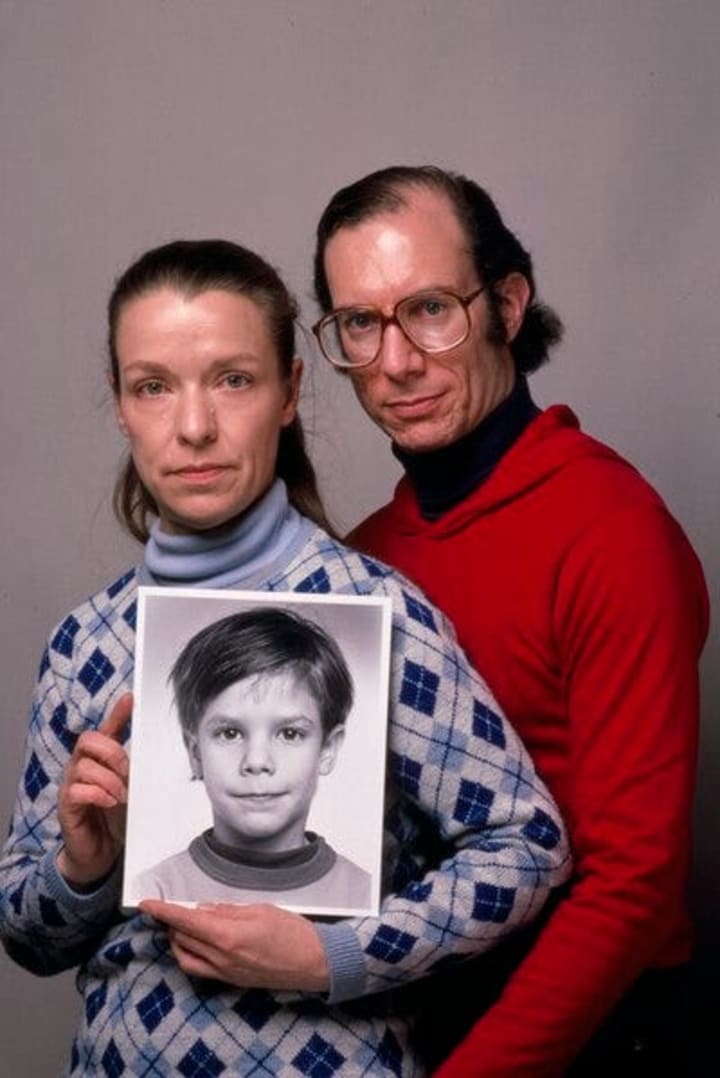
Of course, gun safety wasn't the only message being drilled into kids' heads back then. Anyone growing up in the 1980s and '90s remembers the rise of "Stranger Danger." This was the era of missing kids on milk cartons, "don't talk to strangers" posters, and haunting TV movies like 1983's Adam, based on the true story of 6-year-old Adam Walsh, who was abducted and murdered in 1981.
These high-profile cases sent shockwaves through American households and led to significant legislative changes, such as the 1982 Missing Children Act. However, the well-intentioned message had its shortcomings. It focused almost entirely on creepy strangers in vans and overlooked the critical fact that most child abductions are committed by someone the child already knows, such as a teacher, neighbour, family friend, or even a close relative.
Where is McGruff Today?
You may be surprised to discover that McGruff is still out there, fighting the good fight.
As of 2025, McGruff the Crime Dog remains an active and evolving figure in public safety education, adapting to address contemporary challenges. Under the guidance of the National Crime Prevention Council, McGruff has expanded his focus beyond traditional crime prevention to tackle pressing issues such as cyberbullying, the opioid crisis, elder abuse, and identity theft.
Furthermore, in partnership with the U.S. Patent and Trademark Office, McGruff aims to raise public awareness of the risks associated with counterfeit goods through campaigns such as "Go For Real."
McGruff has also taken a proactive role in addressing the fentanyl crisis through a series of targeted initiatives led by the National Crime Prevention Council. One of the central components of this effort is The Lives Project. This digital remembrance quilt was unveiled on October 19, 2022. This online memorial honours individuals lost to fentanyl overdoses and serves as a platform to raise awareness about the dangers of counterfeit pills laced with fentanyl. The project aims to humanise the statistics and foster community engagement in combating the epidemic.
Complementing this memorial, McGruff stars in the "Think Again" PSAs, which highlight the risks associated with purchasing medications from unverified sources. These PSAs reveal that a significant percentage of counterfeit pills sold on social media platforms contain fentanyl, posing severe health risks to unsuspecting consumers. The campaign encourages viewers to be vigilant and informed about the origins of their medications.
So there you have it folks! From his humble origins as a trench-coated cartoon bloodhound to his enduring status as a trusted voice in crime prevention, McGruff the Crime Dog has had a lasting impact on American public safety.
For more than four decades, he has taught generations about everything from securing doors and avoiding narcotics to navigating internet hazards and fighting the opioid epidemic. Far from being a throwback to the 1980s, McGruff has demonstrated his adaptability and relevance by tackling today's most pressing safety challenges with the same renowned gravelly voice and steadfast message: you have the power to make your neighbourhood safer.
About the Creator
Chelsea Rose
I never met a problem I couldn't make worst.
Keep reading
More stories from Chelsea Rose and writers in Education and other communities.
The Philosophy of Unschooling, A New Way Of Learning
No homework. No rules. No teachers. No tests. There is no typical school day for the Olsons, a family of six from Massachusetts. On any given day, the 15-year-old twins could be researching theatre costumes for their acting program, while their 12-year-old daughter, who is passionate about fitness, could be training on the ninja course she built in their backyard.
By Chelsea Rose4 years ago in Education
This is what happens in your brain when you can't recall and word
You’re sure you know your third grade teacher’s name— it’s like you’re hovering over it in your mind, but it just won’t materialize. Researchers call this tantalizing torment a “tip-of-the-tongue state,” and it's something everyone experiences. But what's actually happening when a word gets caught here? And how can you best get it unstuck? Most of the time, our brains seamlessly summon words from vast stores of knowledge, paring their meaning and sounds, and stringing them into sentences.
By Munesh Yadav3 days ago in Education
How to Succeed at the Benson Directory®
Congratulations and welcome to the Benson Directory® employee #22391! As our newest call handler, you will have the privilege of speaking with dozens of unique and interesting people on a daily basis as well as the opportunity to earn bonuses for high performance. Contained within this handbook you will find a set of ease to follow instructions designed to help you settle in to your new role and begin paving the way to success.
By S. A. Crawforda day ago in Fiction



Comments
There are no comments for this story
Be the first to respond and start the conversation.