
Mastering the Mind: Techniques and Neuroscience Behind Human Self-Control and Mental Discipline
Cognitive behavioral techniques (e.g., mindfulness, meditation, reframing thoughts) Neuroscientific foundations (e.g., prefrontal cortex’s role in impulse control) Ancient and modern approaches (e.g., Stoicism, Buddhism, modern psychology) Practical strategies (e.g., habit formation, emotional regulation, focus training) Mental health benefits and challenges (e.g., overcoming anxiety, controlling anger, reducing stress)
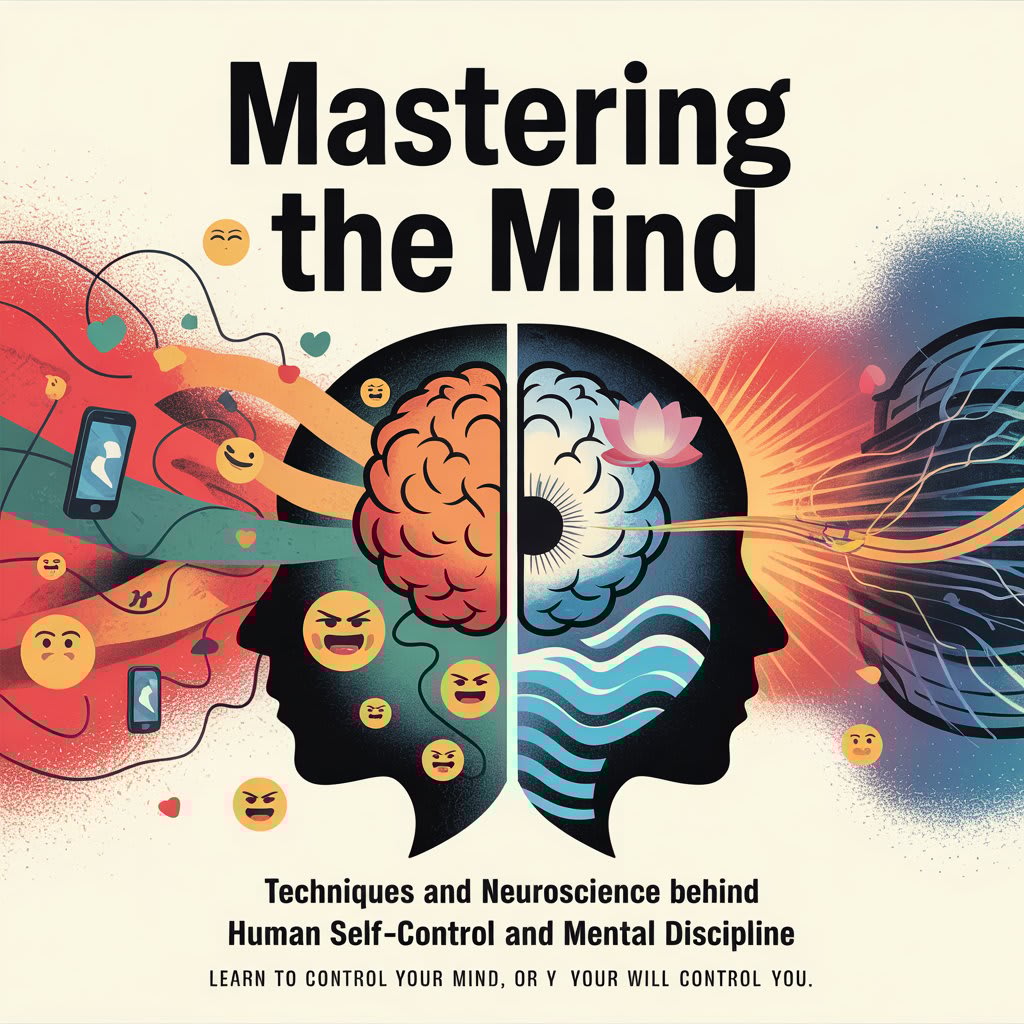
The human mind is a powerful tool—capable of creativity, logic, compassion, and imagination. Yet, for all its power, many people struggle to control it. Thoughts spiral, emotions overwhelm, habits dominate, and attention drifts. The question is: Can humans learn to control their own minds? The answer is yes—and doing so is not only possible but transformative.
Self-control, focus, emotional regulation, and resilience all begin in the mind. Mastering it is not about suppressing thoughts or pretending to be happy all the time. Instead, it's about developing awareness, discipline, and intentionality. Modern science and ancient wisdom both offer powerful tools to help us understand and take charge of our mental world.
The Science Behind Mental Control
To understand how we can control the mind, we first need to understand how it works. Neuroscience tells us that the brain is not a fixed machine but a dynamic, plastic system. The prefrontal cortex, the brain’s control center, helps us make rational decisions, plan ahead, and regulate emotions. This region is essential for self-discipline and willpower.
However, the prefrontal cortex is constantly competing with the more primitive parts of the brain, such as the amygdala, which governs fear and emotional reactions. When we’re stressed, tired, or emotionally overwhelmed, the amygdala can hijack our thoughts, making it harder to stay calm or think clearly.
This biological reality explains why mental control isn’t easy—but it also shows that it’s trainable. Just like we can train muscles at the gym, we can train the brain to become more disciplined, focused, and emotionally intelligent.
Mindfulness: The Gateway to Control
One of the most scientifically validated ways to control the mind is through mindfulness—the practice of being fully present in the moment without judgment. Mindfulness helps us observe our thoughts instead of getting lost in them. It creates a mental "pause," allowing the prefrontal cortex to re-engage and stop automatic reactions.
Studies show that regular mindfulness meditation can:
Reduce anxiety and depression
Increase focus and attention span
Improve emotional regulation
Strengthen areas of the brain related to self-control
It doesn’t take hours of meditation each day. Even 10–15 minutes of daily mindfulness practice can make a measurable difference. The key is consistency. Over time, mindfulness becomes not just a practice, but a new way of thinking and living.
Cognitive Behavioral Tools: Rewriting Thought Patterns
Another powerful tool is Cognitive Behavioral Therapy (CBT), which teaches people to identify and change unhelpful thought patterns. Often, our thoughts are distorted by fear, insecurity, or past experiences. For example, we might jump to conclusions, catastrophize, or dwell on negative self-talk.
CBT helps us recognize these patterns and replace them with healthier, more realistic thoughts. For example:
From “I always mess things up” → to “I made a mistake, but I can learn from it.”
From “This is the worst thing ever” → to “This is difficult, but I’ve handled hard things before.”
Reframing thoughts doesn’t mean lying to yourself—it means seeing things with clarity and compassion. Over time, this mental shift builds resilience, optimism, and a greater sense of control.
Discipline and Habit: Training the Mind Like a Muscle
Mental control isn't about one big breakthrough—it’s about small, consistent habits. Every time you choose to focus, resist a temptation, or respond calmly, you are strengthening your mental discipline.
Habits are powerful because they automate behavior. Once something becomes a habit, it no longer requires as much effort or willpower. To build positive habits:
Start small – Don’t try to meditate for an hour a day from the start. Begin with five minutes.
Be consistent – Repetition is more important than intensity.
Use triggers – Link the habit to something you already do (e.g., meditate right after brushing your teeth).
Reward yourself – Acknowledge your effort. The brain responds well to rewards.
Mental discipline is like a garden. You plant seeds, nurture them daily, and over time, you see growth.
Emotional Intelligence: Ruling the Inner Storm
Controlling the mind also means managing emotions—especially in moments of stress or conflict. This is where emotional intelligence (EQ) comes in. EQ is the ability to understand, manage, and express emotions effectively.
People with high EQ don’t avoid emotions—they face them head-on. They ask questions like:
“What am I feeling right now?”
“Why am I feeling this way?”
“What do I need to do, not just react?”
By slowing down and reflecting instead of impulsively reacting, emotionally intelligent people take back control. They are better at relationships, decision-making, and mental health.
The Role of Philosophy and Spiritual Practice
Ancient wisdom traditions have long explored mind control. Stoic philosophy, for instance, teaches that we cannot control external events, but we can control our responses. Buddhism emphasizes letting go of attachments and cultivating inner peace through awareness and compassion.
Both Stoicism and Buddhism offer mental exercises, such as:
Daily reflection or journaling
Visualization of challenges and outcomes
Practicing gratitude and acceptance
These practices cultivate an inner strength that allows us to remain calm and centered, no matter what life throws our way.
The Lifelong Journey of Mental Mastery
Controlling the mind is not about perfection—it’s about progress. Everyone struggles. Even the most disciplined people have moments of doubt, anger, or distraction. The key is to notice, pause, and redirect—again and again.
Mastering the mind isn’t just about mental health—it’s about freedom. The freedom to choose your response, to focus your attention, to live intentionally instead of reactively.
In a world that constantly demands our attention, pulls us in a thousand directions, and overloads us with stress, mastering the mind is not just a personal victory—it’s a radical act of self-liberation.
About the Creator
📢 Raise Your Voice Thread: 01/22/2026
Our “Raise Your Voice Threads” are hosted most alternating Thursdays at 12PM ET to offer creators more avenues to uncover exceptional stories on Vocal. As we are continuously searching for fresh creators and inspiring stories, this thread provides an opportunity to exchange and discuss the stories that have moved and motivated us on Vocal.
By Raise Your Voice by Vocal6 days ago in Resources



Comments
There are no comments for this story
Be the first to respond and start the conversation.