
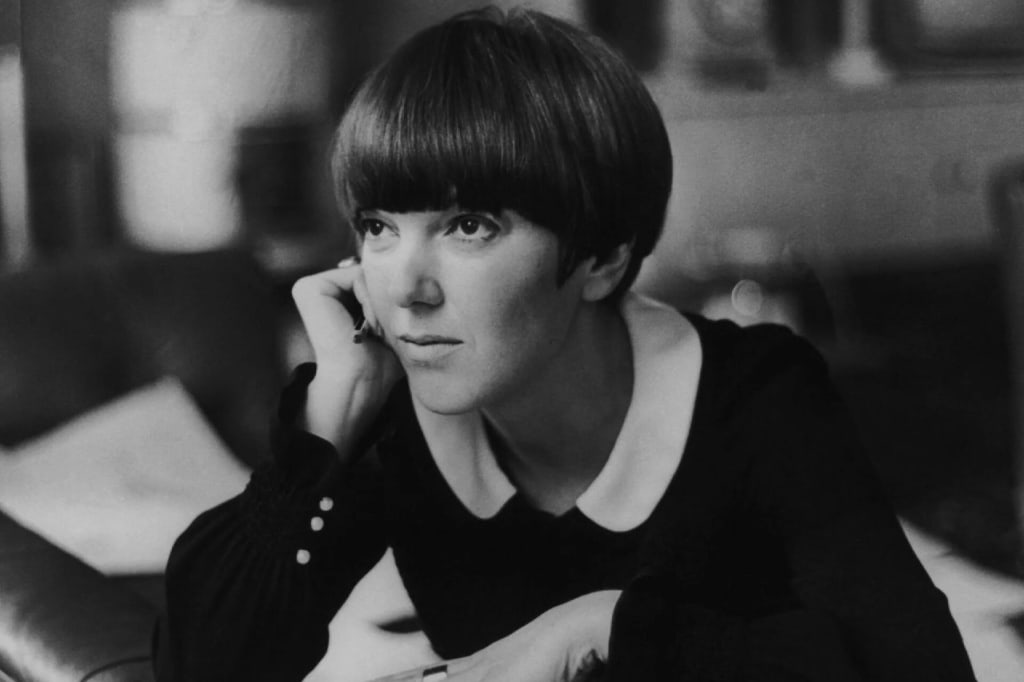
Mary Quant is an iconic fashion designer who is best known for revolutionizing the fashion industry in the 1960s. Her playful, colorful, and unconventional designs reflected the spirit of the era, and her use of PVC and other unconventional materials had a lasting impact on the industry. In this blog post, we will delve into the life and career of Mary Quant, her impact on the fashion industry, and her legacy.
Early Life and Career
Mary Quant was born on February 11, 1934, in London, England. She grew up during World War II, and her experiences during the war had a profound impact on her later designs. She studied illustration at Goldsmiths College in London, where she met her future husband, Alexander Plunket Greene.
After graduating from college, Quant worked as a milliner for the department store J. Lyons & Co. In 1955, she opened her first boutique, Bazaar, in London's King's Road. Bazaar quickly became popular among London's fashion-conscious youth, who were drawn to Quant's playful, colorful, and unconventional designs.
Quant's early designs were heavily influenced by the mod style that was popular in the 1950s. She used bold patterns and bright colors, and her designs were often asymmetrical and playful. She was also known for her use of PVC, which she used to create raincoats and other garments.
The Miniskirt
Quant's most significant contribution to the fashion industry was the miniskirt, which she began designing in the early 1960s. The miniskirt was a daring departure from the modest hemlines of the time, and it quickly became a sensation. The miniskirt was initially designed as a practical solution to the problem of cycling in a skirt, but it quickly became a symbol of the freedom and rebellion of the era.
The popularity of the miniskirt caused controversy in some circles, with critics arguing that it was too revealing and inappropriate for young women. But Quant's designs were embraced by young people, who saw them as a symbol of liberation and empowerment. The miniskirt was also embraced by the fashion industry, and it became a staple of the 1960s fashion scene.
Hot Pants and Other Designs
In addition to the miniskirt, Quant also designed hot pants, which were short shorts that became popular in the late 1960s. Hot pants were another daring departure from the modest fashion of the time, and they quickly became a symbol of the sexual revolution.
Quant's other designs were just as playful and unconventional as her skirts and hot pants. She continued to experiment with new materials and designs, and her work was always playful and colorful. She also launched her own line of cosmetics, Mary Quant Colour, which became popular in the 1970s.
Impact on the Fashion Industry
Mary Quant's impact on the fashion industry cannot be overstated. She was at the forefront of the youth-oriented fashion movement of the 1960s, and her designs reflected the spirit of the era. The miniskirt and hot pants, in particular, were revolutionary, and they continue to be worn today.
Quant's use of PVC and other unconventional materials also had a lasting impact on the fashion industry. Her playful designs and use of bright colors and patterns influenced generations of designers, and her legacy can be seen in the playful, colorful fashion that dominates the industry today.
Quant was also a pioneer in the use of marketing and branding in the fashion industry. She was one of the first designers to use her name and image to promote her designs, and she created a brand that was instantly recognizable. Her branding and marketing strategies influenced generations of designers and continue to be used today.
Legacy
Mary Quant's contribution to the fashion industry will always be remembered and celebrated. Her
About the Creator
The Growth Trap: How Self-Improvement Can Derail Your Success
The growth mindset has become a symbol of ambition and resilience. It promotes the belief that anyone can improve their skills and intelligence through effort, learning, and perseverance. While this concept has inspired many to push past their limits and embrace challenges, it also has a lesser-known side. When taken too far or misunderstood, the pursuit of self-improvement can actually backfire. What begins as a healthy desire to grow can spiral into stress, burnout, and self-doubt, quietly sabotaging the very success it aims to create.
By Jeb Kratziga day ago in Education
Wesley Farnsworth: On Authentic Christian Community with Evidence, Human Rights, and Critical Thinking
Wesley Farnsworth is an author, speaker, and communications professional whose work centers on faith, transformation, and the formation of authentic Christian community. With more than 16 years of experience in visual storytelling, branding, and digital communication—including service in military public affairs—he helps individuals, churches, and nonprofits communicate with clarity, integrity, and purpose.
By Scott Douglas Jacobsenabout 24 hours ago in Education


Comments
There are no comments for this story
Be the first to respond and start the conversation.