
Mars Colonization
What Are the Biggest Challenges?


The idea of colonizing Mars has fascinated scientists, engineers, and space enthusiasts for decades. With NASA, SpaceX, and other organizations making serious plans to send humans to the Red Planet, the dream of a Martian colony is closer than ever. However, settling on Mars presents immense challenges that must be overcome for long-term survival. From harsh environmental conditions to psychological burdens, here are the biggest obstacles to colonizing Mars.
1. Hostile Environment
Mars is an incredibly harsh place for human life. Its thin atmosphere, composed mostly of carbon dioxide, provides almost no protection from cosmic radiation and solar winds. Unlike Earth, Mars has no magnetic field to shield settlers from harmful radiation, increasing the risk of cancer and other health problems. Temperatures on Mars can plummet to -80°F (-62°C) on average, with some areas experiencing even more extreme cold. Developing habitats that can protect colonists from these conditions is a significant engineering challenge.
2. Lack of Water and Oxygen
Water is essential for life, yet Mars has no liquid water on its surface. While there is ice at the poles and underground reserves, extracting and purifying it for human use requires advanced technology. Oxygen is another problem; Mars’ atmosphere is only 0.13% oxygen, compared to Earth’s 21%. Colonists will need oxygen generators, likely extracting it from water through electrolysis or producing it from Martian soil. However, ensuring a continuous, reliable supply of oxygen is a matter of life and death.
3. Sustaining Life and Food Production
Unlike Earth, Mars has no natural ecosystem to support human life. Colonists will need to bring their own food or grow it using hydroponics or aeroponics in controlled environments. Since Mars has weaker sunlight than Earth, artificial lighting or genetic modifications for plants may be necessary. Soil on Mars is toxic due to perchlorates, making it unsuitable for direct farming. Without a sustainable way to grow food, colonists will be dependent on Earth for supplies, which is costly and risky.
4. Transportation and Supply Chain Issues
Sending people and cargo to Mars is a logistical nightmare. A one-way trip takes around six to nine months, and launch windows occur only every 26 months when Earth and Mars align favorably. Spacecraft must carry enough fuel for return trips or rely on in-situ resource utilization (ISRU) to create fuel from Martian materials. Resupplying colonies from Earth is slow, expensive, and unsustainable in the long term. This means colonists must become highly self-sufficient as soon as possible.
5. Health Risks and Psychological Struggles
Mars' low gravity (about 38% of Earth's) could have unknown long-term health effects, including muscle and bone loss. Colonists will also face high radiation exposure, which could lead to increased risks of cancer and genetic mutations.
Beyond physical health, psychological well-being is another major concern. Isolation, confinement, and the lack of familiar environments may lead to depression, anxiety, and interpersonal conflicts. Developing mental health support systems and strong social structures will be essential for maintaining a functioning society.
6. Energy Production and Infrastructure
Reliable energy sources are necessary for maintaining habitats, growing food, and producing oxygen. Solar panels are an option but may be inefficient due to dust storms that can last for weeks or months. Nuclear power could be a solution, but transporting and setting up nuclear reactors is complex and raises safety concerns. Finding the right balance between energy efficiency and sustainability is crucial.
7. Legal and Ethical Considerations
Who owns Mars? The Outer Space Treaty of 1967 states that no nation can claim sovereignty over celestial bodies, but with private companies like SpaceX aiming to establish colonies, legal disputes may arise. Ethical issues, such as the treatment of early settlers, governance structures, and planetary protection (ensuring we don’t contaminate Martian life forms if they exist), also need to be addressed before large-scale colonization happens.
Conclusion
While Mars colonization is an exciting vision for humanity’s future, the challenges are immense. Advances in technology, infrastructure, and human adaptability will be required to overcome these obstacles. If we can successfully address these issues, Mars may one day become a second home for humanity. But for now, the Red Planet remains one of the most formidable frontiers we have ever considered conquering.
About the Creator
Horace Wasland
Research analyst, writer & mystical healer. Exploring the edge where science meets mystery. From mystery/the mystical, to facts, news & psychology. Follow for weekly insights on all four and please leave a tip if you like what you read :)
Keep reading
More stories from Horace Wasland and writers in Education and other communities.
The Genius Octopus
The octopus is one of the most fascinating and mysterious creatures in the ocean. With its alien-like intelligence, extraordinary survival tactics, and eerie abilities, it almost seems like something out of a science fiction movie. But what if we told you that the reality of the octopus is even stranger—and scarier—than fiction? Here are ten terrifying truths about these genius cephalopods that will make you see them in a whole new light.
By Horace Waslandabout a year ago in Education
The Impact of Virtual Reality on Healthcare Innovation and Medical Practice
Virtual reality is steadily transforming the healthcare industry by offering immersive digital environments that support medical education, treatment planning, and patient care. Unlike traditional tools, VR allows healthcare professionals to interact with highly detailed simulations that replicate real medical situations. These interactive experiences provide opportunities for learning and preparation that were previously difficult to achieve through conventional training methods.
By Alex Kipman3 days ago in Education
Why the Sun Will Become a Red Giant: The Future of Our Solar System Explained
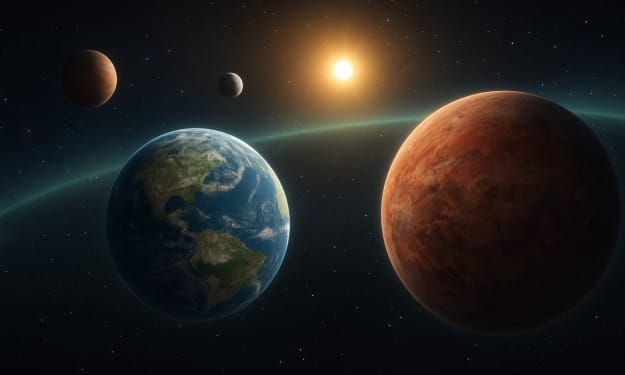
Every morning, the Sun rises as it has for billions of years, bathing Earth in light and warmth. To us, it feels permanent and unchanging. Yet in the vast timeline of the universe, the Sun is only halfway through its life.
By shahkar jalalabout 24 hours ago in Education


Comments (1)
Id colonize mars. Great work! Celestial bodies law of 1967 doesn’t apply off earth I don’t think! Fantastic