
March of the Innocents
Innocence Lost in the Fires of Holy War
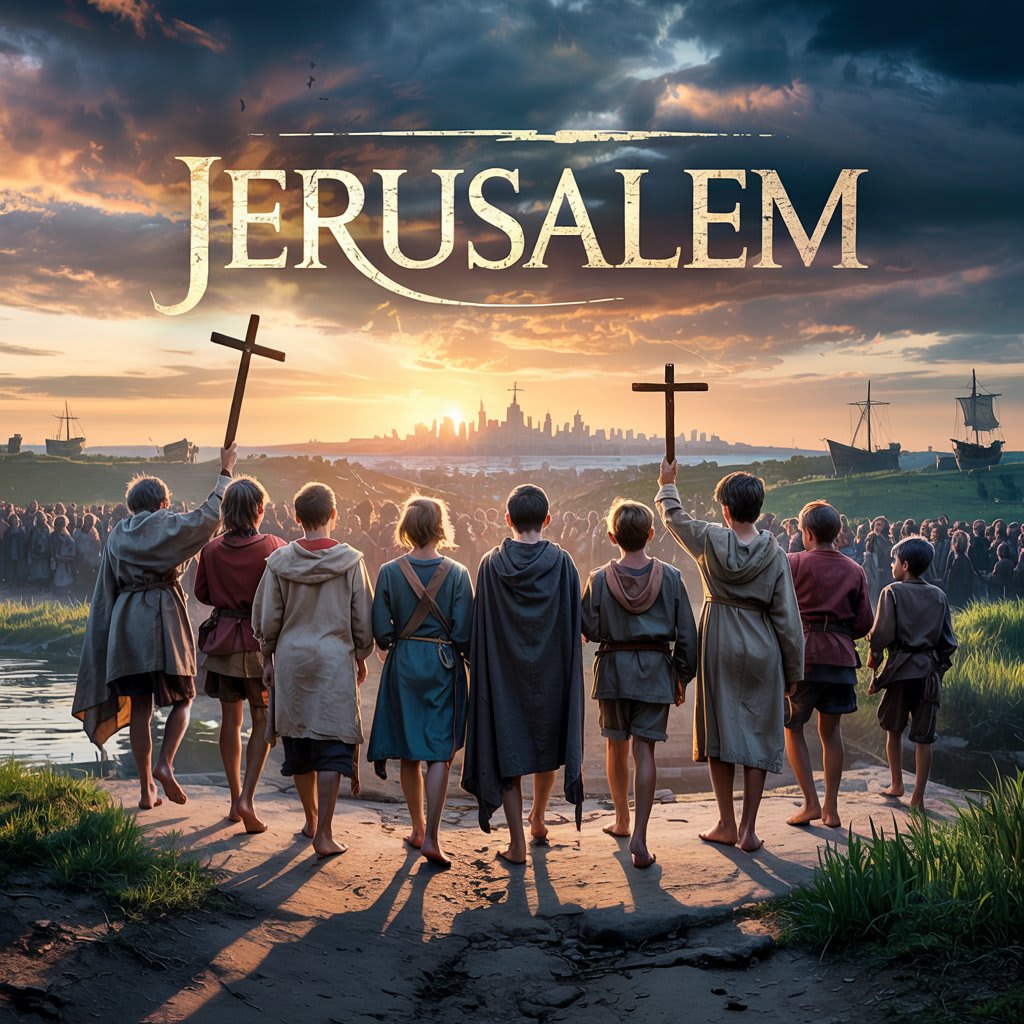
In the year 1212, the world was gripped by feverish dreams and desperate hopes. Europe, torn by war and plagued by famine, saw the rise of a movement that defied the very essence of reason — the Children’s Crusade. It began as a whispered promise of divine favor, a sacred mission fueled by the purest faith. But what began as an idealistic march toward salvation would soon become a haunting tragedy, one that history would never forget.
The Crusade was not led by kings or knights, but by the youngest and most vulnerable of society — children. Boys and girls, many not yet in their teens, left their homes in France and Germany, believing that they were the chosen ones to reclaim the Holy Land from the infidels. Their hearts were full of hope, their spirits brimming with a kind of innocence that only the young could possess.
They came from every corner of Europe, drawn together by a single, burning vision: to march to the Holy Land and free it from the Muslims who had taken control of Jerusalem. They believed their prayers would part the seas, their faith would overpower armies, and God would grant them victory. No one had asked them to go. No adults had called for it. Yet, like a flock of birds migrating south, they moved together, propelled by the same unseen force.
At the head of the march were two charismatic figures — a boy named Stephen from France, who had heard the voice of God commanding him to lead, and a German shepherd named Nicholas, whose faith and youthful spirit captivated those around him. Each believed that God had chosen them for a purpose greater than themselves, and soon their voices reached thousands of children, convincing them to join the cause.
With little more than the clothes on their backs, the children began their journey. They walked for days, weeks, their feet blistered and raw from the harsh roads of Europe. They crossed rivers, trekked through forests, and braved the desolate countryside, all the while singing hymns of devotion and belief. The older ones tried to lead the way, but the vast majority of the children were too young to understand the true nature of what they were undertaking. The stories they had been told about a journey that would bring them to God’s promised land were not enough to prepare them for the cruel realities of the world.
As the days turned into weeks, the march grew more desperate. Hunger and exhaustion set in, and many children began to fall behind. Some turned back, but most pressed on, their faith unshaken, their resolve unbroken. Yet the land they walked was unforgiving. What had seemed like a holy adventure quickly became a nightmare. The streets were empty, the towns abandoned, and the churches that once offered solace were now silent and hollow. The children had no place to rest and no food to eat.
As they crossed into Italy, their hope began to wither. In Rome, Pope Innocent III, who had originally been swept up in the fervor of their mission, began to distance himself from the movement. He issued a decree, declaring that the children would not be able to march to the Holy Land. The dream of salvation was dashed. Yet the children, driven by their unwavering belief in the divine promise, refused to turn back.
In the southern Italian city of Brindisi, their journey took an even darker turn. Here, some unscrupulous merchants saw an opportunity for profit. Promising the children that they would transport them across the sea to the shores of the Holy Land, they lured them onto ships with promises of safety and glory. But the children were not heading toward Jerusalem — they were heading into slavery. Once aboard the ships, the merchants sold the children to the Muslim slave markets, betraying their trust and innocence for a quick profit.
Some children escaped, but most were trapped. What had begun as a march of hope had ended in tragedy. The few who survived the journey and returned home were broken, their once-innocent faith shattered by the horrors they had endured. For the rest of Europe, the Children’s Crusade became a symbol of the dangers of blind faith, of the vulnerability of youth, and of the consequences of a world that had abandoned its youngest and most innocent.
The story of the Children’s Crusade did not end with them. In the years that followed, their plight became a cautionary tale, one that was passed down from generation to generation. It was a tale of faith taken too far, of innocence sacrificed on the altar of ambition and politics. And though the children’s names were lost to history, the memory of their march would live on.
The March of the Innocents is a powerful reminder that history is not always kind to the young and the vulnerable. Their idealism, their purity, and their hope were crushed by the harshness of the world, but their story still echoes through the corridors of time. It reminds us of the delicate balance between faith and reason, between hope and reality. The children who marched did so with hearts full of purity, but their sacrifice serves as a painful reminder of how fragile innocence can be in a world full of cruelty.
Though they did not live to see the fruits of their efforts, the children of the Crusade left behind something far greater than the Holy Land they sought. They left behind a legacy of faith, sacrifice, and a haunting reminder of the dangers of blindly following a dream.
Their story, though tragic, is one of courage and devotion, and it calls us to reflect on the cost of hope when it is driven by forces too powerful to understand.
About the Creator
Bahram shah
iter sharing honest thoughts, real experiences, and fresh takes on everything from trending topics to everyday life. Here to connect, explore, and keep things interesting.
Keep reading
More stories from Bahram shah and writers in Education and other communities.
make money online 2025
The internet has evolved, but the dream of earning money online is more alive than ever in 2025. With the rise of AI, automation, and remote work culture, making money online has become not only more accessible but also more diverse. Whether you're a college student, a stay-at-home parent, or simply someone looking to escape the 9-to-5 grind, there are practical and profitable ways to start generating income from your laptop.
By Bahram shah9 months ago in Geeks
Designing a Meaningful Future: Strategic Planning for Mission-Focused Entrepreneurs
In today’s evolving business landscape, entrepreneurs are increasingly motivated by more than financial success. Many are building companies around a mission to create social, environmental, or community-driven impact. While passion and vision ignite these ventures, strategic planning transforms purpose into a lasting, scalable business. For mission-focused entrepreneurs, planning is not about restriction but about clarity, alignment, and sustainable growth.
By Mario Payne3 days ago in Education
Why Did Einstein Dislike Quantum Mechanics? The Greatest Scientific Disagreement Ever
Einstein Helped Create Quantum Mechanics It is often forgotten that Einstein was a pioneer of quantum physics. In 1905, Einstein proposed that light comes in discrete packets called photons. This explained the photoelectric effect and earned him the Nobel Prize. His work was one of the pillars of quantum theory.
By shahkar jalal7 days ago in Education



Comments
There are no comments for this story
Be the first to respond and start the conversation.