
Maqamat Sufism and its Relationship with Quran
Maqamat Sufism and its Relationship with Quran

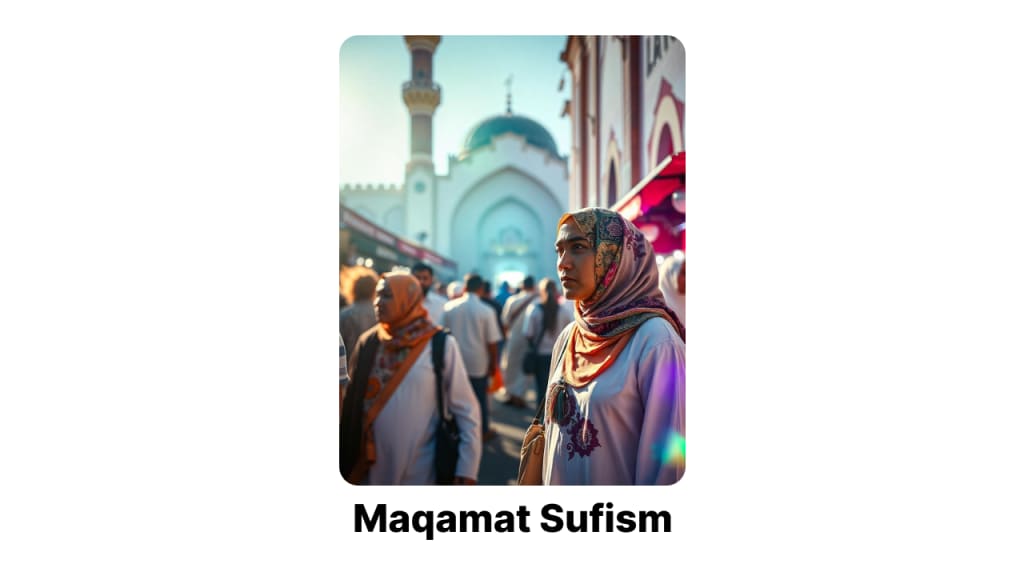
Sufism is the inner, mystical dimension of Islam. It refers to the pursuit of spiritual truth as a definite goal through the path of love and devotion. Sufis seek to find divine love and knowledge through direct personal experience of God. The origins of Sufism can be traced back to the lifetime of Prophet Muhammad, and it emerged as a distinct movement in the 8th and 9th centuries CE.
The fundamental concept in Sufism is maqam (plural maqamat) which means 'station' or 'stage'. Maqamat refer to the various stages and states that a Sufi goes through in their mystical journey towards the ultimate goal of unification with God. The Quran and Hadith provide scriptural basis for these stations that Sufis must go through in order to attain higher spiritual levels. This paper analyzes the main maqamat in Sufism and examines how they relate to Quranic concepts and Quran teachings.
The Maqamat of Sufism
Sufis have identified and described a number of maqamat that compose the path to mystical enlightenment. While the names and numbers of maqamat differ between different Sufi orders, the following are considered the universally agreed upon stations that Sufis must pass through:
Tawba (Repentance)
The first station in Sufism is tawba or sincere repentance for all the wrongs committed in the past. The Sufi repents directly to God and aims to reset their soul and reorient it towards the divine path. This involves remorse over one’s sins as well as a firm resolution to avoid future wrongdoings. God promises forgiveness for sins in the Quran for those who repent: “And He it is who accepts repentance from his servants and pardons evil deeds and knows what you do” (42:25).
Zuhd (Renunciation)
After repentance, the Sufi enters the station of zuhd which implies detachment from the material world and desiring the next world. It requires abstaining from excessive indulgences and living a simple life. The Quran praises those who are not obsessed with material gains: “Beautified for people is the love of that which they desire - of women and sons, heaped-up sums of gold and silver, fine branded horses, and cattle and tilled land. That is the enjoyment of worldly life, but God has with Him the best return” (3:14).
Sabr (Patience)
Sabr refers to the virtue of patience and perseverance on the Sufi path. It involves enduring pain, hardship, and difficulties calmly for the sake of God. The Quran emphasizes patience in many verses including: “O you who have believed, persevere and endure and remain stationed and fear Allah that you may be successful” (3:200).
Tawakkul (Reliance on God)
Tawakkul implies complete trust and dependence on God. The Sufi abandons all concerns and relies fully on the will and plan of God. The Quran mentions tawakkul in verses such as “And upon Allah rely, if you should be believers” (5:23) and “And rely upon the Ever-Living who does not die” (25:58).
Zuhd (Poverty)
This station refers to the state of spiritual poverty where the Sufi recognizes the poverty of their soul and expresses need to God. It reflects humility and being ‘poor’ in spirit, not just materially. The Quran alludes to this poverty in the verse: “O mankind, you are those in need of Allah, while Allah is the Free of need, the Praiseworthy” (35:15).
Sabr (Contentment)
The Sufi becomes content with less, accepts fate and surrenders completely to the will of God. Complaints and dissatisfaction with life fade away. The Quran mentions the station of contentment or ridha: “Indeed, the patient will be given their reward without account” (39:10) and “Indeed, those who have said, "Our Lord is Allah " and then remained on a right course - the angels will descend upon them, [saying], "Do not fear and do not grieve but receive good tidings of Paradise” (41:30).
Tawhid (Unity)
Tawhid is the core of Sufi belief and means affirming the absolute oneness of God. The ultimate goal of the Sufi path is to achieve complete unification with this supreme oneness. The fundamental statement of Islamic belief found in the Quran, the shahada, declares: “There is no deity except Allah” (47:19) capturing this state of unity.
Ma’rifa (Spiritual Knowledge)
The station of ma’rifa refers to intuitive and experiential knowledge of God attained by the Sufi through sincere devotion. This contrasts blind belief and intellectual knowledge alone. The Quran recognizes this level of spiritual knowledge in verses such as: “It is He who sent down to you the Book; in it are verses precise - they are the foundation of the Book - and others unspecific. As for those in whose hearts is deviation, they will follow that of it which is unspecific, seeking discord and seeking an interpretation. And no one knows its interpretation except Allah.” (3:7)
Ihsan (Spiritual Excellence)
Ihsan is spiritual excellence attained when the Sufi has achieved communion with God and performs all actions mindful of the divine presence. According to a hadith, it is to “worship God as though you see Him, and if you cannot yet see Him, know that He sees you.” This powerful state of constant awareness leads to utmost sincerity, beauty and excellence.
Fana (Annihilation)
The final maqam is fana which refers to the dissolution of the ego and all personal desires. The self melts away and only God remains. This is the pinnacle of mystical enlightenment and unification when the Sufi becomes annihilated in God. The Quran alludes to this state with phrases such as “Everything will perish save His Face” (28:88) and “Be, and it is” (16:40) that symbolize the subsistence of only the Divine.
Relationship Between Maqamat and Quran
It is clear that while the Quran does not explicitly mention the Sufi maqamat, there are references to the underlying concepts, states and stations. This shows the intimate relationship between Sufism and Quran, and how the maqamat are solidly based on Quranic themes. Some ways the maqamat relate to the holy book are:
- The Quran provides the inspiration for repentance, contentment, patience and loving devotion that are fundamental to the Sufi path.
- Quranic verses endorse key stations like tawakkul (reliance on God) and ridha (contentment) which are central maqamat.
- The shahada encapsulates tawhid which is the ultimate goal, affirming Quranic oneness of God.
- The highest state of fana has intimations in the Quran through verses on the all-encompassing nature of God.
- The Quran recognizes the esoteric, spiritual knowledge (ma’rifa) attained by Sufis through devotion.
- The maqamat align closely with the Quranic path of spiritual development and afterlife rewards.
- Passages on being poor in spirit, avoiding materialism resonate with Sufi poverty (faqr).
- Quranic descriptions of the patient, perseverant believer mirror the Sufi in sabr.
Therefore, while arising later, Sufism follows the Quran in its broad ethos, spiritual teachings and mystical dimensions. The Quran laid the groundwork for this inner path within Islam. Sufi maqamat or stations constitute the methodology and framework designed to realize lofty Quranic ideals.
Conclusion
The maqamat are the path and methodology of Sufism. Central Sufi stations like repentance, renunciation, patience, contentment, reliance on God and gnosis all find resonance in the Quran even if not described as formal stages. The Quranic path of faith, moral excellence and afterlife elevation parallels the Sufi journey through maqamat leading to annihilation in God. While differences emerged between mainstream Islam and Sufism, the maqamat represent an attempt to realize the essence of Quranic teachings on spirituality and loving God. Sufism elaborated on cryptic Quranic references to the mystical experience but stayed true to its teachings of moral discipline, devotion and unity with the Divine.
About the Creator
M Haseeb
Reading can be a fantastic way to unwind and take a break from the hustle and bustle. Reading has the power to transport you to another world, providing a much-needed escape and helping to reduce stress.
I <3 Irasutoya
If you live in Japan, you've seen Irasutoya images everywhere. It's on posters, it's on flyers, it's on internet adverts, it's truly everywhere. You've probably seen it once or twice if you don't live in Japan. It's cute, it's simplistic and it somehow manages to get succinct points across really clearly and concisely.
By Max Brooks4 days ago in Education



Comments