
Making Of The Internet
Every wonderful creation has its genesis

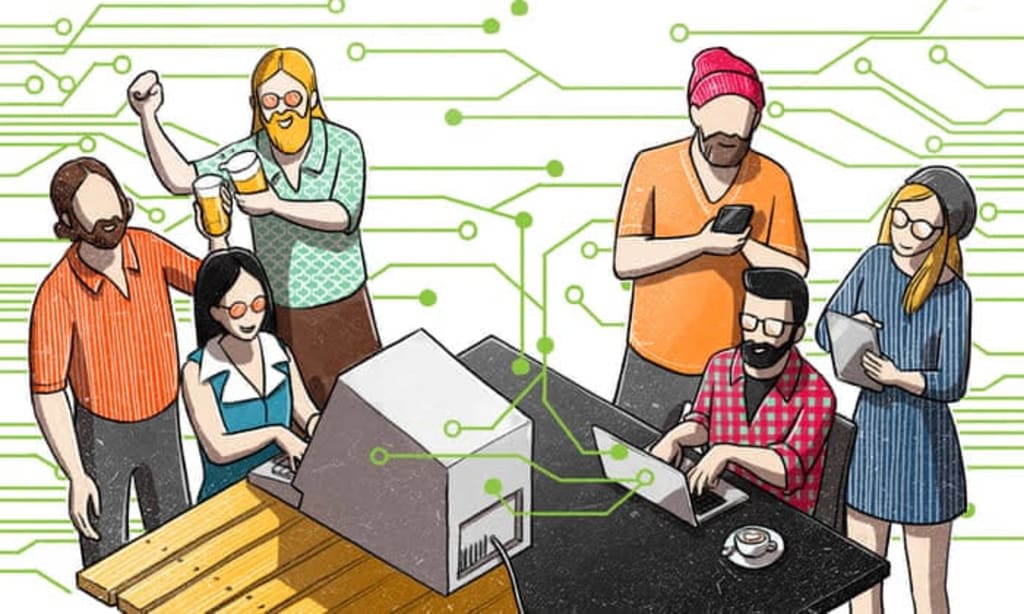
The Internet has become an essential part of our daily lives, allowing us to communicate, work, learn, and entertain ourselves in ways that were once unimaginable. It is a vast network of computers and servers that connect people and information from around the world. But how did it all begin? In this article, we will explore the history of the Internet, the key players involved in its creation, and how it has evolved into the powerful tool it is today.
The Birth of the Internet:
The story of the Internet begins in the 1960s, during the Cold War, when the United States government began to develop a secure communication system that could withstand a nuclear attack. This project was initiated by the Advanced Research Projects Agency (ARPA), a division of the Department of Defense, which was responsible for developing new technologies for military use.
ARPA's project led to the development of a computer networking technology known as packet switching, which is the foundation of the Internet. Packet switching allows data to be broken down into small packets and sent through a network of interconnected computers, with each packet being independently routed to its destination. This approach to data transmission was more efficient and reliable than the traditional circuit-switching approach, which was used by telephone networks at the time.
The first packet-switched network, called ARPANET, was launched in 1969, linking together four universities in California and Utah. The network used the newly developed ARPANET Interface Message Processor (IMP) to connect the computers together, and it was designed to allow researchers to share computing resources and communicate with each other over long distances.
The Creation of the World Wide Web:
While ARPANET was the foundation of the Internet, it was the creation of the World Wide Web (WWW) that made the Internet accessible to the masses. The WWW is a system of linked documents that can be accessed through the Internet using a web browser. It was invented by Tim Berners-Lee, a British computer scientist, who was working at CERN, the European Organization for Nuclear Research, in the late 1980s.
Berners-Lee was looking for a way to share information among scientists at CERN, who were working on a variety of research projects. He proposed a new way of organizing and sharing information using hypertext, a method of linking documents together. He created a language called HTML (Hypertext Markup Language) to describe the structure of web pages, and he developed the first web browser and web server.
In 1991, Berners-Lee released the first web page, which provided information about the World Wide Web project. This marked the beginning of the WWW, which allowed users to access information in a graphical interface and navigate through different web pages using hyperlinks.
The Growth of the Internet:
The internet has come a long way since its inception in the 1960s. It has evolved from a small network connecting a handful of computers to a vast and complex system that connects billions of devices around the world. In this article, we will explore the growth of the internet and the key developments that have shaped it into what it is today.
Expansion of the Internet:
The internet experienced rapid growth during the 1990s as more and more people began to use it for communication, research, and entertainment. The development of the World Wide Web, along with the introduction of web browsers that could display images and videos, made it easier for people to access and navigate the internet.
By the end of the 1990s, the number of internet users had grown to over 100 million, and the internet had become an essential tool for businesses and individuals alike. The introduction of online shopping, online banking, and other e-commerce services helped to fuel the growth of the internet and made it a central part of everyday life.
Emergence of Social Media:
The early 2000s saw the emergence of social media platforms like Facebook, Twitter, and LinkedIn. These platforms allowed users to connect with each other and share information and content, leading to a new era of social interaction and online communication.
Social media also provided new opportunities for businesses to reach customers and promote their products and services. The use of social media for marketing and advertising has since become a multi-billion dollar industry, and many businesses now rely on social media to reach their target audience and build brand awareness.
Mobile Internet:
The introduction of smartphones and mobile devices in the late 2000s revolutionized the way people access the internet. Mobile devices made it possible to access the internet from anywhere, at any time, and led to a surge in mobile internet usage.
The popularity of mobile devices and the convenience of mobile internet led to the development of mobile apps, which have since become a staple of the online experience. Today, there are over 3 million mobile apps available for download, covering everything from social media and gaming to productivity and health.
Internet of Things:
The internet of things (IoT) is another major development that has shaped the growth of the internet. IoT refers to the network of interconnected devices and objects that can communicate with each other and share data over the internet.
The IoT has the potential to revolutionize many industries, from healthcare and transportation to manufacturing and agriculture. By enabling devices to communicate and share data, the IoT can help to increase efficiency, reduce costs, and improve the quality of products and services.
Future of the Internet:
As the internet continues to grow and evolve, it is difficult to predict exactly what the future holds. However, it is clear that the internet will play an increasingly important role in our lives, and that it will continue to shape the way we communicate, work, and interact with the world around us.
One area of particular interest is the development of artificial intelligence (AI) and machine learning. These technologies have the potential to transform the way we interact with the internet, enabling more personalized and intuitive experiences that can adapt to our individual needs and preferences.
Conclusion:
The growth of the internet has been a remarkable journey, spanning over half a century and touching the lives of billions of people around the world. The internet has evolved from a simple communication network to a complex system that connects people, devices, and data in ways that were once unimaginable.
As we look to the future, it is clear that the internet will continue to play a critical role in our lives, and that it will continue to evolve and adapt to new technologies and trends. From social media and mobile devices to the internet of things and artificial intelligence, the growth of the internet is a testament to the power of human innovation and the limitless potential of technology.
About the Creator
Emmanuel Atilola
Just a 15 year old kid who loves to write articles
Keep reading
More stories from writers in Education and other communities.
Staying Active at the Gym: How to Avoid Burnout and Stay Consistent
Staying active at the gym offers many physical and mental benefits, but maintaining consistency can be challenging, especially when burnout appears. Many people start with excitement and strong motivation, yet after a few weeks, the pressure to perform or the demands of a busy life can lead to fatigue, boredom, or frustration. Avoiding burnout is essential for long-term success. A healthy fitness routine should support your well-being, not drain your energy or enthusiasm. With the right strategies, you can stay consistent, maintain a positive mindset, and enjoy your workouts for years to come.
By Keith Brautigam3 days ago in Education
One Hard Thing
Stop me if you’ve heard this one before: You have the number, you know your schedule- you’ve even picked out the perfect day and time to make this appointment. Shoot, you’ve even picked out alternative days and times just in case their schedules can’t accommodate you!
By Taylor Rigsby5 days ago in Motivation



Comments (1)
Nice Article