
Lost in Transition: The Real Struggles of Today’s Youth
From Academic Pressure to Mental Health — Understanding the Modern Challenges Facing Young People

Introduction
We live in a world of constant innovation, digital connectivity, and boundless opportunities. Today's youth are more informed, more technologically savvy, and more globally connected than any previous generation. However, beneath this apparent advantage lies a storm of confusion, pressure, and emotional distress.
As they stand on the uncertain threshold between adolescence and adulthood, young people are grappling with issues far deeper than ever before — from crushing academic expectations to silent mental health battles. This article explores these core challenges and explains why it is critical for society to acknowledge and address them.
1. Academic Pressure and the Burden of Overachievement
One of the most visible and overwhelming issues youth face today is academic pressure. From the earliest stages of schooling, children are thrust into an intensely competitive environment. Success is often measured by grades, rankings, test scores, and university acceptances — all indicators that reduce a young person’s worth to numbers and performance.
Parents and educators, in their desire for excellence, frequently set sky-high expectations. Unfortunately, this leaves little room for failure, creativity, or self-exploration. Students end up sacrificing their mental well-being, sleep, physical health, and social life to meet these demands.
As a result, many youth experience burnout before even reaching adulthood. The fear of disappointing their families, failing in society’s eyes, or falling behind in the "race of life" becomes a constant source of anxiety and self-doubt.
2. Mental Health: A Growing Crisis
Closely tied to academic and social pressure is the alarming rise in mental health issues among young people. Depression, anxiety, panic disorders, and suicidal thoughts are becoming increasingly common. The pressure to be perfect, combined with feelings of isolation, rejection, and failure, often overwhelms the emotional resilience of youth.
Sadly, in many cultures, mental health remains a taboo topic. Youth are often discouraged from talking about their emotions or seeking professional help. This stigma leads to silence, shame, and, in some cases, tragedy.
Educational institutions and families need to be proactive — providing accessible counseling, mental health education, and safe spaces where young people feel heard, accepted, and supported.
3. The Double-Edged Sword of Social Media
Social media plays a huge role in the daily lives of young people. While it offers connection, expression, and access to information, it also fuels insecurity and emotional distress. Platforms like Instagram, TikTok, and Snapchat promote carefully curated, idealized lifestyles that often don’t reflect reality.
Young users begin to compare their real lives with the filtered, glamorous versions of others' lives — leading to feelings of inadequacy, loneliness, and low self-esteem. The constant need for likes, validation, and attention can become addictive and emotionally draining.
Moreover, cyberbullying, online harassment, and digital exclusion are growing threats. Many teens face cruelty behind screens with no clear avenue for justice or support. Parents and educators must take an active role in educating youth about responsible digital behavior and helping them disconnect when necessary.
4. Unemployment and Career Confusion
Another significant challenge is the mismatch between education and employment. Even after years of education, countless graduates struggle to find jobs in their field or face underemployment. This disconnect stems from outdated academic systems that focus more on theory and grades than practical skills and real-world application.
This uncertainty leaves many young adults feeling lost and discouraged. Economic instability, the rising cost of living, and the absence of proper career guidance deepen the fear of the future. Youth often want to work, contribute, and succeed — but they don’t know where to start, or what path to follow.
Governments and industries must collaborate with educational institutions to design curricula that match current job market demands, include internships, and promote skill-based training.
5. Identity Crisis and the Pressure to Conform
Globalization has exposed youth to a wide range of cultures, beliefs, and lifestyles. While this diversity is enriching, it also causes confusion and internal conflict. Many young people struggle to define their identity — whether it be cultural, spiritual, sexual, or moral.
This confusion is worsened by peer pressure. In a bid to “fit in,” youth often suppress their real personalities, interests, and values. They may dress, speak, or act in ways that don’t reflect who they truly are, simply to avoid being excluded or judged.
Without a strong sense of self, it becomes easy to follow unhealthy trends, adopt harmful behaviors, or fall into existential despair. Supportive communities, role models, and inclusive environments can help young people navigate this identity journey with confidence and authenticity.
Conclusion: A Call to Action
The youth of today are not just future leaders — they are the heartbeat of our present. Their challenges are real, urgent, and deeply complex. Rather than dismiss their struggles as “over-sensitivity” or “immaturity,” society must listen, learn, and support them with empathy.
We must transform our schools into spaces of learning and healing. We must promote mental health as much as academic excellence. We must guide youth with compassion, not comparison. And above all, we must give them the freedom to fail, explore, and grow.
Parents, educators, employers, governments — everyone has a role to play. When young people are understood and empowered, they can overcome the confusion and fear of transition. They can thrive — not just survive — in a world that desperately needs their creativity, courage, and compassion.
About the Creator
Keep reading
More stories from Jafar Khan and writers in Education and other communities.
To Vanish, Learn How to Appease the Predator First
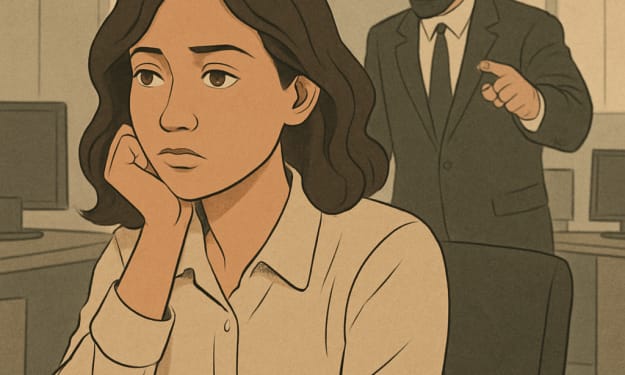
Story In a city where noise meant presence and silence was mistaken for weakness, lived a girl named Zoya — calm in demeanor, sharp in mind. She wasn’t loud, nor was she ever seen arguing or defending herself in public. But that didn’t make her weak — not even close. She was, in fact, made of steel wrapped in silence. Zoya worked at TitanCore Solutions, a fast-rising tech firm known for its ruthless corporate culture. Her manager, Mr. Haroon, was infamous throughout the company — a man who ruled through fear. He barked orders, insulted employees in meetings, and used humiliation as a tool to maintain his authority. His voice echoed through the glass corridors like thunder, reminding everyone of their place. People either fled or fought — and those who fought, fell hard. Fired. Blacklisted. Broken. Haroon had destroyed careers without a second thought. But Zoya didn’t flee. And she certainly didn’t fight. Instead, she watched. She watched how Haroon reacted when someone challenged him — his nostrils flaring like a threatened predator. She noted how he fed on praise and flattery, how he calmed down when his ego was stroked just right. She memorized his patterns, his triggers, and more importantly — his weaknesses. She began to adopt a strategy that few understood. > “To vanish, learn how to appease the predator first.” This became her silent mantra — her daily approach to survival. She began to navigate her office life like a skilled traveler through a minefield. She complimented Haroon just enough to be noticed, never too much to raise suspicion. She smiled at his rants, not out of fear, but out of studied indifference. She became an expert at being unremarkable, staying under the radar yet never out of the game. Colleagues wondered why Haroon left her alone. They whispered theories. Some thought she was a favorite. Others assumed she was too timid to provoke. None guessed the truth — Zoya was playing chess in a room full of checkers. Outside the office, her real work began. Every night, she returned to her small apartment and opened her laptop with purpose. She enrolled in online business courses. She took language classes. She saved every rupee she could from her modest salary. She quietly built a network of mentors through LinkedIn and alumni groups. She didn’t post on social media. She didn’t share her struggles. She didn’t complain. She just prepared. Six months passed. On the surface, nothing had changed. Haroon still barked. Staff still trembled. And Zoya still walked through the office halls like a ghost — quiet, steady, unshaken. But inside her email inbox was a message that would change everything: > “Congratulations! You have been selected for the Global Future Leaders Fellowship at the University of Edinburgh. Full tuition, accommodation, and living stipend covered.” The predator had never suspected a thing. The next morning, Zoya printed her resignation letter — short, professional, and emotionless. She walked into Haroon’s office and placed it gently on his desk. He looked up, stunned. “You’re quitting?” he scoffed, scanning the letter. “Where will you go? Another local firm?” Zoya simply smiled. “I’m going abroad. Scholarship. Business management.” Haroon blinked. His ego — the same one Zoya had fed for months — now looked betrayed. She watched him struggle to say something, but he couldn’t. She had slipped through his grasp like vapor. And just like that, she was gone. No drama. No fight. No revenge. Just strategy. Embedded Article (in the story)
By Jafar Khan6 months ago in Lifehack


Comments
There are no comments for this story
Be the first to respond and start the conversation.