
Lollipop
Using Film as a Teaching Resource in Social Work Education


Frigga Haug writes:
The accumulation of data on such topics as unemployment, income, marital status, on the share of housework, on the percentage of high-school graduates, etc., has indeed the strange effect that the living women themselves remain external to it even when they are directly affected…
In other words, simply knowing ‘stuff’ about the world does not mean we understand it. Having information is not the same as being able to grasp how it impacts our lives. Data, no matter how beautifully presented, does not get to the nub of an experience.
And as the last few years have shown, we rarely win an argument, change a mind or the world by stating facts. We do not win by shouting, “You’re wrong and I can prove it.”
We need a bridge between the ‘stuff’ and the feelings. And that is where the power of story comes into its own.
Stories make us more alive, more human, more courageous, more loving. (Madeleine L’Engle)
Stories have power.
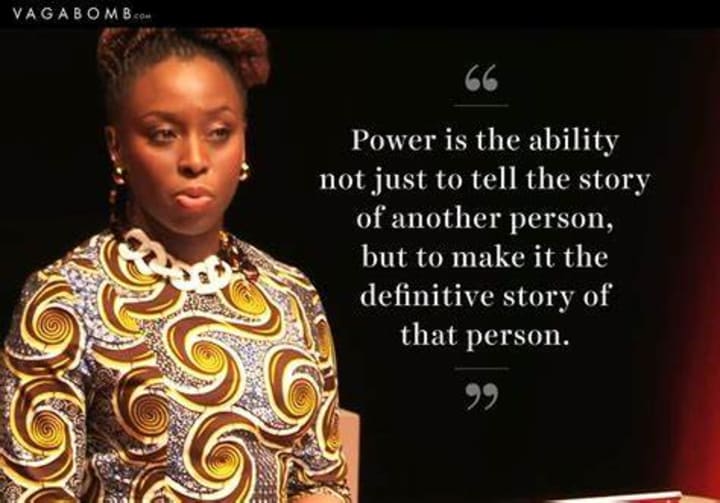
Many stories matter. Stories have been used to dispossess and to malign. But stories can also be used to empower, and to humanize. Stories can break the dignity of a people. But stories can also repair that broken dignity. (Chimamanda Ngozi Adiche)
And it is this ability to analyse how stories can harness power and repair broken lives that social work students need to develop in working with the people trying to access their support.
Film can be an accessible way to start the big discussions in social work education. Not everyone can grapple with complex texts and data sets. But most students can access cinema. Film offers, for many, an immersive step into another’s world, a different narrative, a starting point for empathy.
And empathy is crucial.
Empathy is part of our evolution, and not just a recent part, but an innate, age-old capacity. (Primatologist Frans de Waal)
This is not to say that all films are fool proof teaching tools.
This is a short guide to explore how one film could be used in a social work classroom. I’m going to use the recently released British film Lollipop (2025).

Lollipop is about Molly, a young woman recently released from prison, looking forward to reunification with her children. We never know why Molly was in prison, although there is a brief reference to sniffer dogs. She has spent four months away from her two children, Leo (5) and Ava (11). Whilst inside, the children had been left in the care of their grandmother, Molly’s mum. However, Grandma, with an over-reliance on dark rum and a dying partner, failed to look after the children and they have been placed in foster care.
Molly appears to be naively misinformed about how the processes will work, desperate to promise her children a safe home back with her.
The film is loosely based on the experience of the writer-director, Daisy May Hudson. It is shown from the point of view of Molly (or Lollipop as her mother calls her), and we watch her frustration, grief and anger grow with a system that doesn’t seem to hear or see her. The only good thing in her life is her friendship with Amina, who is also caught up in the system, trying to qualify in nursing while living in a homeless hostel. Molly is undoubtedly capable of great love, but also is scared, alone and unpredictable. Each decision is both understandable, but impulsive and potentially destructive.
She looks at a childhood photograph of herself and sighs: “I wish someone had looked after her.”
Her mother responds with “Don’t start.”
This isn’t a film with villains and heroes, but it is a film where there is a struggle to get justice.

Using it as a tool for teaching requires preparation. Students, even social work students should not be subjected to a classroom experience that might upset them in front of their peers. Showing the film should be preceded by a care warning for: homelessness, parental neglect, violence and swearing. (Yes, students will encounter this in practice, but it doesn’t mean it has to be in their face in all of their educational experiences.)
One argument students will use, especially if the film is uncomfortable, is that it is just a film. Real life isn’t like this. This is a fair point. In this case, the argument will be that this film builds on the writer/director’s experience of homelessness. But the more general point is that using fictional characters means that the judgements being made are not about real people. There is some space to disagree and judge motive, character, behaviour, which isn’t available or appropriate in real world situations.
Let the students know that they are not going to be passive viewers. They need to pay attention for post-screen discussion.
And finally, in terms of preparation, please make sure students are comfortable.: that they have drinks, snacks and can see the screen, and if necessary, can access subtitles or audio description.
The film lasts 1 hour 40 mins. That is a long time to sit still. Build in a break for after the showing. Maybe move to another room, with a different set up for discussion.

Then have the conversations that the film has prompted. These are my ideas for discussion prompts:
- Point to the moments of joy in the film (It’s a tough watch, but there are some lovely moments, and this might be a good place to start the reflection)
- Do you think that if her old social worker, Ruth, had not been off sick, that things would have been different?
- What does a promise mean? What does a broken promise mean? What role do promises play in parenting? What role do promises play in providing a service?
- The state gets involved with families, but what does this film tell us about the role of friends?
- What do you think Molly’s family will look like in twelve months’ time, when the supervision order is over?
- What do you think should have been in place for Molly the day she leaves prison? (Let students use their imagination to see that the system we have does not have to be the system we will always have).
Lollipop lingers long after the film has been seen.
A rousing, emotional wrecking ball in the very best way possible, boasting star-making turns across the board and a story that is guaranteed to stay with you. (Empire)
Don’t let it be a one and done experience. Continue to refer to it when discussing complex issues throughout the curriculum. For example, it is a good reference point for discussions about:
- Strength-based approaches
- Trauma informed care
- Class, solidarity, Bourdieu’s concept of social capital
- Bureaucracy, austerity and public service
- Presentation and court skills
- Resilience
The key message for me was about resilience and how much is required from workers and those who need access to support. And maybe the big question that can be returned to time and again through social work education and a social work career, is:
“How do we keep showing up for someone who keeps messing up?”
About the Creator
Rachel Robbins
Writer-Performer based in the North of England. A joyous, flawed mess.
Please read my stories and enjoy. And if you can, please leave a tip. Money raised will be used towards funding a one-woman story-telling, comedy show.
Keep reading
More stories from Rachel Robbins and writers in Education and other communities.
Misplaced Optimism: A Year of Accountability Promised — and Withheld at LAUSD
“We must hold the Superintendent accountable” – Karla Griego (2024) Ten years ago, I ran for a seat on the LAUSD Board of Education to change the district I believed was failing its students, especially those with Special Education needs. My opponent was Tamar Galatzan, an entrenched incumbent who was backed by the charter school industry. I achieved the lowest cost per vote, just 69 cents, in the entire city during that election cycle. While it wasn’t enough to win the seat, our campaign helped knock Galatzan out of office. This helped to clear a pathway for change and raised expectations that accountability might finally follow.
By Carl J. Petersenabout 18 hours ago in Education




Comments (9)
Nice
Good work
What a thoughtful & intriguing review, Rachel! Homelessness is such an important topic! I'll be hunting this movie down! Thx 4 sharing! 🌸
Sounds interesting as you described it, I have to add it on my never-endinglist.
I haven't seen the movie, but you make it sound interesting.
Some interesting thoughts here and I know how tough it can be for children of a mother in prison and then for the mother when she returns to her family. Great talking points.
I love this! It's such a thoughtful, nuanced analysis... I've never seen this film but it certainly sounds like a great teaching tool (and a great film!)
Fantastic! Fantastic! Everything you wrote here makes so much sense!!! We, as a society, need to be less data driven and more in tune to what is going on in the day to day lives of individuals. You have provided much food for thought for the data driven person that I am.
I loved this from beginning until the end...so necessary in this world we find ourselves in today. This film should also be offered at rehabs and prisons with counselors available for purposeful discussions. Thank you for bringing this to my attention. I have a granddaughter who is studying social work and I will pass it along to her, too.