
Living Beneath the Dust: The Underground World of Coober Pedy
Why an Underground Life Makes Perfect Sense in the Outback

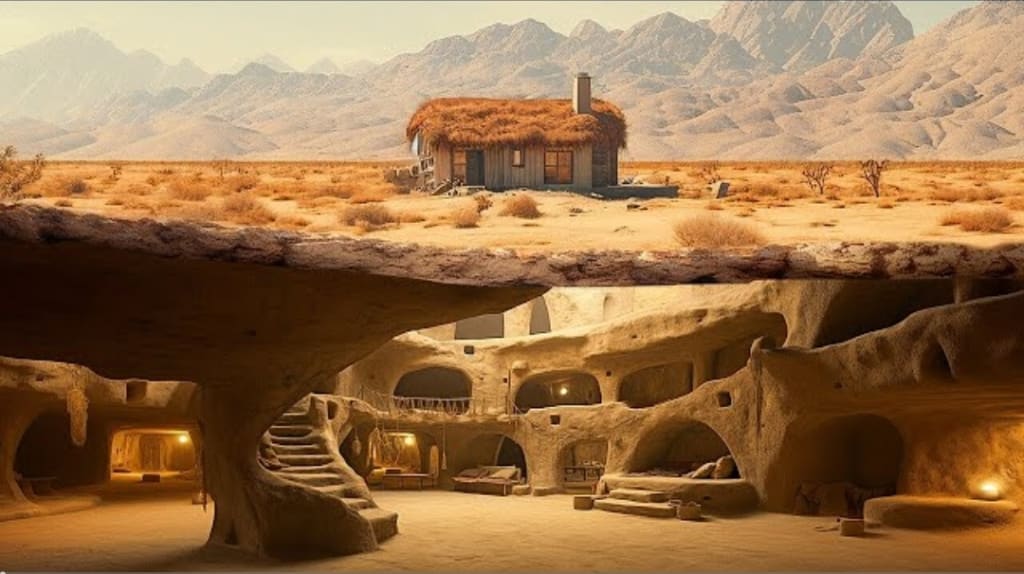
You’re driving along a remote road to central Australia, about 527 miles north of Adelaide, when you notice something strange. Rising from the salmon-pink dust and scattered shrubs are mysterious sand pyramids. The landscape feels like something straight out of a post-apocalyptic movie. As you continue, you notice scattered mounds of pale earth. These are the first hints of Coober Pedy, a quirky opal mining town home to around 2,200 people.
These mounds are actually waste soil from decades of mining, but they also reveal something unique about this town—most people live underground. That’s right—estimates suggest that 60-80% of Coober Pedy's population resides in homes carved directly into the rock. If you stroll through the area, you’ll notice ventilation shafts popping out of the ground and piles of dirt near the entrances to these underground dwellings.
While this underground lifestyle might seem unusual in winter, it makes perfect sense during the scorching summers. Coober Pedy is one of the hottest places on Earth, with temperatures climbing to 126°F (52°C). It’s so hot that birds sometimes fall from the sky, and people have to store their electronics in fridges to keep them functioning.
### Why Live Underground?
This subterranean lifestyle isn’t just about surviving the heat. Underground homes, known as “dugouts,” maintain a consistent, comfortable temperature of 73°F (23°C) year-round. While residents above ground battle extreme temperatures, those below enjoy perfect room conditions without relying on expensive air conditioning.
Coober Pedy generates its electricity through solar and wind power, but cooling an above-ground home in such heat is incredibly costly. By living underground, residents save money and live more sustainably.
---
### Affordable and Innovative Housing
One of the surprising things about Coober Pedy is how affordable its underground homes are. A three-bedroom dugout recently went for just $44,000 AUD (around $26,000 USD). Though some homes might need renovations, the cost is still far below the Australian average.
Building these homes isn’t as hard as it might seem. The sandstone here is incredibly soft—it’s so easy to carve that you could scratch it with a pocketknife. In the past, people expanded their homes by simply digging into the walls. Today, modern tunneling machines can carve out six cubic meters of rock per hour, meaning you could have a brand-new dugout ready in less than a month.
---
### Perks of Underground Living
Living underground offers many advantages beyond beating the heat. There are no pesky insects or flies to bother you, no light pollution, and minimal noise. Plus, the thick sandstone walls offer excellent protection from earthquakes. Vibrations pass through the rock without causing structural damage.
Residents have gotten creative with their homes, transforming their dugouts into luxurious spaces. Many feature underground swimming pools, game rooms, and fancy living areas. One resident even described their underground home as a castle, complete with arched doorways and tens of thousands of tumble bricks.
---
### Challenges of Underground Living
While underground living seems idyllic, it comes with its own challenges. Dampness can be a significant issue in many places. However, Coober Pedy’s arid climate, with less than half an inch of rain per month, ensures that dampness and mold aren’t problems here. Ventilation shafts help maintain airflow and remove moisture from indoor activities.
In wetter regions, building underground can be far more challenging. For instance, when constructing the London Underground in the 19th century, builders had to use layers of brick and waterproof coatings. Despite these efforts, black mold is still a problem in many underground spaces worldwide. Fortunately, Coober Pedy’s porous sandstone keeps everything bone dry.
---
### Not Alone in Going Underground
Coober Pedy isn’t the only place with underground living. Humans have used subterranean spaces to escape extreme climates for thousands of years.
Take Cappadocia in Turkey, for example. In 1963, a man renovating his basement stumbled upon a hidden passageway. It turned out to be a massive underground city called Derinkuyu, capable of housing up to 20,000 people. Built around the 8th century BCE, the city had everything: ventilation shafts, wells, stables, churches, and even warehouses.
Like Coober Pedy, these underground spaces helped residents survive harsh summers and freezing winters, maintaining a steady temperature of around 55°F. Today, Cappadocia’s caves are popular tourist attractions, and many are even used for modern purposes like storing produce.
---
Living underground may seem like a relic of the past, but Coober Pedy shows how innovative and practical this lifestyle can be. Whether it’s a way to escape the extreme heat or a creative solution to rising housing costs, the town’s dugouts are a testament to human ingenuity. So, next time you’re traveling through central Australia, don’t forget to explore this hidden world beneath the surface.
About the Creator
Nora Ariana
Empowering through stories and sound igniting purpose, sparking growth, and awakening the power within.
Keep reading
More stories from Nora Ariana and writers in Education and other communities.
A goal is a dream with a deadline
A goal is a dream with a deadline. This powerful quote reminds us that without action, dreams remain just that wishes floating in our imagination. But when we set a timeline and commit to achieving them, they evolve into goals, bringing clarity, direction, and purpose. Many people go through life holding on to dreams, hoping they will come true someday. But someday is not a day on the calendar. Dreams without structure often fade with time or get buried under the weight of daily responsibilities. Turning a dream into a goal is what separates those who achieve from those who continue to wish.
By Nora ArianaExclusive • 9 months ago
How GPS Tracking for Tools and Equipment Can Save Your Business
Tool theft is a growing problem for construction companies, contractors and tradespeople. At kynekt.id we provide best GPS tracking for tools and equipment, Whether it’s a jobsite break-in or equipment walking off during work hours, losing tools can cost thousands of dollars and delay projects. Fortunately, We offer a practical solution that’s becoming more affordable and easier to use every day.
By Kynekt Limited5 days ago in Education
Rooted in Conviction: Lessons on Spiritual Leadership and Social Order from Iglesia ni Cristo
Spiritual leadership has always played an essential role in guiding communities toward shared values and ethical living. In a world where leadership styles constantly evolve, religious institutions continue to offer enduring perspectives on responsibility and social harmony. Iglesia ni Cristo (INC), a Christian church founded in 1914 in the Philippines, presents a distinctive model of spiritual leadership that emphasizes order, unity, and moral discipline. Its influence reaches beyond religious practice and offers valuable lessons for society as a whole.
By Iglesia Ni Cristoa day ago in Education
Miss Persephone's Manual to a Seemingly Ordinary Life
Miss Persephone was found at the dining table, her blue eyes swollen, her tears arriving and retreating like the tides of the ocean. Earlier that day, her family had visited her in the retirement home where she had lived for eight years. It was her eightieth birthday.
By Imola Tóth4 days ago in Fiction


Comments
There are no comments for this story
Be the first to respond and start the conversation.