

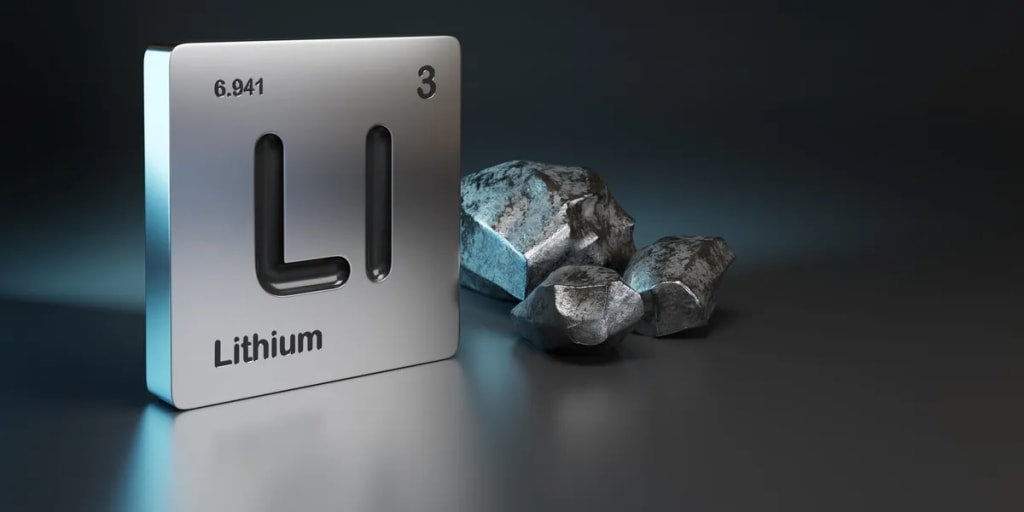
Lithium is a chemical element with the symbol Li and atomic number 3. It is a soft, silvery-white metal that belongs to the alkali metal group on the periodic table, which also includes sodium and potassium. Lithium is the lightest of all metals and has the highest electrochemical potential, making it an important component in batteries, lubricants, and glass manufacturing. It is also used in the treatment of certain mental health conditions, such as bipolar disorder, due to its mood-stabilizing properties.
Using for
Lithium has a wide range of uses, including:
- Batteries: Lithium is an important component in the production of rechargeable lithium-ion batteries, which are used in a variety of devices, such as smartphones, laptops, and electric vehicles.
- Glass and ceramics: Lithium is added to glass to improve its optical quality and to ceramics to improve their strength and heat resistance.
- Medical applications: Lithium carbonate is used as a mood stabilizer in the treatment of bipolar disorder and other mental health conditions.
- Lubricants: Lithium-based grease is used in high-temperature and high-speed applications, such as in aerospace and automotive industries.
- Nuclear reactors: Lithium-6, a isotope of lithium, is used as a coolant in some types of nuclear reactors.
- Metals production: Lithium is used as a flux in the production of aluminum and in the refining of magnesium.
These are just a few examples of the many uses of lithium. Its unique properties and versatility make it an important element in a variety of industries and applications.
Lithium Exports
Lithium is a globally traded commodity and its exports play an important role in the world economy. Some of the largest producers and exporters of lithium include:
- Chile: Chile is the largest producer of lithium and is responsible for more than one-third of the world's production. The country exports significant amounts of lithium to the United States, Japan, and China.
- Australia: Australia is the second-largest producer of lithium and a major exporter to China, Japan, and South Korea.
- Argentina: Argentina is also a significant producer of lithium and exports the metal to countries such as China, Japan, and Germany.
- China: Although China is not a major producer of lithium, it is a significant importer and exporter of the metal. The country imports lithium from countries such as Chile, Australia, and Argentina, and exports to other countries, including Japan and South Korea.
- Portugal: Portugal is a smaller producer of lithium but has significant reserves of the metal and exports to countries such as the United States and Japan.
These are some of the largest exporters of lithium, but there are many other countries that also play a role in the global trade of this commodity. The demand for lithium is expected to continue growing, especially as the electric vehicle market expands and the use of lithium-ion batteries becomes more widespread.
Lithium Side Effects
Like most substances, lithium can have side effects, especially if taken in large doses or if the individual is sensitive to the drug. Some of the most common side effects of lithium include:
- Nausea and vomiting: This is a common side effect of lithium, especially in the early stages of treatment.
- Diarrhea: Lithium can also cause diarrhea.
- Tremors: Lithium can cause fine tremors, especially in the hands.
- Drowsiness: Lithium can cause drowsiness or fatigue.
- Thirst and dry mouth: Lithium can increase thirst and cause dry mouth.
- Muscle weakness: Lithium can cause muscle weakness, especially in the legs.
- Memory problems: Some people taking lithium may experience memory problems or difficulty concentrating.
- Thyroid dysfunction: Lithium can affect the functioning of the thyroid gland, causing hypothyroidism (an underactive thyroid) or hyperthyroidism (an overactive thyroid).
- Acne: Lithium can cause acne or worsen existing acne.
- Weight gain: Lithium can cause weight gain, especially in the face, neck, and trunk.
These are some of the most common side effects of lithium, but not everyone will experience them. If you are taking lithium and are concerned about side effects, it is important to talk to your doctor. They can help you manage any side effects you may be experiencing and adjust your treatment as needed.
Conclusion
lithium is a chemical element with a wide range of uses, including as a component in batteries, in the treatment of mental health conditions, and in the production of glass and ceramics. Its exports play an important role in the global economy, with some of the largest exporters being Chile, Australia, Argentina, China, and Portugal. Like any substance, lithium can have side effects, including nausea, diarrhea, tremors, drowsiness, thirst and dry mouth, muscle weakness, memory problems, thyroid dysfunction, acne, and weight gain. If you are taking lithium and are concerned about side effects, it is important to talk to your doctor for guidance on managing these effects.
About the Creator
Keep reading
More stories from GJB FAMILY and writers in Education and other communities.
Etoposide - Short Review
Etoposide Etoposide is a chemotherapy drug used to treat various types of cancer, including testicular, ovarian, and lung cancer. It works by interfering with DNA replication and division in rapidly dividing cancer cells, leading to cell death. Etoposide is usually given intravenously (into a vein) and can cause side effects such as low white blood cell count, nausea, vomiting, hair loss, and increased risk of infection. The specific dosing and administration of etoposide will depend on the type and stage of the cancer being treated, as well as the patient's overall health.
By GJB FAMILY3 years ago in Education
How to Start a Home Remodeling Business
Starting a home remodeling business can be a good opportunity for people who enjoy construction, repairs, and improving homes. Many homeowners want to update their kitchens, bathrooms, roofs, and living spaces, but they often need skilled professionals to handle the work.
By supun fernando3 days ago in Education
International Footballer Joins Forces With StoryZoo
An international footballer has joined forces with one of the UK’s main education platforms to launch a brand-new nationwide initiative. Levi Colwill who has played for both Chelsea and England aims to reverse the decline in children’s reading engagement by teaming up with StoryZoo to launch a brand-new scheme which will look at increasing the rate at which children gain the valuable skills they need to read.
By Ashish Prabhua day ago in Education
TUS NUA - ch 53
TUS NUA – ch 53 New Beginnings – Mia and Midnight (*)(*)(*) Finola knew Ali’s brother-in-law needed to put his mind at rest. She fed her arm through his and led him outside. “We’ll sit here. If you like, I can put a block around us so our conversation will be private.”
By Margaret Brennan4 days ago in Fiction


Comments
There are no comments for this story
Be the first to respond and start the conversation.