
Lessons in the Heart of Life
Finding Strength, Growth, and Purpose in Every Step
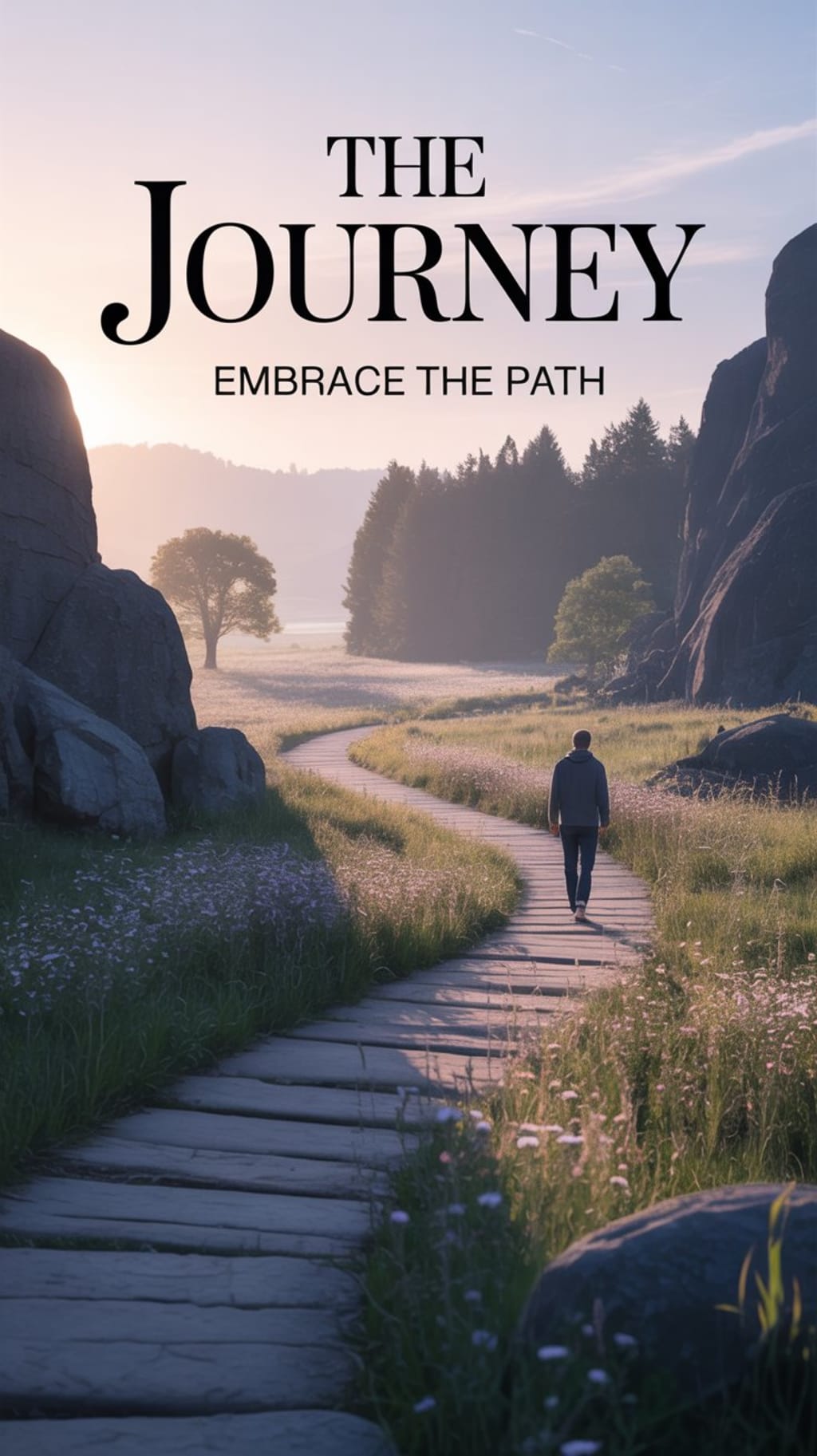
In a quiet village nestled between green hills and a winding river stood a weathered tamarind tree. The villagers called it “The Whispering Tree,” not just because of the sound the wind made through its leaves, but because it had watched over generations — births, deaths, laughter, heartbreak — in the same patient silence.
This story begins with a boy named Aarav. At ten years old, he was all bones and boundless curiosity. His father, an ironworker, had passed away the previous winter, leaving behind only an old hammer and the memory of calloused hands that had once cradled him with strength and love. Aarav’s mother, Mira, carried the weight of her grief quietly, her hands now weaving baskets from dawn to dusk to make ends meet.
Aarav often sat under the tamarind tree, watching life go by. To others, it was just a tree — but to him, it was a living monument to time, and lately, it felt like the only thing that listened. One late afternoon, as golden light streamed through the branches, Aarav whispered, “I want to be strong, like Papa. But I don’t know how.”
The wind rustled the leaves above, as if the tree acknowledged his request.
Years passed. Aarav grew into a lanky teenager, still sitting under the tree, but now with a journal in hand. He’d taken to writing — poems, thoughts, dreams — mostly questions without answers. His friends often teased him for being too quiet, too reflective. But Aarav didn’t mind. Writing gave his pain a voice and his dreams a shape.
One rainy evening, disaster struck. A flood, the worst the village had seen in decades, swept through the valley. Houses were torn apart, fields drowned, and hope was washed away in muddy water. Aarav and Mira barely escaped with their lives. When the waters receded, their home was gone. So was the tree.
For days, Aarav didn’t speak. The loss of the tree felt strangely personal, like losing a friend. But in the ruins of the village, something changed in him. The villagers, weary and broken, began to rebuild — not because they had to, but because they refused to give up. Aarav, though young, joined them, his arms aching from lifting bricks, his back sore from hauling water. It wasn’t writing, and it wasn’t quiet. But it gave him something new: strength born not from muscle, but from will.
One evening, as he rested beside the remains of the tamarind tree, Aarav found a small green sprout breaking through the mud. A seedling. New life.
He cupped it gently, tears in his eyes. That night, he wrote in his journal: “Even the strongest fall, but life finds a way to begin again. So must I.”
The years that followed shaped Aarav in ways he never expected. He left the village to attend university, thanks to a scholarship for students from disaster-affected regions. City life was a whirlwind — tall buildings, crowded buses, fast words, and faster dreams. Aarav struggled to keep up. There were moments he wanted to run back to the village, to the comfort of home. But he remembered the seedling, how it grew from loss.
He studied environmental engineering, driven by the memory of the flood and a desire to protect others from such devastation. There were failures — failed exams, rejections from internships, nights spent doubting his path. But each failure was a lesson, and Aarav, patient as the tree he once loved, kept going.
Eventually, Aarav returned to the village — not as a boy, but as a man with a purpose. He brought with him new techniques for flood prevention, sustainable farming, and a promise: “We can’t stop the storms, but we can be ready for them.”
Under his leadership, the village transformed. They built raised homes, better irrigation systems, and even planted trees — hundreds of them. And in the center of it all, grown tall and proud, stood the tamarind tree. The sapling had flourished over the years, a living symbol of resilience.
One afternoon, a group of children sat beneath its shade, giggling and whispering secrets, just as Aarav once had. He watched them with a smile and handed one of them his old journal. “Fill these pages,” he said. “Let your questions become paths.”
As the sun dipped below the hills, painting the sky in hues of fire and amber, Aarav stood beneath the branches and closed his eyes. He had found strength in pain, growth in struggle, and purpose in returning.
The tree rustled softly above him, whispering its eternal wisdom:
Every step, even the broken ones, leads somewhere.
About the Creator
Keep reading
More stories from Muhammad Atif and writers in Education and other communities.
Whispers in the Walls
The rain had begun before she even stepped out of the car. Elena gripped the steering wheel a moment longer, staring at the house that rose like a corpse from the edge of the woods. It had the look of something meant to be forgotten — rotting porch steps, shutters hanging loose like broken bones, and vines choking the chimney. The house had belonged to her grandfather, a man she’d never met, and one her mother refused to speak of.
By Muhammad Atif9 months ago in Horror
How Agile Consulting Drives Innovation and Business Resilience
In today’s fast-paced business environment, companies face the constant challenge of adapting to rapidly evolving market conditions, emerging technologies, and shifting customer expectations. Traditional business models and rigid operational structures often struggle to keep up with this level of change. As a result, organizations are increasingly turning to agile consulting as a strategic approach to remain competitive and resilient.
By Scott Gelbard4 days ago in Education
Purposeful Scaling for a Recognizable Brand in a Growing Market
Business growth can bring excitement and opportunity. Companies often expand to reach new customers, increase revenue, and build a stronger market presence. However, expansion without direction can weaken brand identity. Businesses that grow with a clear strategy are more likely to develop a recognizable brand that customers remember and trust.
By Asad Malik4 days ago in Education


Comments
There are no comments for this story
Be the first to respond and start the conversation.