
Lessons from Rich Dad and Poor Dad: A Tale of Two Mindsets About Money
How Two Fathers with Opposing Views on Wealth Taught Me the True Meaning of Financial Freedom
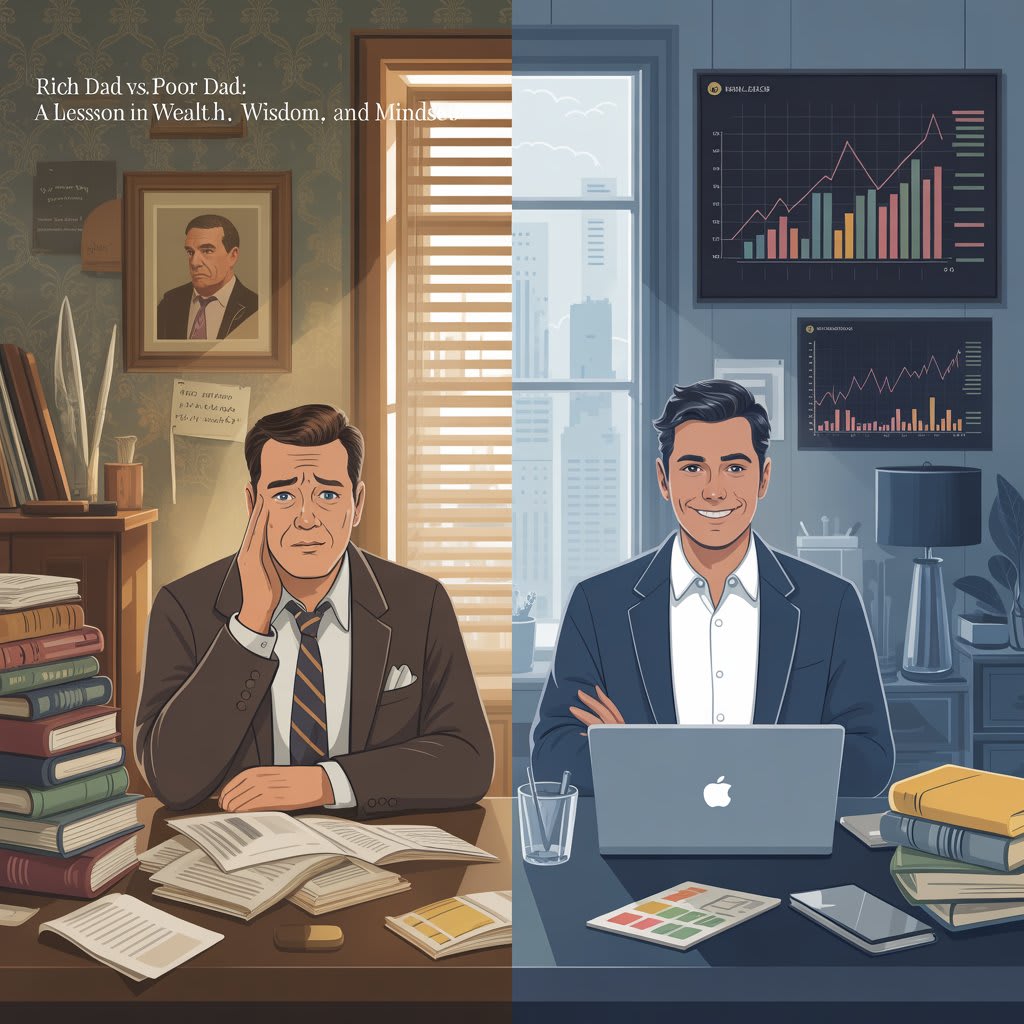
In a quiet town nestled between mountains and marketplaces, a young boy named Adam grew up torn between two very different teachers in his life — his biological father, whom he lovingly called “Poor Dad,” and his best friend’s father, “Rich Dad,” who took him under his wing and taught him how to think like an entrepreneur.
This is not a story about wealth in terms of money alone — it’s a story about mindsets, values, and the hidden rules of financial success.
The Poor Dad: Education is Everything
Adam’s biological father, Dr. William Grant, was a respected school principal. Every morning, he left the house in a neatly ironed shirt and returned late, exhausted but proud. He constantly reminded Adam that success came from academic achievement, job security, and working your way up the ladder.
“Study hard, get a degree, then find a stable job,” he would say.
He believed that a high-paying job was the ultimate goal. His idea of financial planning was saving small amounts in a bank account and avoiding debt at all costs.
Despite being well-educated and holding a respectable position, he was often worried about bills, mortgages, and rising expenses. Adam often heard his parents arguing about money, especially at the end of the month.
Dr. Grant wasn’t lazy — he was disciplined, honest, and hardworking — but his financial education was based on the principle that money is earned through effort, not strategy.
The Rich Dad: Make Money Work for You
In contrast, Mr. Collins, the father of Adam’s best friend, owned multiple businesses — a chain of laundromats, a small real estate portfolio, and a digital marketing agency.
Unlike Poor Dad, Rich Dad never finished college. He always said, “School teaches you to work for money. I teach you how to make money work for you.”
Adam spent weekends at their home, helping out with inventory, bookkeeping, and customer service. These tasks turned into lessons.
“Assets put money in your pocket. Liabilities take money out,” Mr. Collins often told him.
He didn’t believe in saving money just for the sake of it. Instead, he believed in investing — in stocks, businesses, and skills. He emphasized financial literacy, passive income, and leveraging systems.
Lessons That Changed Adam’s Life
By the time Adam turned 18, he had internalized the stark differences between his two “dads”:
Poor Dad taught him to fear risk, value comfort, and avoid mistakes.
Rich Dad taught him to embrace failure as a teacher, think creatively, and question conventional paths.
One key moment was when Adam asked both men the same question:
“Is it better to buy a car with cash or finance it?”
Poor Dad replied, “If you can’t pay cash, you can’t afford it.”
Rich Dad answered, “Can you buy an asset that pays for the car?”
That response sparked Adam’s curiosity. Instead of buying the latest sports car when he got his first job, he invested in a vending machine business. Within six months, the machines generated enough cash flow to pay his rent — something he once thought only a high-paying job could do.
The Power of Mindset in the Real World
As Adam entered adulthood, the influence of both dads stayed with him. When most of his college friends were applying for jobs, Adam was launching an online store using dropshipping. He didn’t see success overnight, but because Rich Dad had taught him persistence, scalability, and learning from failure, he kept going.
Meanwhile, his Poor Dad’s values also served him — Adam stayed grounded, appreciated structure, and understood the value of education. But he viewed education as a lifelong tool, not just a formal degree.
He read books on finance, attended investment webinars, and networked with mentors. Each time he faced doubt, he remembered a Rich Dad quote:
“Don’t say ‘I can’t afford it.’ Ask ‘How can I afford it?’”
Building His Own Path
By the time Adam turned 30, he owned two profitable e-commerce brands, several rental properties, and even began mentoring young entrepreneurs. His friends called him “lucky,” but he knew that luck favored the financially literate and mentally prepared.
He didn’t become a millionaire overnight. But he built freedom — the freedom to choose how he worked, where he lived, and what legacy he wanted to create.
Adam didn’t reject his Poor Dad’s teachings. Instead, he integrated both worlds: discipline from one, innovation from the other.
Final Thoughts: Which Dad Are You Learning From?
The story of Rich Dad vs. Poor Dad is not just a personal journey — it’s a reflection of the crossroads many people face. Do you pursue the safe route laid out by society? Or do you take calculated risks to build long-term wealth?
Adam’s story reminds us that the greatest investment isn’t money — it’s mindset.
Whether you're launching a business, investing in real estate, or simply trying to manage your income better, ask yourself:
Are you working for money?
Or is your money working for you?
Choose your mindset wisely — because the dad you learn from may determine the future you live in.
SEO Keywords Included:
About the Creator
Keep reading
More stories from Shafi Ullah and writers in Education and other communities.
Unlocking Unshakable Confidence: How to Believe in Yourself and Thrive
Introduction Confidence is not something you're born with — it's something you build. It’s the silent force behind every successful presentation, bold career move, and personal breakthrough. In a world that constantly challenges our self-worth, having true self-confidence can be your greatest asset.
By Shafi Ullah10 months ago in Education
From Cockpit to Climb: Flight Teaching Skills in Mountain Environments
At first glance, flying an aircraft and moving across icy mountain terrain seem very different. However, both activities demand strong judgment, careful planning, and steady leadership. Because of this overlap, flight teaching skills in mountain environments are highly valuable for instructors who guide people in cold, high-altitude environments. The habits developed in aviation training help instructors stay focused, organized, and calm when conditions become difficult.
By Duke Valentour7 days ago in Education




Comments
There are no comments for this story
Be the first to respond and start the conversation.