
LED Grow Lights
How LED Grow Lights Support Controlled Environment Agriculture?

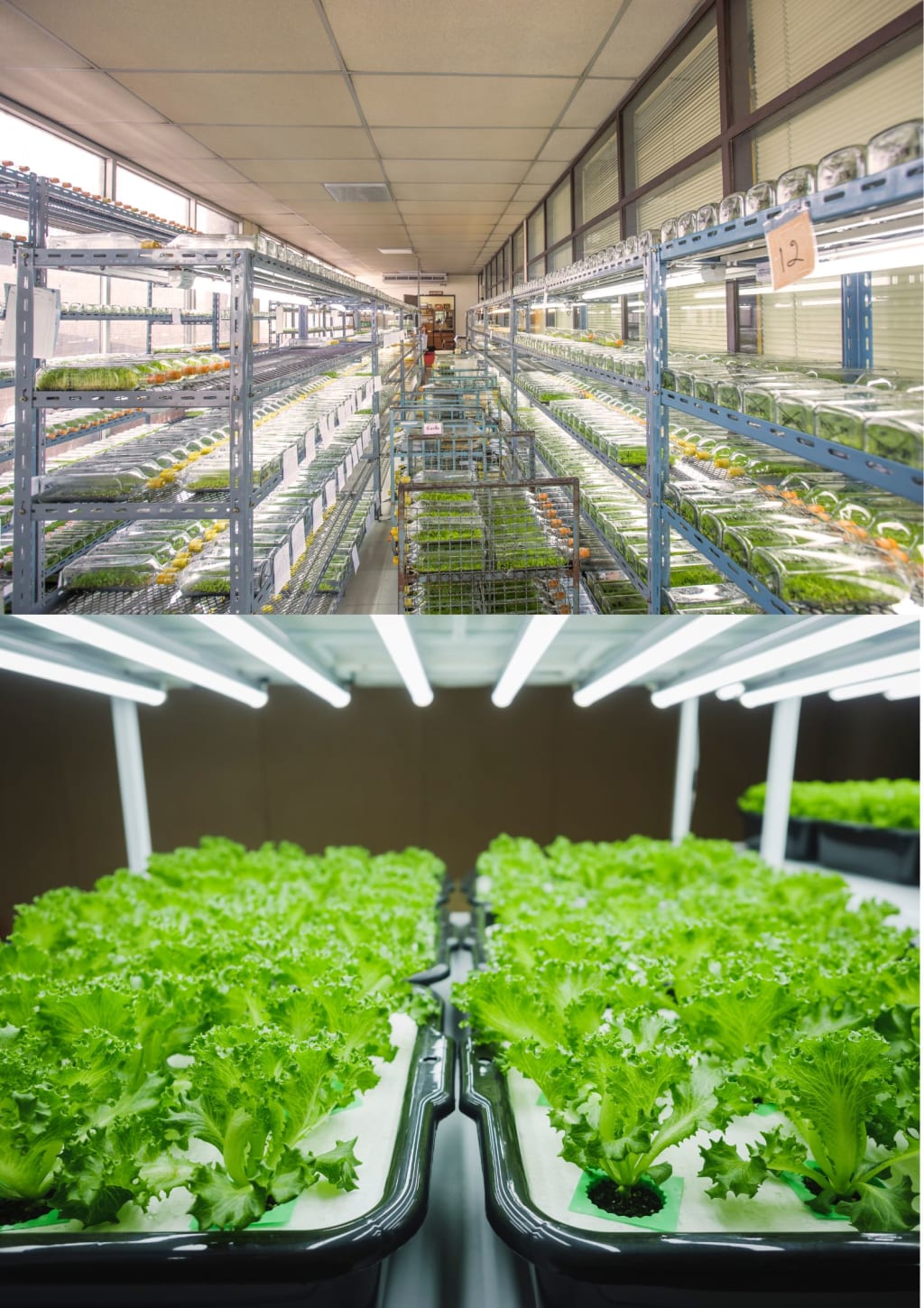
Controlled Environment Agriculture (CEA) is revolutionizing the way we grow food by allowing crops to thrive in tightly controlled indoor environments. CEA systems regulate key factors such as temperature, humidity, carbon dioxide levels, and light to create ideal growing conditions, maximizing crop yields and quality year-round. A crucial component of this system is lighting, and LED grow lights have emerged as the preferred solution for supporting CEA due to their versatility, efficiency, and ability to mimic natural sunlight.
- Advanced Spectrum Tuning for Optimal Plant Growth
One of the most remarkable features of LED grow lights is the ability to fine-tune the light spectrum to meet the specific needs of plants at different stages of their growth cycle. Not all wavelengths of light are equally beneficial at every growth stage. For example, blue light (in the 400-500 nm range) stimulates vegetative growth by promoting the development of strong roots, sturdy stems, and lush foliage. This makes it ideal for leafy greens like lettuce or herbs such as basil and mint.
Red light (in the 600-700 nm range), on the other hand, plays a vital role in stimulating flowering and fruiting, making it indispensable for crops like tomatoes, strawberries, and ornamental flowers. Far-red light (in the 700-800 nm range) has also been discovered to have a positive impact on plants by promoting flowering and helping plants transition into the bloom phase. The ability to adjust the ratio of these lights at the click of a button gives farmers a significant advantage, enabling them to achieve faster growth, greater yields, and more efficient energy usage.
Moreover, some advanced LED grow lights incorporate UV and infrared (IR) wavelengths, which can be used to boost plant immunity, increase flavor, or enhance the nutritional value of certain crops. These features make LED technology far superior to traditional lighting systems like HPS, which offer limited spectrum control.
- Tailored Lighting for Specific Crops
One of the most appealing aspects of LED grow lights is their adaptability for different types of crops. LED systems can be tailored to the needs of various plants, whether they require low light levels or high-intensity lighting. For example, crops such as lettuce, spinach, and kale, which thrive in lower light environments, can benefit from dimmable LED systems that conserve energy while delivering just the right amount of light.
Conversely, fruiting crops like tomatoes and peppers require high-intensity lighting during their flowering and fruiting stages. LED grow lights can easily be adjusted to deliver the intense red and far-red light required during these phases, all while using significantly less energy than traditional lighting systems.
In vertical farms, where space is a limiting factor, LED grow lights are particularly advantageous. These lights can be customized to deliver uniform light across all levels of the plant canopy, ensuring that even plants at the bottom of stacked layers receive sufficient illumination for photosynthesis.
- Integration with Smart Farming Technologies
LED grow lights also integrate seamlessly with modern automation systems. The rise of smart farming technologies allows growers to automate light schedules, adjust light intensity, and even modify the spectrum based on real-time data from the growing environment. For example, sensors that monitor plant growth, light absorption, and temperature can be linked to the LED grow lights, adjusting them automatically to ensure optimal conditions for each crop.
This level of precision and automation minimizes human error, reduces labor costs, and ensures consistent crop performance, making LED grow lights a cornerstone in the future of automated indoor farming.
- Long-Term Economic and Environmental Benefits
While the upfront cost of installing an LED grow light system may be higher than traditional lighting options, the long-term economic benefits are undeniable. LED lights have an impressive lifespan, often lasting up to 50,000 hours, which reduces the need for frequent replacements. They also consume less electricity, reducing energy bills and contributing to a lower carbon footprint.
In terms of environmental impact, LED grow lights are not only energy-efficient but also recyclable. Unlike fluorescent or HPS bulbs, which contain harmful materials like mercury, LEDs are made from non-toxic components, further enhancing their sustainability.
Additionally, their reduced heat output means less energy is wasted in cooling systems, making them ideal for small indoor spaces or urban vertical farms where temperature control can be challenging. This eco-friendly aspect is critical as the world faces increasing challenges with climate change and the need for sustainable farming practices becomes more urgent.
- Future Potential: LEDs as a Key to Global Food Security
As the global population continues to grow, food production must become more efficient to meet demand. LED grow lights, in combination with CEA, have the potential to significantly contribute to global food security. Their ability to provide consistent, year-round production of high-quality crops in any climate makes them a valuable tool for combating food shortages and reducing reliance on imports, particularly in regions with harsh environmental conditions.
In conclusion, LED grow lights offer a myriad of advantages that make them essential for CEA systems. Their energy efficiency, precise spectrum control, and adaptability for different crops ensure optimal growing conditions, improved yields, and lower operational costs. As technology continues to advance, the integration of LED lighting with automated systems and smart farming tools will likely continue to revolutionize indoor farming, paving the way for a more sustainable and food-secure future.
About the Creator
Fluortronix
Fluortronix is the lead manufacturer of LED grow lights in India for hydroponics and other cultivation practices. We offer premium grow lights that optimize light spectrum and wavelength for every stage of plant growth and development.
Keep reading
More stories from writers in Education and other communities.
How Intentional Blessings Are Supporting Mental Health Awareness in the U.S.
Introduction Mental health awareness in the United States has grown significantly in recent years. Alongside therapy, mindfulness, and lifestyle changes, many Americans are turning to intentional blessings as a complementary practice for emotional well-being.
By Shahid Khan6 days ago in Education
What Is Polarization of Light?
Understanding Light as a Wave To understand polarization, we must first understand light as a wave. Light is an electromagnetic wave, meaning it consists of oscillating electric and magnetic fields that travel through space. These oscillations occur perpendicular to the direction the light is moving.
By shahkar jalal4 days ago in Education
Our Song
Evening has given way to night. Gently, I settle next to you on the comfortable, old love seat and reach for your hand. You snatch it away, again. It cuts me to the quick, but I hide the pain, understanding that the reaction is but part of your demented state. Since the accident, your presence here in our cozy home has been clouded by a haze I can't see. Nevertheless, I feel the frigidity of your expressions and it serves as an excruciating reminder of the immeasurable distance between us.
By Dana Crandella day ago in Fiction


Comments
There are no comments for this story
Be the first to respond and start the conversation.