
Learning Beyond the Classroom: A Journey Through Real-World Education
Exploring the invaluable lessons that life teaches beyond the classroom walls.
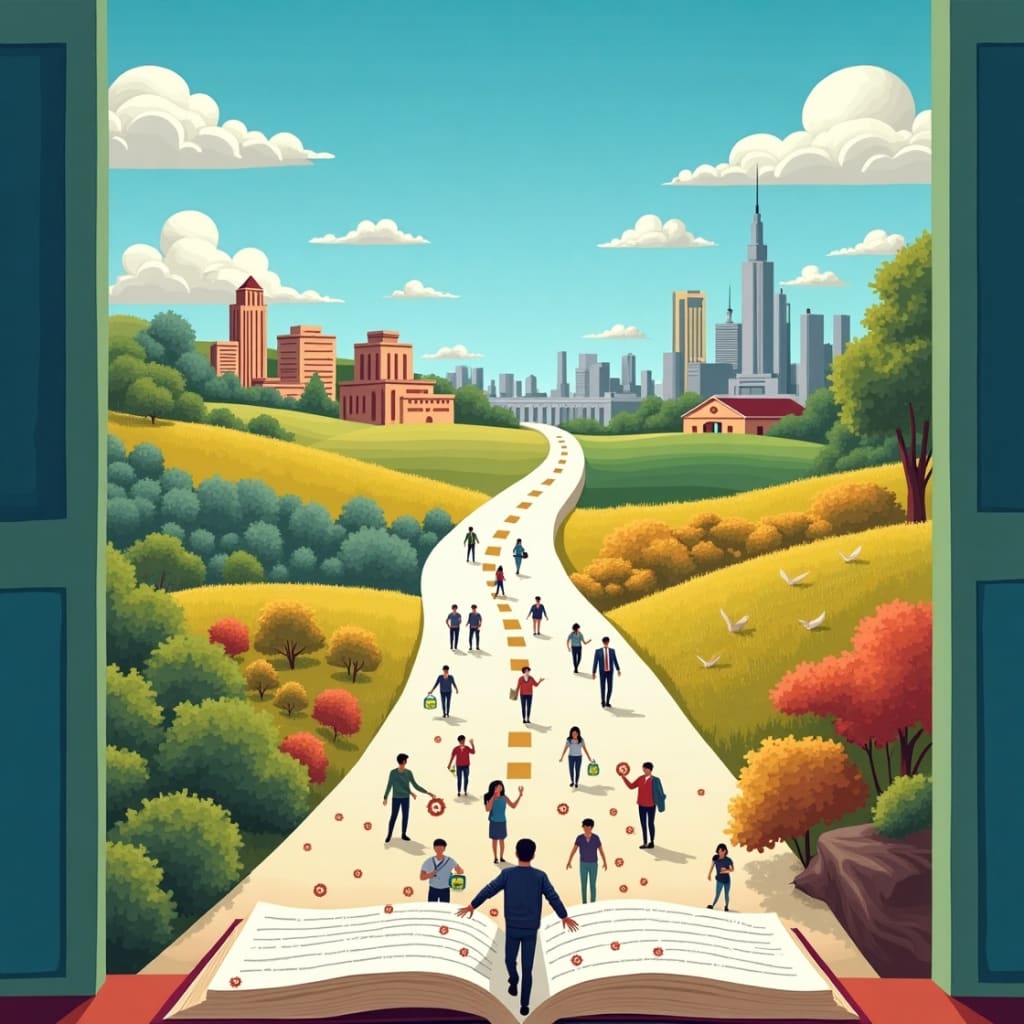
Education has always been seen as the gateway to success. Growing up, we are taught that to achieve our dreams, we must excel in school, follow the prescribed path, and acquire a set of academic qualifications. This linear path—textbooks, exams, assignments—became my definition of learning. It wasn’t until much later that I discovered a simple yet powerful truth: education doesn’t end in the classroom. It doesn’t even begin there.
My journey into the real world of education started when I stepped outside the bubble of my formal schooling. The moment I graduated from college and entered the workforce, I realized that everything I had learned in textbooks and lectures—while invaluable in its own right—was only a fraction of the knowledge I needed to thrive in life.
I remember my first job out of college. On paper, I was fully prepared: I had aced all my exams, had been involved in student projects, and had internship experience that seemed to match the job description perfectly. But, as soon as I walked into the office for the first time, I felt like a deer in headlights. The theories I had learned in my textbooks didn’t translate directly into the real-world environment. There was no syllabus, no structure, and most importantly, no teacher standing by to guide me through each task.
It wasn’t long before I realized that the real education I needed wouldn’t come from textbooks or lectures. It would come from the people around me, the challenges I faced, and my ability to adapt and grow outside the classroom.
The Value of Experience
The first lesson I learned was that experience is one of the most powerful teachers we have. I was tasked with managing a project from start to finish, and although I had learned about project management in school, the reality of it was far more complex than any textbook could prepare me for. Deadlines weren’t as flexible as professors had been in college. Stakeholders didn’t have the patience for theoretical discussions—they wanted results. I had to quickly learn how to communicate, negotiate, and adapt my approach on the fly.
I learned that project management wasn’t just about having a plan. It was about being resourceful when things didn’t go according to plan. It was about managing relationships, staying calm under pressure, and learning how to prioritize. No one had taught me this in school, but every mistake I made—whether it was miscommunication with my team or an error in judgment—taught me valuable lessons. Slowly, I started to understand that the classroom was just the beginning, a foundation upon which the real lessons would build.
Learning from Failure
Perhaps one of the most difficult, yet essential, lessons I had to learn was the value of failure. In school, failure was often seen as something to avoid at all costs. Failing an exam or an assignment meant disappointment, a bruise to my self-esteem. But in the real world, failure wasn’t something to fear—it was something to embrace.
I remember one project that went terribly wrong. The client had very high expectations, and despite my team’s best efforts, we missed the mark. The feedback was harsh, and it stung. For days, I questioned my abilities. But as time passed, I realized that failure was teaching me more than success ever had. It was teaching me resilience. It was teaching me how to bounce back stronger, more focused, and more determined.
I learned that failure wasn’t the end of the road—it was simply a detour. Each setback offered invaluable insight. Each mistake was a stepping stone to personal growth. In school, we were often told what to do and when to do it. In the real world, no one had the answers for me. I had to figure it out on my own. But with each failure, I learned more about my strengths and weaknesses, and I became better equipped to tackle challenges moving forward.
The Power of Networking and Mentorship
One of the most surprising lessons of real-world education was the importance of mentorship and networking. In college, we were encouraged to focus solely on our own academic growth. But in the real world, success is often not just about what you know—it’s about who you know and how well you can collaborate.
I learned the importance of building relationships with colleagues, mentors, and even clients. It wasn’t enough to simply do my job well—I had to communicate effectively, build trust, and learn from those with more experience. I sought out mentors who had been in the industry for years. I asked questions, listened, and absorbed their wisdom. Through these relationships, I gained insights that no textbook could provide.
Networking also became a key part of my learning journey. By attending industry events, engaging with others in my field, and constantly learning from those around me, I was able to gain a wider perspective on my career and the industry I worked in. I learned that education doesn’t happen in isolation—it happens in collaboration with others.
Real-World Education: A Lifelong Journey
As I moved further along in my career, I began to see that learning isn’t confined to a specific time or place. Education is a lifelong journey, and the world is our classroom. Whether it’s learning how to solve a problem at work, adapting to new technology, navigating a personal challenge, or finding new passions, the lessons we encounter outside the classroom are just as valuable, if not more so, than those learned in school.
The classroom teaches us how to think critically, solve problems, and acquire knowledge. But the real world teaches us how to apply that knowledge, adapt to change, and navigate the complexities of life. No textbook can teach us the power of emotional intelligence, resilience, or creative problem-solving. These are the lessons that come from real-world experiences, from trying new things, from failing and succeeding, from engaging with the people and world around us.
I’ve come to understand that formal education may give us the foundation, but it’s the education we receive in the world that shapes us into who we are meant to become. The best lessons, the most meaningful growth, comes when we step outside the classroom and immerse ourselves in the world of opportunities, challenges, and endless learning.
As I reflect on my journey, I realize that my education didn’t end the day I graduated. It continues every day, in every interaction, and with every new experience. The true value of education lies not in how much we know, but in our ability to continue learning—long after the classroom doors have closed.
About the Creator
Keep reading
More stories from Ubaid Ullah and writers in Education and other communities.
A Love Letter to Almost
I still remember the first time we met — not because it was dramatic or cinematic, but because it was quietly significant, like a puzzle piece sliding into place without a sound. You walked into the room, and I swear, time didn’t stop, but it did pause — just for a second. That was all it took for something unspoken to form between us.
By Ubaid Ullah10 months ago in Families
The Power of Service Beyond the Uniform in Everyday Life
Service reaches far beyond the moments spent in uniform, shaping lives long after formal duties end. Veterans, first responders, and public servants carry lessons that extend into workplaces, families, and communities. Their values of discipline, compassion, teamwork, and integrity influence how they interact with others and how they continue serving in new ways. As they go about their everyday lives, their actions show that service is not defined by a role but by a mindset. Because of that mindset, countless communities benefit from their leadership and steady presence.
By Eric Schnabelabout 12 hours ago in Education
Importance of Technology in Learning Islamic Education
Islamic education has always been rooted in knowledge, reflection, and understanding. From handwritten manuscripts to traditional madrasa systems, learning has continuously evolved with time. Today, technology is shaping a new chapter in how Islamic education is taught, accessed, and understood. Rather than replacing traditional learning, technology enhances it, making Islamic knowledge more accessible, structured, and engaging for learners of all ages.
By Arslan Shahbazabout 11 hours ago in Education



Comments
There are no comments for this story
Be the first to respond and start the conversation.