

Certainly! The history of India is rich with the stories of its kings, who have shaped the country's culture, religion, politics, and society over thousands of years. From the ancient Indus Valley Civilization to the Mughal Empire and beyond, India has seen the rise and fall of numerous dynasties, each leaving its mark on the country's history. In this article, we will take a closer look at some of the most significant kings of India, exploring their accomplishments, legacies, and impact on Indian history and culture.
Ashoka the Great (304 BCE - 232 BCE)
Ashoka is considered one of the greatest kings in Indian history, ruling over the Mauryan Empire from 268 BCE to 232 BCE. He was known for his military conquests, including the unification of India under his rule, but he is perhaps best remembered for his commitment to non-violence and religious tolerance.
Ashoka converted to Buddhism after the brutal Kalinga War, and his reign saw a remarkable shift in policy towards religious and cultural diversity. He promoted Buddhism throughout India and beyond, sending missionaries to spread the faith to other countries. Ashoka is also credited with the establishment of some of India's earliest universities and hospitals, as well as a sophisticated network of roads and public works.
Chandragupta Maurya (340 BCE - 298 BCE)
Chandragupta Maurya was the founder of the Mauryan Empire, which lasted from 322 BCE to 185 BCE. He came to power by overthrowing the Nanda dynasty, which had ruled much of northern India.
Under Chandragupta's leadership, the Mauryan Empire expanded to become one of the largest in the world at the time. He was also known for his efficient administration and for establishing a sophisticated system of governance, which included a vast network of spies and informants.
Chandragupta is also known for his association with the philosopher and political advisor Chanakya, who is credited with writing the Arthashastra, a seminal text on politics and economics in ancient India.
Harsha (590 CE - 647 CE)
Harsha was a king of the Vardhana dynasty who ruled over much of northern India from 606 CE to 647 CE. He is known for his patronage of the arts and for his commitment to Buddhism, which he supported through the construction of numerous temples and monasteries.
Harsha was also a skilled diplomat, forging alliances with neighboring kingdoms and establishing peaceful relations with China and other countries. He is remembered as one of the most important rulers of ancient India, and his reign is considered a golden age of Indian culture and learning.
Akbar the Great (1542 CE - 1605 CE)
Akbar was a Mughal emperor who ruled over much of northern India from 1556 CE to 1605 CE. He is considered one of the greatest rulers in Indian history, known for his military conquests, administrative reforms, and cultural patronage.
Akbar was known for his policy of religious tolerance, which allowed people of all faiths to practice their religion freely. He also promoted the arts, commissioning some of the finest examples of Mughal architecture and painting, including the Taj Mahal.
Akbar is remembered as a visionary leader who brought stability and prosperity to India during a tumultuous period in its history.
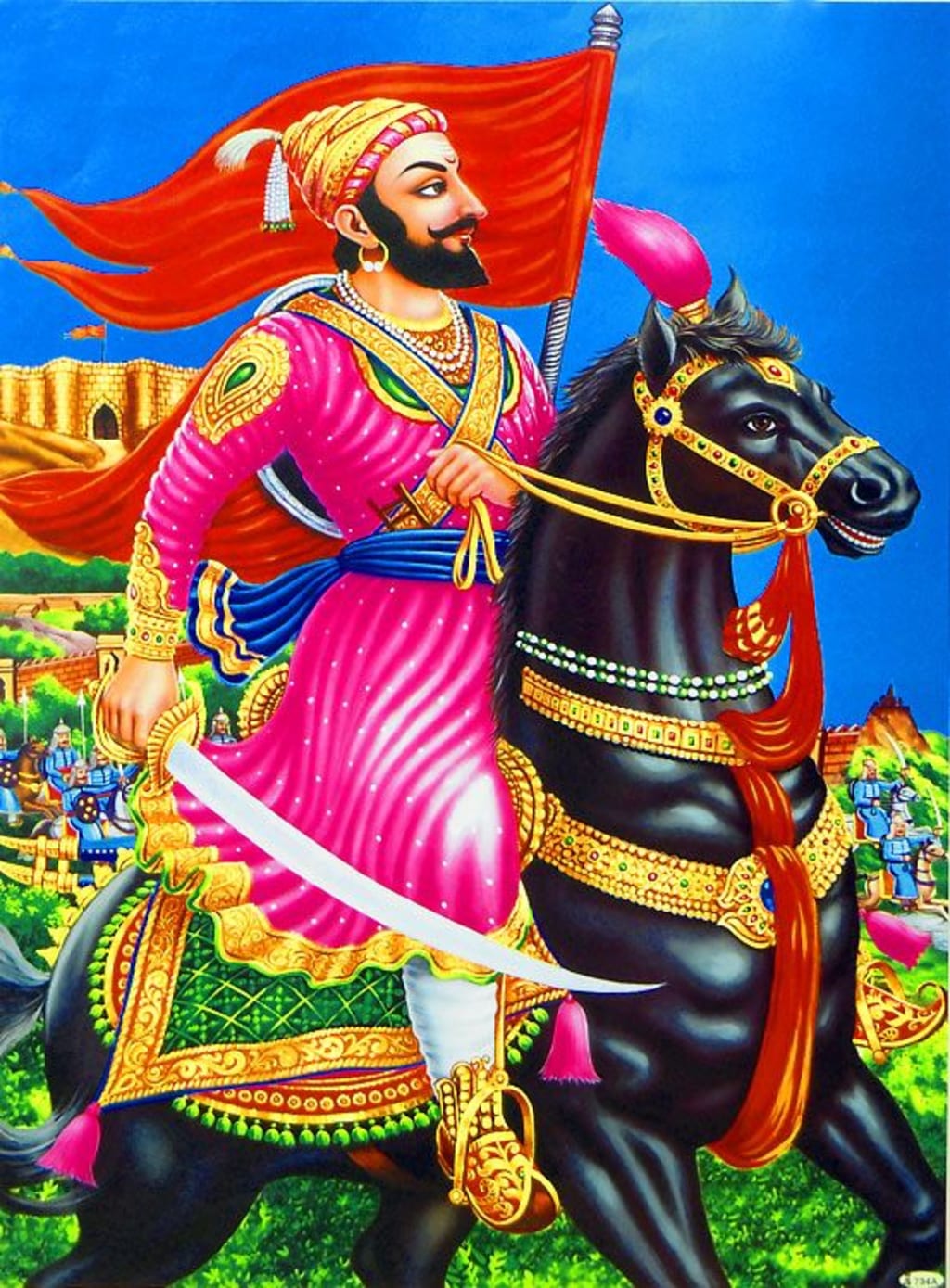
Shivaji (1627 CE - 1680 CE)
Shivaji was a Maratha king who ruled over much of western India from 1674 CE to 1680 CE. He is considered one of the most important figures in Indian history, known for his military prowess, political acumen, and commitment to his people.
m
Indi
Indian kings built many magnificent structures and monuments throughout history, reflecting their wealth, power, and artistic sensibilities. Here are some notable examples:
Taj Mahal - Built by Mughal Emperor Shah Jahan in memory of his beloved wife, Mumtaz Mahal, the Taj Mahal is one of the most famous and iconic buildings in the world. It is a white marble mausoleum located in Agra, and its construction was completed in 1653.
Qutub Minar - The Qutub Minar is a towering minaret located in Delhi, built by Qutb-ud-din Aibak in the 12th century. It is a UNESCO World Heritage Site and one of the tallest brick minarets in the world.
Khajuraho Temples - The Khajuraho Temples are a group of Hindu and Jain temples located in Madhya Pradesh. Built between the 10th and 12th centuries by the Chandela dynasty, they are known for their elaborate sculptures and intricate carvings.
Konark Sun Temple - The Konark Sun Temple is a 13th-century temple located in Odisha, dedicated to the Hindu sun god, Surya. It is built in the form of a chariot with 24 wheels, and its intricate carvings and sculptures are a marvel of ancient Indian architecture.
Mysore Palace - The Mysore Palace is a grand palace located in Mysore, Karnataka, built in the 14th century and renovated several times since then. It is known for its elaborate architecture, intricate artwork, and stunning interiors.
About the Creator
How Japan Saved Its Biggest City from Collapse
400 years ago, modern-day Tokyo was known as Edo, and it was already one of the biggest cities in the world, with a population approaching 1 million. However, it was on the verge of ecological collapse. Years of intense logging had led to massive deforestation. The city now faced timber shortages and the impacts of severe erosion and frequent flooding that threatened food supplies. But over just a few decades, Edo will transform and become one of the most sustainable and efficient cities in history.
By Munesh Yadava day ago in Education
Understanding Laravel Helper Functions and Their Use Cases
Laravel is widely appreciated for its clean syntax, expressive structure, and developer-friendly ecosystem. One of the most underrated yet powerful features of the framework is its built-in helper functions. These helpers simplify common tasks, reduce boilerplate code, and improve overall development speed. If you’re working with Laravel regularly, understanding helpers in Laravel can significantly improve how efficiently you write and maintain code, especially when building modern applications such as dashboards, SaaS platforms, or integrations with tools like the Best AI Video Ads Tools for marketing automation.
By Lennox Graya day ago in Education


Comments
There are no comments for this story
Be the first to respond and start the conversation.