
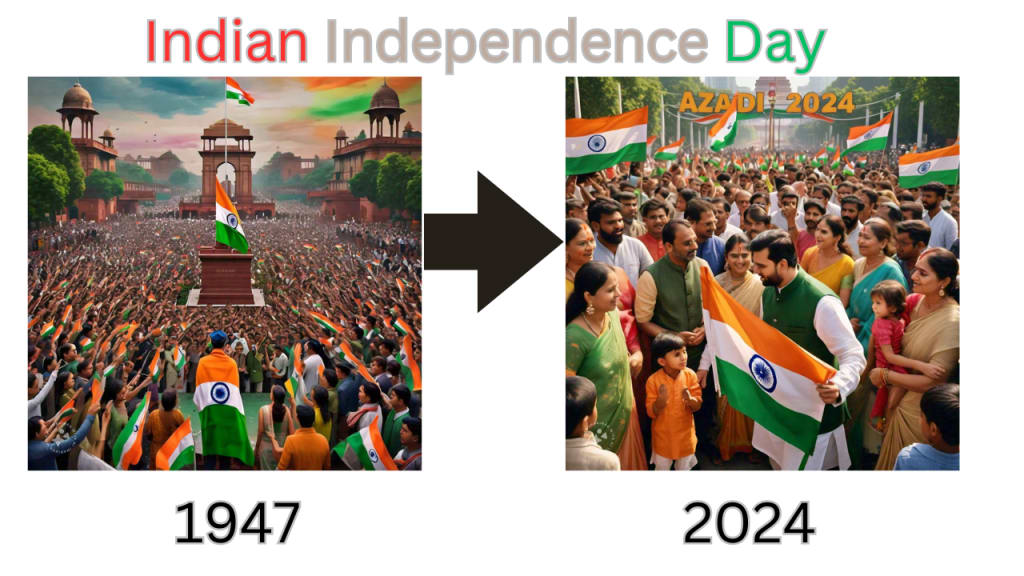
Indian Independence Day, celebrated every year on August 15th, marks the end of British rule in India and the birth of a free and independent nation. This day is filled with patriotic fervor, commemorations, and reflections on the country's journey to freedom. Let's explore some important and interesting facts about Indian Independence Day that are sure to enhance your knowledge and appreciation of this historic event.
The Dawn of Independence: August 15, 1947
1. Historical Context
India gained independence from British rule on August 15, 1947, after a long and arduous struggle that spanned over 200 years. The British East India Company initially came to India for trade but gradually took control of large parts of the country. The fight for independence involved numerous movements, protests, and sacrifices by countless freedom fighters.
2. The Role of Mahatma Gandhi
Mahatma Gandhi, also known as the Father of the Nation, played a crucial role in India's independence movement. His philosophy of non-violence (Ahimsa) and civil disobedience inspired millions to join the struggle. Gandhi's leadership in movements like the Salt March and the Quit India Movement significantly weakened British control.
3. The Indian National Congress
The Indian National Congress (INC), founded in 1885, was the principal party leading the independence movement. Leaders like Jawaharlal Nehru, Sardar Vallabhbhai Patel, and Subhas Chandra Bose emerged from its ranks, each contributing in unique ways to the freedom struggle.
Celebrations Across the Nation
4. Flag Hoisting Ceremony
Every year, the Prime Minister of India hoists the national flag at the Red Fort in New Delhi. This ceremony includes a speech addressing the nation, recounting the progress made, and outlining future goals. The event is attended by dignitaries, military personnel, and thousands of citizens.
5. Parades and Cultural Programs
Independence Day is marked by grand parades featuring the Indian armed forces, cultural performances, and tableaux showcasing India's rich heritage. These parades highlight the diversity and unity of the nation, celebrating its cultural and regional uniqueness.
6. Patriotic Songs and Films
Patriotic songs and films play a significant role in creating a sense of national pride. Songs like "Vande Mataram" and "Jana Gana Mana" (the national anthem) are sung with great enthusiasm. Movies depicting the freedom struggle, such as "Gandhi," "Lagaan," and "The Legend of Bhagat Singh," are popular during this time.
Symbols of Independence
7. The Tricolor Flag
The Indian national flag, known as the Tricolor, consists of three horizontal stripes: saffron at the top, white in the middle, and green at the bottom. The Ashoka Chakra, a 24-spoke wheel in navy blue, sits in the center. Each color has a specific meaning: saffron represents courage and sacrifice, white symbolizes peace and truth, and green stands for faith and chivalry.
8. The National Anthem
"Jana Gana Mana," written by Rabindranath Tagore, was adopted as the national anthem of India on January 24, 1950. It is a symbol of unity and pride, reflecting the diverse yet united spirit of the nation.
9. The National Emblem
The national emblem of India, adopted on January 26, 1950, features four Asiatic lions standing back to back, symbolizing power, courage, pride, and confidence. The emblem is inspired by the Lion Capital of Ashoka at Sarnath and includes the motto "Satyameva Jayate" (Truth Alone Triumphs) from the ancient Indian scriptures.
The Legacy of Freedom Fighters
10. Bhagat Singh
Bhagat Singh, a revolutionary freedom fighter, is remembered for his fearless acts against British rule. His execution at the young age of 23 turned him into a martyr and a symbol of resistance and bravery.
11. Rani Lakshmibai
Rani Lakshmibai, the Queen of Jhansi, played a pivotal role in the 1857 rebellion against British rule. Her courage and determination made her a legendary figure in Indian history.
12. Subhas Chandra Bose
Subhas Chandra Bose, also known as Netaji, was a prominent leader who advocated for armed resistance against British rule. He founded the Indian National Army (INA) and sought support from foreign powers to secure India's independence.
Independence Day: A Time for Reflection
13. Remembering the Partition
The independence of India also led to the partition of the country into India and Pakistan, causing widespread displacement and communal violence. Independence Day is a time to remember the hardships faced by millions during this period and to promote peace and harmony.
14. Progress and Development
Since gaining independence, India has made significant strides in various fields, including science, technology, education, and infrastructure. The country has become one of the world's fastest-growing economies and a major player on the global stage.
15. Challenges Ahead
Despite its achievements, India faces numerous challenges such as poverty, corruption, and social inequality. Independence Day is an opportunity to reaffirm the nation's commitment to addressing these issues and working towards a better future for all its citizens.
Fun Facts and Trivia
16. First Prime Minister's Speech
Jawaharlal Nehru, the first Prime Minister of India, delivered the iconic "Tryst with Destiny" speech on the eve of independence. His words captured the hopes and aspirations of a newly independent nation.
17. Midnight Ceremony
India's independence was officially declared at the stroke of midnight on August 15, 1947. This midnight ceremony symbolized the end of an era and the beginning of a new journey for the nation.
18. National Holiday
Independence Day is a national holiday in India. Schools, colleges, government offices, and businesses remain closed as people come together to celebrate the country's freedom.
Conclusion: Embracing the Spirit of Independence
Indian Independence Day is more than just a national holiday; it is a day to honor the sacrifices of those who fought for freedom and to celebrate the progress of a vibrant, diverse, and resilient nation. By understanding and appreciating the significance of this day, we can carry forward the legacy of our forefathers and work towards a united and prosperous India.
This guide aims to provide a comprehensive overview of Indian Independence Day, highlighting its historical context, celebrations, symbols, and legacy. Let us take this opportunity to reflect on the values of freedom, unity, and progress, and continue to strive for a better future for all.
About the Creator
Why ISO Certification Is Becoming a Business Standard for Companies in the UAE
Businesses in the UAE operate in a competitive environment. Clients expect reliability. Regulators expect compliance. International partners expect structured operations. Because of these expectations, companies are adopting management systems that improve how they operate.
By Umar Quality Jounala day ago in Education




Comments (1)
Thanks for reminding