
Journey to the Stars: Unveiling the Mysteries of Space
Lets Dive In

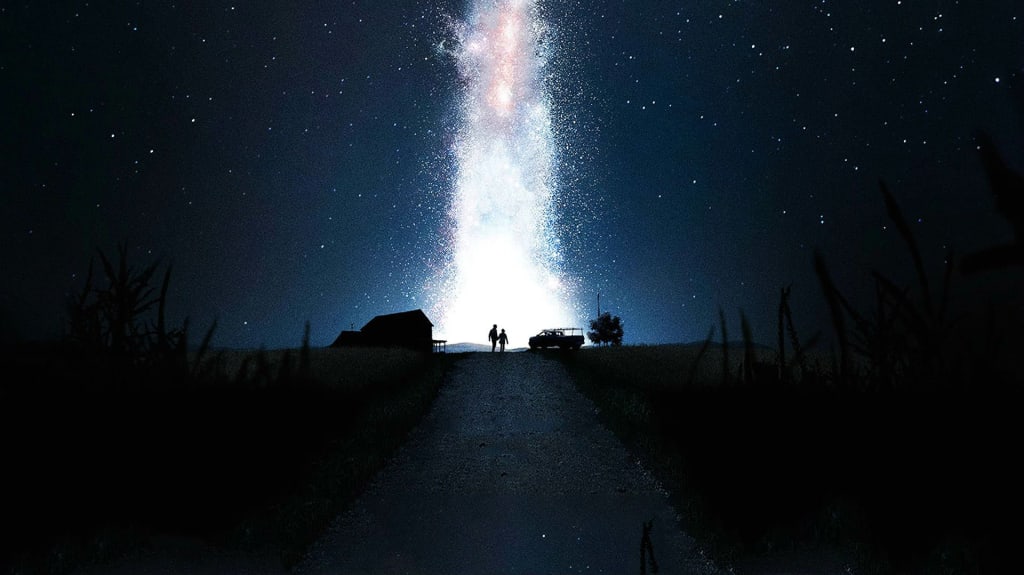
Imagine a frozen world, ancient and approximately 4.5 billion years old, with minimal heat from the Sun and a thick layer of ice covering its surface. This world is called Europa, the sixth satellite of Jupiter and one of the largest moons in the solar system. What makes this distant place even more fascinating is the possibility that it might host life.
Europa has long been considered one of the most promising locations in the solar system to search for new forms of life. This is due to its massive saltwater ocean, estimated to have a depth of 40 to 100 miles, hidden beneath an ice layer measuring 10 to 20 miles thick. Plumes of water erupt from cracks in the ice shell, releasing the contents of the moon's ocean into space.
Exploring such a deep environment poses significant challenges for missions seeking signs of life. However, scientists have discovered evidence suggesting the existence of shallower pools that may lie closer to the moon's surface, possibly less than one mile beneath the ice. This discovery has two significant implications: it increases the likelihood of life existing on Europa, and it may facilitate easier detection of these life forms by future missions.
The revelation about these shallow pools was accidental, as scientist Riley Kohlberg stumbled upon a presentation by a colleague showcasing double ridges on Europa's surface. Kohlberg recognized similar ridges on Earth, although they are more abundant on Europa. Further studies indicated that these ridges on Jupiter's moon could be the result of a specific cycle, similar to Earth, in which liquid water freezes and thaws within an ice sheet under high pressure. This repeated movement creates a two-peaked structure. While the behavior of ice on Europa is different from Earth's, these findings suggest the presence of shallow waters on the moon.
The under-ice environments on Europa are likely well-protected from Jupiter's harsh radiation, further enhancing the prospects for life existing there. The moon's ocean is believed to have a salty composition, which gives rise to red streaks on its surface. These streaks are likely frozen mixtures of water and salts, unlike any known substances on Earth. Additionally, yellow spots on Europa's surface may be caused by the presence of sodium chloride, or table salt.
Scientists have conducted laboratory experiments to recreate Europa's conditions and have successfully produced a new type of solid crystal by combining water, table salt, freezing temperatures, and high pressure. This crystal could potentially exist at the bottom of Europa's ocean and on the moon's surface. Despite these findings, there are still many unanswered questions regarding the behavior of ice and the extent of water pockets on Europa.
Future missions, such as NASA's Europa Clipper, set to launch around 2030, aim to explore Europa more closely. The Europa Clipper will conduct close flybys to determine if any form of life exists on the moon. The European Space Agency's JUICE (Jupiter Icy Moons Explorer) mission also plans to visit Europa in the coming years.
While space is generally silent, there are some ways to hear sound in certain situations. For instance, in atmospheres of other planets or in places with denser dust clouds, sound can be produced, albeit very faintly. Additionally, inside spaceships or within spacesuits, small pockets of air can transmit sound. Bone conduction, where sound is transmitted through bones, can also allow astronauts to perceive sound in space.
In conclusion, while sound is not audible in the vastness of space, the potential for sound does exist in specific environments and can be detected through various means.
About the Creator
Random Facts
hope you guys enjoy the stories i publish, please support and like
thank you
Keep reading
More stories from Random Facts and writers in Education and other communities.
If You See This Person on the Road, Don't Pull Over
If you're accustomed to picking up hitchhikers during your long commute to work, it's essential to be aware of a scam known as the Hitchhiker Roadscan. This deceptive trick targets unsuspecting drivers. The scam typically begins with someone posing as a hitchhiker, flagging down a car on the side of the road. They might claim to be stranded or in need of a ride to a nearby town or city. In some instances, the hitchhiker may request the driver to stop at a specific location, such as a gas station or convenience store. Once there, the hitchhiker will vanish with the driver's money or other valuable possessions.
By Random Facts3 years ago in Education
How Japan Saved Its Biggest City from Collapse
400 years ago, modern-day Tokyo was known as Edo, and it was already one of the biggest cities in the world, with a population approaching 1 million. However, it was on the verge of ecological collapse. Years of intense logging had led to massive deforestation. The city now faced timber shortages and the impacts of severe erosion and frequent flooding that threatened food supplies. But over just a few decades, Edo will transform and become one of the most sustainable and efficient cities in history.
By Munesh Yadavabout 3 hours ago in Education
Understanding Laravel Helper Functions and Their Use Cases
Laravel is widely appreciated for its clean syntax, expressive structure, and developer-friendly ecosystem. One of the most underrated yet powerful features of the framework is its built-in helper functions. These helpers simplify common tasks, reduce boilerplate code, and improve overall development speed. If you’re working with Laravel regularly, understanding helpers in Laravel can significantly improve how efficiently you write and maintain code, especially when building modern applications such as dashboards, SaaS platforms, or integrations with tools like the Best AI Video Ads Tools for marketing automation.
By Lennox Grayabout 6 hours ago in Education




Comments
There are no comments for this story
Be the first to respond and start the conversation.