
Join our UNIX | LINUX Training-NareshIT
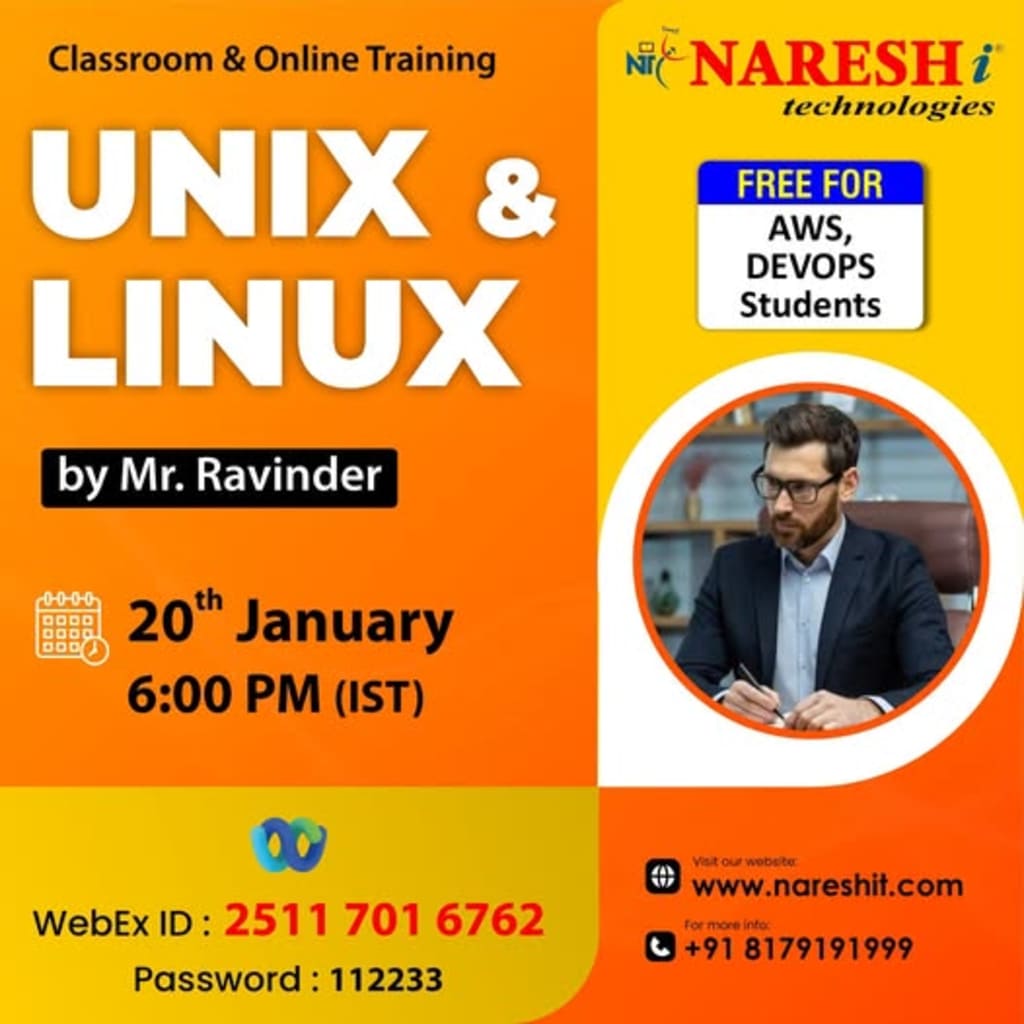
Classroom & Online Training in Ameerpet
Introduction
UNIX and Linux are powerful, versatile operating systems widely used in various sectors, including academia, business, and personal computing. Understanding these systems can open doors to numerous career opportunities in system administration, development, and cybersecurity. This guide aims to provide an overview of UNIX/Linux training, covering essential concepts, skills, and resources.
Why Learn UNIX/Linux?
1. Industry Demand: UNIX/Linux skills are in high demand across many industries, from IT to finance and healthcare.
2. Open Source: Linux is open-source, allowing users to understand, modify, and distribute the code, fostering a deep understanding of system internals.
3. Server Dominance: A significant percentage of web servers, cloud infrastructures, and supercomputers run on UNIX/Linux.
4. Security and Stability: Known for their robustness, UNIX/Linux systems are less prone to malware and provide a stable environment for development and operations.
Key Concepts in UNIX/Linux
• Kernel: The core component that manages hardware resources.
• Shell: Interface between the user and the kernel, interpreting commands.
• File System: Organized in a hierarchical structure, with everything treated as a file.
2. Shell and Command Line
• Shell Basics: Command syntax, file manipulations, and process control.
• Common Shells: Bash, Zsh, and Fish.
• Scripting: Automating tasks using shell scripts.
3. File Management
• File Permissions: Read, write, and execute permissions for users, groups, and others.
• File Operations: Commands like ls, cp, mv, rm, and find.
• Text Processing: Tools like grep, sed, and awk for text manipulation.
4. Process Management
• Understanding Processes: PID, PPID, and process states.
• Process Control: Commands like ps, top, kill, and nice.
5. Networking
• Basic Networking Commands: ping, netstat, ifconfig, and ssh.
• Advanced Networking: Configuring servers, firewalls, and network troubleshooting.
6. System Administration
• User Management: Adding, deleting, and managing users and groups.
• Package Management: Installing, updating, and removing software using package managers like apt, yum, and zypper.
• System Monitoring: Tools like htop, vmstat, and iostat.
Training Resources
1. Online Courses
• edX: Offers comprehensive UNIX/Linux courses from institutions like Harvard and Linux Foundation.
• Coursera: Features courses from top universities and companies.
• Udemy: Provides a range of courses from beginner to advanced levels.
2. Books
• "UNIX and Linux System Administration Handbook": A must-read for system administrators.
• "Linux Command Line and Shell Scripting Bible": Great for mastering command line and scripting.
• "The Linux Programming Interface": Comprehensive guide for developers.
3. Practice Platforms
• Linux Survival: Interactive tutorials for beginners.
• OverTheWire: Wargames for learning security and networking.
• Hack The Box: Real-world hacking scenarios for advanced users.
4. Community and Support
• Forums: Linux Questions, Stack Overflow, and UNIX.com.
• Mailing Lists: Join mailing lists related to specific distributions or topics.
• Local Meetups: Engage with local Linux User Groups (LUGs) for networking and support.
Certification Paths
1. CompTIA Linux
• Vendor-neutral certification covering basic to intermediate Linux skills.
2. Red Hat Certified System Administrator (RHCSA)
• Focuses on system administration tasks in Red Hat Enterprise Linux.
3. Linux Professional Institute Certification (LPIC)
• Multi-level certification, starting from basics (LPIC-1) to advanced (LPIC-3).
4. Oracle Certified Professional, Oracle Solaris System Administrator
• Specific to Oracle's Solaris OS, part of the UNIX family.
Career Opportunities
1. System Administrator: Managing and maintaining UNIX/Linux systems.
2. DevOps Engineer: Integrating development and operations using UNIX/Linux tools.
3. Network Engineer: Setting up and managing networks, often relying on Linux.
4. Security Analyst: Securing systems and networks, utilizing Linux's robust security features.
5. Software Developer: Developing applications for UNIX/Linux environments.
Conclusion
UNIX/Linux training is an invaluable investment for anyone interested in technology. Whether you're aiming to be a system administrator, developer, or security expert, mastering these systems will significantly enhance your career prospects. Utilize the resources, pursue certifications, and engage with the community to build your expertise and succeed in the UNIX/Linux domain.
About the Creator
Keep reading
More stories from Jayanthi Nareshit and writers in Education and other communities.
Join our Advanced Java Training-NareshIT
Introduction Advance Java is a higher-level programming skill that builds upon the core concepts of Java. It is designed to provide a deeper understanding of Java for developing web-based, network-centric, and enterprise applications. NareshIT, a renowned institute, offers comprehensive training in Advance Java to help students and professionals enhance their skills and meet industry requirements.
By Jayanthi Nareshitabout a year ago in Education
The Invisible Deficiency: Why Modern Food is Leaving Us Hungry for Life
We all share a common desire: for our children to grow up without illness and for our parents to enjoy a long life free from suffering. Yet, we are living through a profound contradiction. In an era of qualified doctors, ultra-modern clinics, and endless medications, humans fall ill more than any animal in its natural environment.
By Pavel Pavlovabout 20 hours ago in Education
How to Donate Venison to Manna House in Huntsville
Donating venison is one of the most meaningful ways local hunters can give back to the community. In Huntsville, Manna House plays a vital role in turning legally harvested deer into healthy meals for families in need. If you have extra venison this season and want it to make a real difference, understanding the process helps ensure your donation is safe, legal, and impactful.
By Joe Sottolano4 days ago in Education
Stories Before a Wedding, or The Happily Ever After of Cinderella
Cinderella had always dreamt of marrying a prince. She had dreamt of nothing else since she was a small girl. Now, however, as the Prince’s wife of three days, she had to admit that the reality was not as she had dreamt it to be.
By Dionearia Red3 days ago in Fiction




Comments
There are no comments for this story
Be the first to respond and start the conversation.