
Is Planet Nine the real deal?
If so, why hasn’t it been seen?
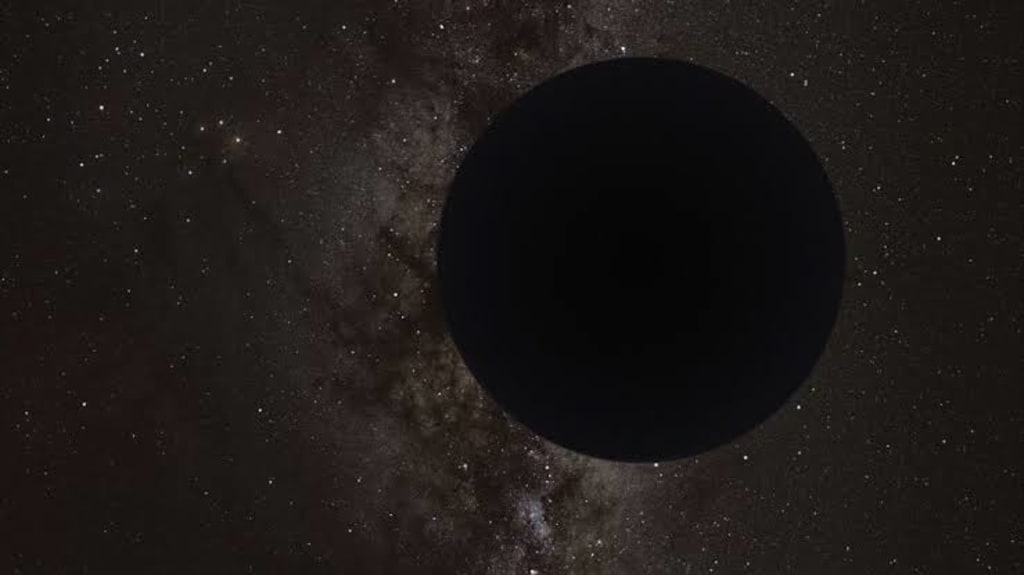
For years, the idea of a colossal planet lurking in the far reaches of our solar system has captivated both scientists and the general public.
For just a few decades, we've been delving into the mysteries of the solar system beyond Neptune's orbit. But let's take a moment to reflect on why this area has been a bit of a head-scratcher for astronomers. Picture this: we're on the hunt for objects that are teeny-tiny and incredibly distant. It's like trying to find a needle in a haystack, but the haystack is the size of the universe. No wonder it's been a challenge!
Now imagine this: for over 60 years after Pluto's discovery in 1930, we were completely in the dark about the outer reaches of our solar system. It wasn't until 1992 that astronomers stumbled upon a frozen little gem, a Kuiper Belt object, lazily orbiting the sun in near perfect darkness beyond Neptune. This discovery was a game-changer, shedding light on the remnants of our solar system's formation and opening up a whole new world of exploration. Who knows what other secrets lie hidden in the depths of space, waiting to be uncovered?
Since that groundbreaking discovery, we've stumbled upon a plethora of similar celestial bodies, meticulously organising and classifying them. But today, we're setting our sights on a particularly fascinating group of space oddities known as extreme trans-neptunian objects, or eTNOs for short. Now, if you're not familiar with this astronomical lingo, fear not! It simply means these bad boys are located waaay beyond the orbit of Neptune - like, seriously far out.
Sendna discovered in 2003 by astronomers is like the black sheep of the eTNO family, this celestial oddball is about half the size of Pluto, but its orbit is truly out of this world. Brace yourself for this mind-boggling fact: Sedna takes a whopping 11,000 years to complete just one orbit! That's twice as long as all of recorded human history. And get this - during that time, Sedna swings from a distance of 76 astronomical units (that's the distance between the sun and Earth) all the way to over 900 AU, before making its way back again. Talk about a wild ride!
Sedna's orbit is a cosmic mystery that begs to be solved. This almost-planet's massive size and detached orbit are mind-boggling. How did it manage to avoid being flung out of our solar system entirely? It's a puzzle that has astronomers scratching their heads and searching for answers.
Now picture this: you're strolling through a field, admiring the flowers, when you come across one with all its petals clustered together. Weird, right? Well, that's exactly what a group of astronomers noticed about a handful of eTNOs (extreme trans-Neptunian objects) in our solar system. These objects had eerily similar orbits, with the same amount of ellipticity and clustered ellipses. The only explanation? A mysterious ninth planet, aptly named Planet Nine (for now), was keeping them in line. So, is there something else out there, holding Sedna and its eTNO friends on a cosmic leash? It's looking more and more likely.
It's a fascinating argument. The discovery of Neptune was actually prompted by the inability to explain the orbit of Uranus, so there's a historical precedent for this strategy. And since then, we've found even more eTNOs in these bizarre, clustered orbits. But despite all the buzz about a possible ninth planet, astronomers have yet to capture a single image of it. This isn't necessarily cause for alarm, though. If Planet Nine does exist, it's likely quite small and incredibly far away, making it a real challenge to spot. Plus, our current survey methods are more likely to pick up eTNOs with these funky orbits, rather than their more conventional counterparts. So there's no need to invoke some mysterious force in the outer solar system to explain these strange orbits - we just haven't finished exploring yet.
Of course, the existence of a ninth planet does raise some tricky questions about how our solar system formed. Astronomers have proposed various scenarios to account for it, such as a failed core of a planet or a captured rogue exoplanet. But the more complex the explanation, the harder it is to swallow.
Ultimately, until we have concrete evidence of Planet Nine, the astronomical community will remain skeptical. So the search for this elusive planet continues, and who knows what other mysteries we might uncover along the way?
So, what do you think? Could Planet Nine be hiding just beyond our reach, waiting to be discovered?
About the Creator
kashaf
As a journalism student, I'm passionate about writing and aspire to inspire others with my words.
Why Creative Thinking is the Catalyst for Higher Productivity
In many professional settings, creativity and productivity are often seen as separate, even conflicting, concepts. Productivity is typically associated with structure, deadlines, and measurable output, while creativity is considered unstructured, unpredictable, and harder to quantify. But this outdated thinking overlooks a critical truth: a creative mindset is a powerful driver of productivity.
By Norman Badger5 days ago in Education



Comments (1)
I love planet stuff! Well written and great article. Gazoogabloga!