
Is Minoxidil Right for You?
Side Effects of Minoxidil!

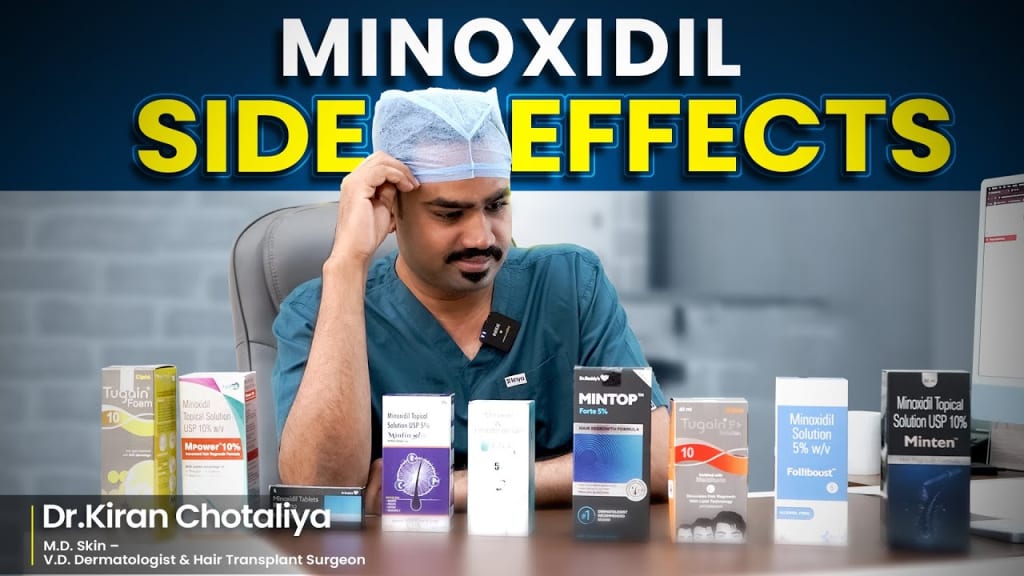
Is Minoxidil Right for You?
Minoxidil is a commonly prescribed solution for hair loss and baldness. It's widely used by men and women alike for promoting hair regrowth. While effective, it is essential to understand its proper usage, potential side effects, and dispel common myths surrounding it.
In this blog, we will explore these aspects in detail, providing a balanced understanding of this widely-used hair regrowth solution.
How Does Minoxidil Work?
Minoxidil is a vasodilator, which means it helps widen blood vessels and improves blood flow to specific areas where it is applied. This increased blood circulation nourishes hair follicles, stimulating hair growth and improving the overall density and quality of hair.
Common Myths About Minoxidil
1. Minoxidil Causes Sexual Weakness
One of the most prevalent myths is that using Minoxidil leads to sexual weakness. This is entirely untrue. Minoxidil works locally by improving blood circulation and has no impact on hormonal levels or sexual drive.
However, if you are taking DHT blockers like Finasteride along with Minoxidil, any perceived sexual side effects are likely due to the former, not Minoxidil itself.
2. Minoxidil Permanently Alters Your Body
Some believe Minoxidil causes permanent systemic changes in the body. This is a myth. Any systemic effects are temporary and usually subside within a few days of discontinuing use.
Local vs. Systemic Side Effects of Minoxidil
Minoxidil can cause side effects, but they are categorized into local and systemic effects.
Local Side Effects
These occur at the site of application:
Dryness and Flaking: Alcohol-based Minoxidil formulations can cause dryness and irritation on the scalp.
Dandruff: Crystallization from older alcohol-based formulations may lead to dandruff.
Redness or Allergies: Rarely, users may experience redness, itching, or an allergic reaction.
Unwanted Hair Growth: If Minoxidil drips onto areas like the face, it can cause unwanted hair growth, especially in females.
How to Prevent Local Side Effects:
Use newer foam-based or lipid-based formulations to minimize irritation.
Wash hands and the surrounding area thoroughly after application.
Avoid excessive use. Follow prescribed dosage.
Systemic Side Effects
Systemic side effects occur when excessive Minoxidil is absorbed into the bloodstream. These include:
Increased Heart Rate (Palpitations): This is rare and usually temporary.
Headaches or Lightheadedness: Excess absorption can cause mild headaches or dizziness.
Fluid Retention: Some may experience swelling in the body, which is extremely rare.
How to Handle Systemic Side Effects:
Reduce the dosage or frequency of application.
Switch to a lower concentration of Minoxidil.
Consult your dermatologist for alternate formulations or medications.
Special Considerations for Women
Facial Hair Growth: If Minoxidil trickles onto the face, it may lead to unwanted hair growth. Women should be particularly cautious while applying and wash off any residue.
Pregnancy and Breastfeeding: Minoxidil is not recommended during pregnancy as its safety has not been well-studied.
Dispelling Concerns About Alcohol-Based Minoxidil
Older Minoxidil formulations contained alcohol for better penetration, but they often caused irritation. Newer foam-based or lipid-based options have significantly reduced these issues, making Minoxidil suitable even for people with sensitive scalps.
When to Seek Medical Attention
If you experience severe or prolonged side effects, consult your dermatologist immediately. Signs to look out for:
Persistent irritation despite switching formulations.
Severe allergic reactions, such as swelling or rashes.
Continuous heart palpitations or dizziness.
Key Tips for Effective and Safe Minoxidil Use
Follow the Correct Dosage: Apply as directed by your dermatologist to avoid overuse.
Be Patient: Hair regrowth with Minoxidil takes time. Results may take 3–6 months to appear.
Consult a Dermatologist: Always get professional advice before starting or stopping Minoxidil.
Hygiene Is Crucial: Regularly clean the scalp and avoid applying on dirty or infected areas.
Understand Limitations: While Minoxidil helps hair regrowth, it cannot cure baldness or regrow hair in completely inactive follicles.
Conclusion
Minoxidil is a proven, effective remedy for hair loss when used correctly. While side effects are possible, they are usually manageable and temporary. Understanding its proper use and consulting a dermatologist ensures you can enjoy its benefits without significant risks.
If you're considering Minoxidil or facing side effects, feel free to reach out to us at Hairfree and Hairgrow Clinics. Our expert dermatologists will guide you toward safe and effective treatments tailored to your needs.
About the Creator
Hair Transplant Stories
"From thinning hair to winning confidence—sharing my hair transplant journey, one story at a time!"
Keep reading
More stories from Hair Transplant Stories and writers in Education and other communities.
Are you hesitant to go for a Hair Transplant?
At Hairfree And Hairgrow, we believe in transforming lives, not just physically but emotionally. Sometimes, the decision to undergo a hair transplant is not just about aesthetics, but about restoring confidence and improving quality of life. Today, we share a heartwarming journey of one of our patients, Mr. Ram Satpathy from Odisha, who chose us for his hair transplant, traveling thousands of miles to get the right treatment.
By Hair Transplant Storiesabout a year ago in Interview
From Despair to Hope: How Animal Rescue Efforts Rebuild Broken Lives
Animal rescue efforts stand as a powerful response to suffering that often goes unseen. Across towns, cities, and rural areas, animals face neglect, abandonment, injury, and fear every day. Many are left without food, shelter, or medical care. Others are harmed by abuse or natural disasters. Without help, their future is uncertain. Through patience, care, and action, animal rescue efforts transform despair into hope and give animals the chance to heal and live safely.
By Brenda McGrane3 days ago in Education




Comments
There are no comments for this story
Be the first to respond and start the conversation.